
Tom De Kooning

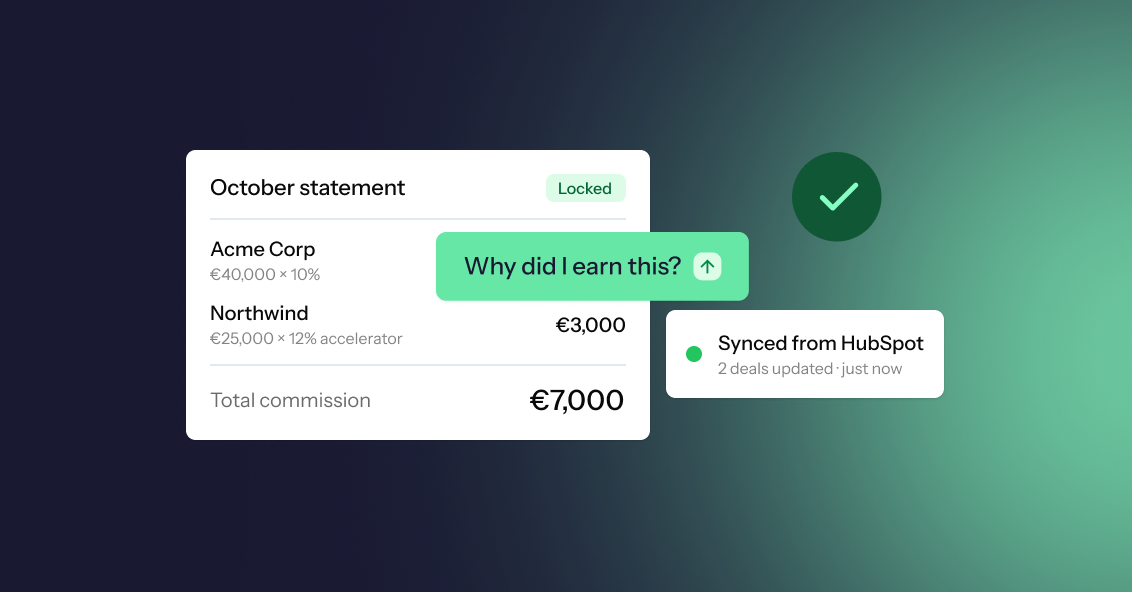
- Sales compensation software pulls sales and quota data from your CRM, applies your compensation rules, and gives finance teams, sales ops, and reps a clear view of commission calculations and payouts.
- You’ve probably outgrown spreadsheets when commission calculations depend on one person, reps maintain their own versions of the numbers, payouts are consistently late, or changes to compensation plans keep breaking the process.
- The right sales compensation tool should handle the complexity you actually have, including clawbacks, splits, accelerators, multi-currency, approvals, and changes to deals after a payout has been approved.
- Integration depth matters just as much as the commission engine. Look for reliable CRM data, clear rules around what gets synced, and a workflow that doesn’t create another manual data-cleaning job.
- Your main options are spreadsheets, a custom-built solution, or dedicated sales compensation software. The right choice depends on plan complexity, team size, operational risk, and how much manual effort you can justify.
- A good trial or demo should let you test your own compensation plans and real sales data, rather than watching a polished walkthrough of a generic example.
Most commission plans fail because nobody modelled the numbers before rolling them out. A rate that looks generous on a slide turns into a payout you can't afford at 130% attainment, or an accelerator so flat that your best sales reps stop pushing the moment they hit quota.
So we collected the eight most common sales commission structures into a single free commission sheet template. It is one workbook with a commission spreadsheet for each structure, each with live formulas and a filled-in example. Change a rate, a quota, or a revenue number and every payout updates instantly, so you can compare sales commissions across models in one place.
Open the template in Google Sheets or start for free and let Driven build the plan for you.

Under ASC 606, the revenue recognition standard, and its cost subtopic, ASC 340-40, sales commissions that are incremental costs of obtaining a contract are no longer expensed when paid. They are recorded as a deferred commission asset and amortized as the company delivers the service, which can be longer than the initial contract term if renewals are expected. A practical expedient lets you expense commissions as incurred when the amortization period is one year or less, but it rarely fits multi-year SaaS contracts.
Fixed salaries and company-wide bonuses are not capitalized, while SPIFFs and bonuses tied to specific deals usually are. ASC 606 does not dictate how to design your sales compensation plan, but the plan you choose determines how much accounting work you create. Clear rules on new vs. renewal commissions, clawbacks and other sales incentives keep it clean, and a platform like Driven can automate the schedules and keep them audit-ready.
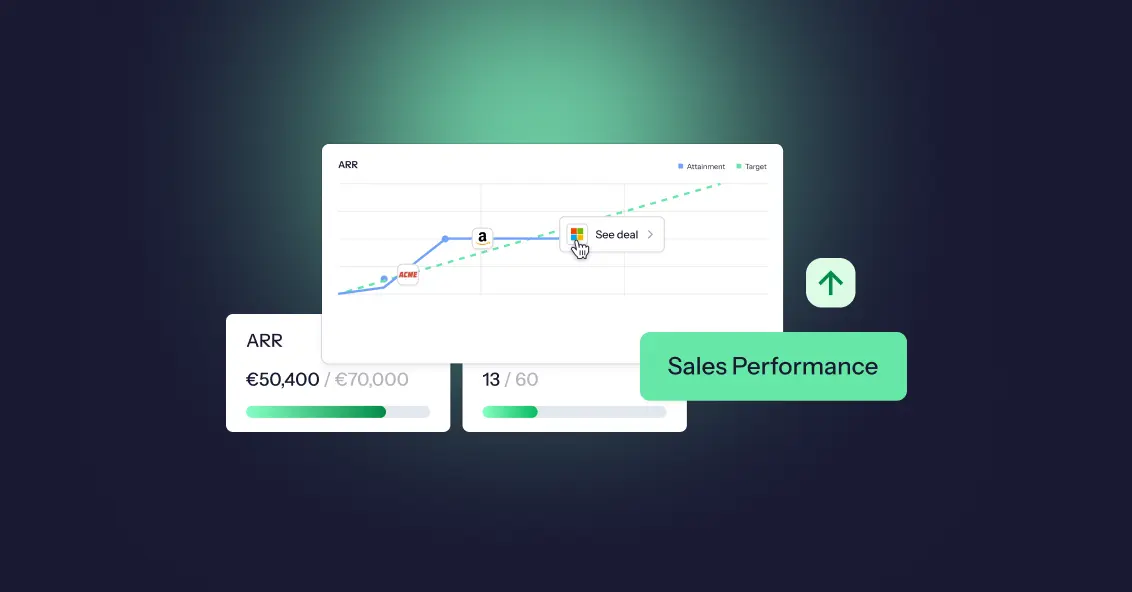
Sales performance analysis is the process of examining sales data to understand what is driving results, what is holding them back, and what to change next. It differs from reporting, which only says what happened, and the ongoing practice and technology behind it is called sales analytics.
A good sales analysis starts with a clear question, tracks a handful of key sales metrics (win rate, conversion rate, average deal size, sales cycle length, quota attainment, pipeline coverage and cost of sales), and looks at the data through five lenses: time, rep, territory, customer segment and lead source. The practical process has seven steps: ask a question, collect the sales data, clean it, set a baseline, identify trends through the lenses, diagnose the root cause, and act and monitor.
To evaluate individual sales reps, use a balanced scorecard of outcomes, activity and quality, and look at how attainment is distributed across the team, not just the average. Because compensation shapes behavior, it helps to analyze pay against performance too.
Driven acts as the data layer that connects your CRM and commission data, so you can query it in natural language and build the dashboards each person needs.
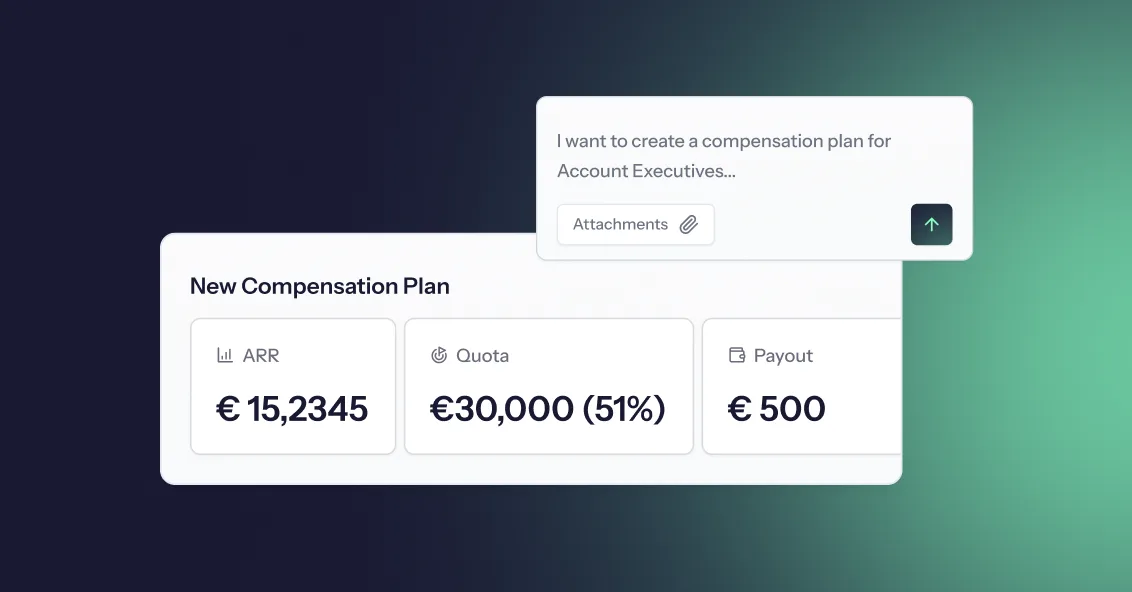
A sales compensation plan defines how your sales team gets paid: a fixed base salary, variable pay like commissions and bonuses, and a quota that decides how much of that variable pay a rep actually earns. Base salary plus target variable pay makes up a rep's on-target earnings (OTE).
Sales compensation plans do more than pay people; they shape behavior, drive revenue, and define culture. Get the plan right, and your team is aligned, motivated, and chasing the numbers that actually matter. Get it wrong, and you'll spend every month-end on disputes, recalculations, and reps who no longer trust their payslip.
This guide covers the core components, the main plan types, and a 10-step process to build your own, followed by three sales compensation plan examples. Jump to the examples. Everything here draws on Driven's work with finance, RevOps, and sales compensation leaders who run these plans every single month.
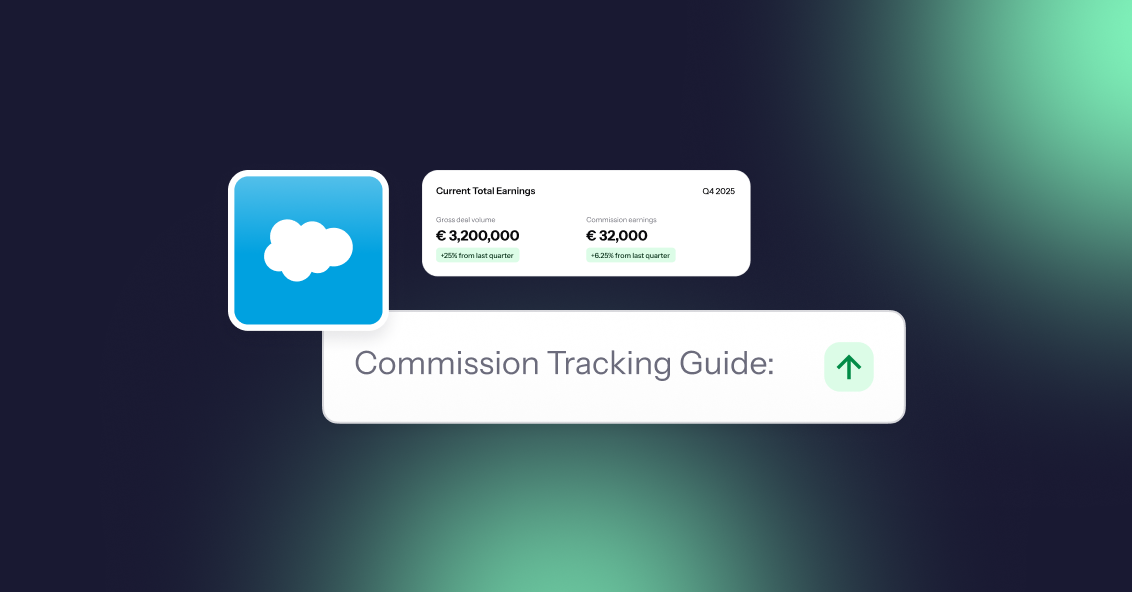
TL;DR: Salesforce stores every field commissions depend on, but core Sales Cloud doesn't calculate, explain or protect payouts. Teams close that gap in one of five ways: native formula fields, a custom build, Salesforce's native ICM (Spiff), a vibe-coded tool, or a third-party commission tool. A flat rate and a few reps can stay native. Tiers, accelerators, splits and frequent plan changes point to a dedicated tool, and to an agentic platform like Driven if you want the plan designed, explained and maintained for you.
It's not uncommon for teams in 2026 to still run sales commissions on spreadsheets. The deal data lives in Salesforce, the rates live in a Google Sheet someone built three finance leads ago, and the payouts get reconciled by hand at the end of every quarter. When a rep asks why their number looks different, no one can fully explain it. When finance needs an accrual, someone exports a report and rebuilds it in Excel. The process is time-consuming, error-prone, and actively eroding rep trust. It's hard to keep a sales team motivated when reps can't trust their own paycheck.
Teams that outgrow the spreadsheet usually reach for formula fields, a custom build, or a paid add-on. But tools for managing sales incentives are now moving from rules engines you configure to agents that work alongside you. Gartner predicts that 40% of enterprise applications will feature task-specific AI agents by the end of 2026, up from less than 5% in 2025. They also say that 60% of B2B seller work will be executed through conversational interfaces by 2028.
This guide breaks down five ways to track Salesforce commissions, including what each approach does well, where it breaks, and how to choose.