.png)
Sales compensation software has moved far beyond spreadsheets and manual commission tables that are prone to errors, delays, and confusion. Modern compensation platforms now help businesses design fair and motivating compensation plans, automate even the most complex commission calculations, accurately forecast payout costs, and improve transparency across the entire sales organization. By providing real-time visibility into earnings and performance, these tools keep sales teams motivated while helping finance leaders maintain control over budgets and revenue planning. In a world where sales velocity, scalability, and revenue predictability matter more than ever, choosing the right sales compensation software can truly transform how your revenue organization operates and grows.
In this guide, we review the best sales compensation software available today, compare their key features, pricing models, and ideal use cases, and help you confidently choose the platform that best fits your business goals.
.png)
Best for: Companies that want clarity, automation, and performance growth
Pricing: Custom (contact for demo & quote)
Driven combines AI-powered compensation planning with real-time commission automation and a strong focus on rep-friendly transparency. Instead of relying on complex spreadsheets and error-prone formulas, sales and finance teams can quickly build flexible incentive plans, accurately forecast payout impact, and clearly explain how earnings are calculated. This clarity helps reduce disputes, improve trust, and keep sales teams focused on closing deals rather than questioning their commissions.
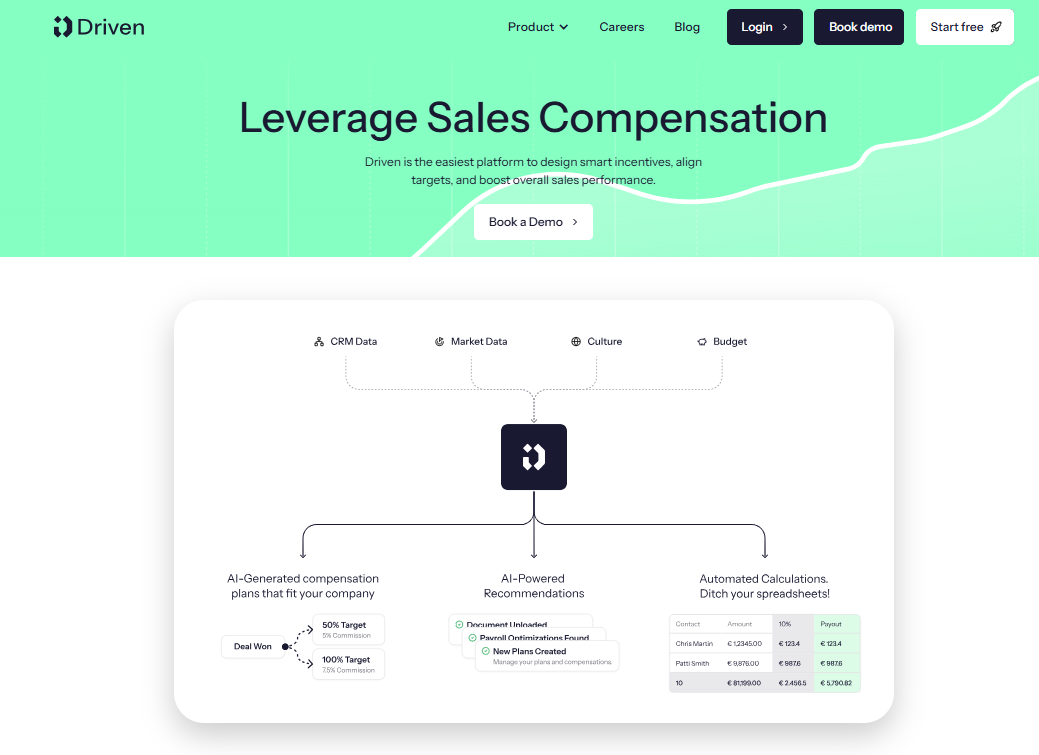
Top features:
Why Driven wins: Designed for small teams, Driven blends power with simplicity, which helps you stop guessing and start growing.
Pros
Cons
Best for: Mid-market to enterprise revenue teams (20- 200 reps)
Pricing: Transparent, SMB-friendly (tiered plans)
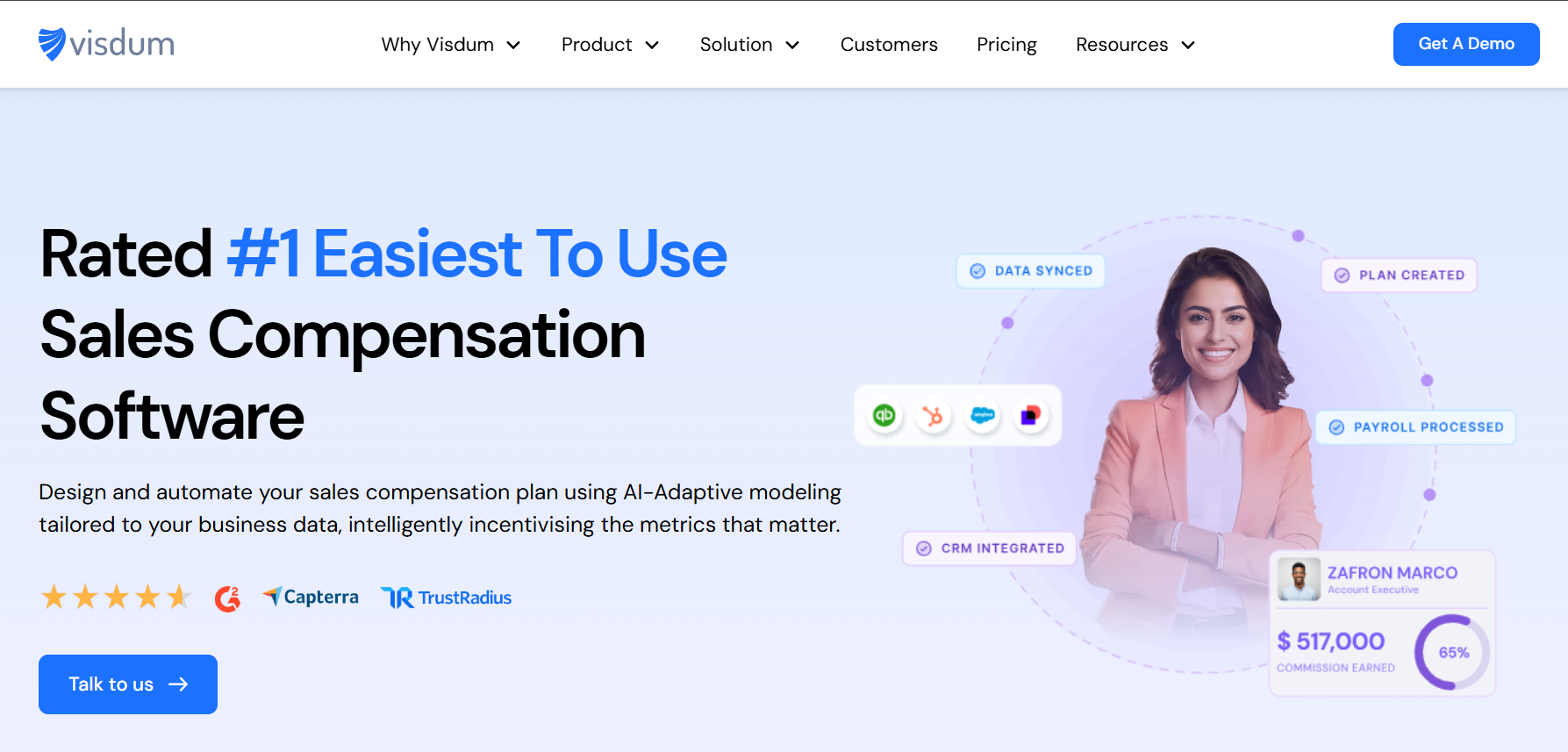
Visdum is built for teams that want to eliminate spreadsheet-heavy commission workflows and automate payouts end-to-end. It focuses on accuracy, auditability, and ops efficiency- making it especially useful for Sales Ops and Finance teams managing complex commission structures without enterprise bloat.
The platform syncs directly with CRMs, calculates commissions automatically, and gives reps clear visibility into earnings using dashboards-without manual reconciliation every month.
Standout features:
Pros
Cons
Best for: Teams needing customizable models
Pricing: Custom (on request)
CaptivateIQ enables teams to build complex compensation logic without needing coding skills. Its sandbox simulation environment lets you test structures before rolling them out, and seamless integrations ensure your sales data flows without friction.
Top features:
Pros
Cons
Best for: Large companies with complex compensation structures
Pricing: Custom enterprise quotes
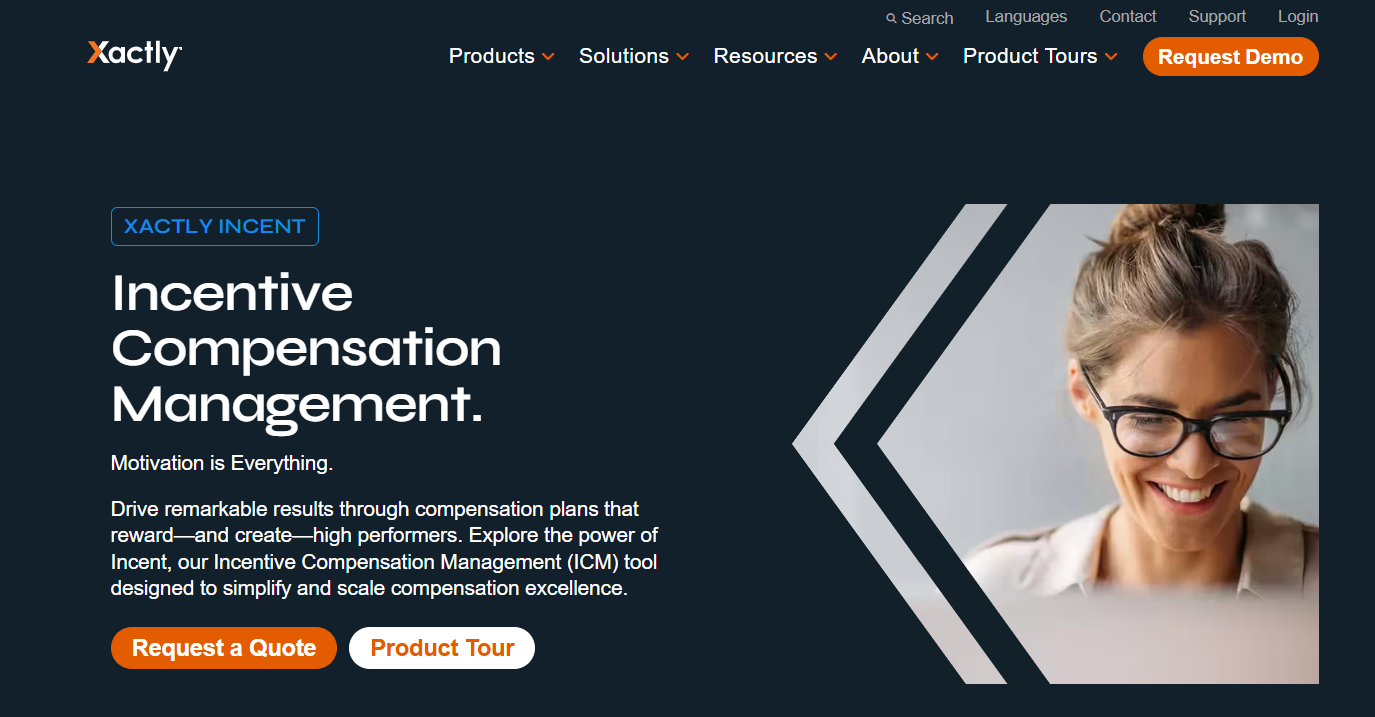
Xactly has a long history in sales performance management and is tailored for enterprise needs, including compliance, multi-country rules, and detailed payout control.
Key features:
Pros
Cons
Best for: Incentive programs and short-term sales motivation
Pricing: Custom (on request)
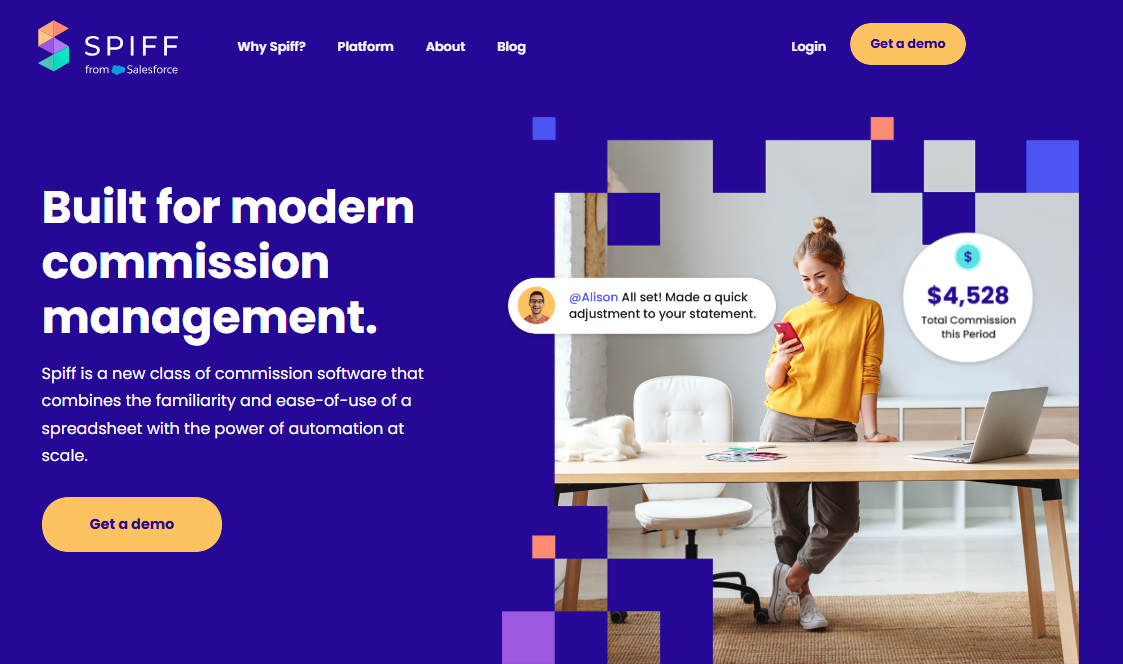
SPIFF focuses on driving immediate sales behavior through flexible SPIFFs, bonuses, and incentive programs. It helps sales leaders quickly launch contests, track progress in real time, and reward reps faster, keeping motivation consistently high.
Standout features:
Pros
Cons
Best for: SMBs to mid-market companies
Pricing: Custom (on request)
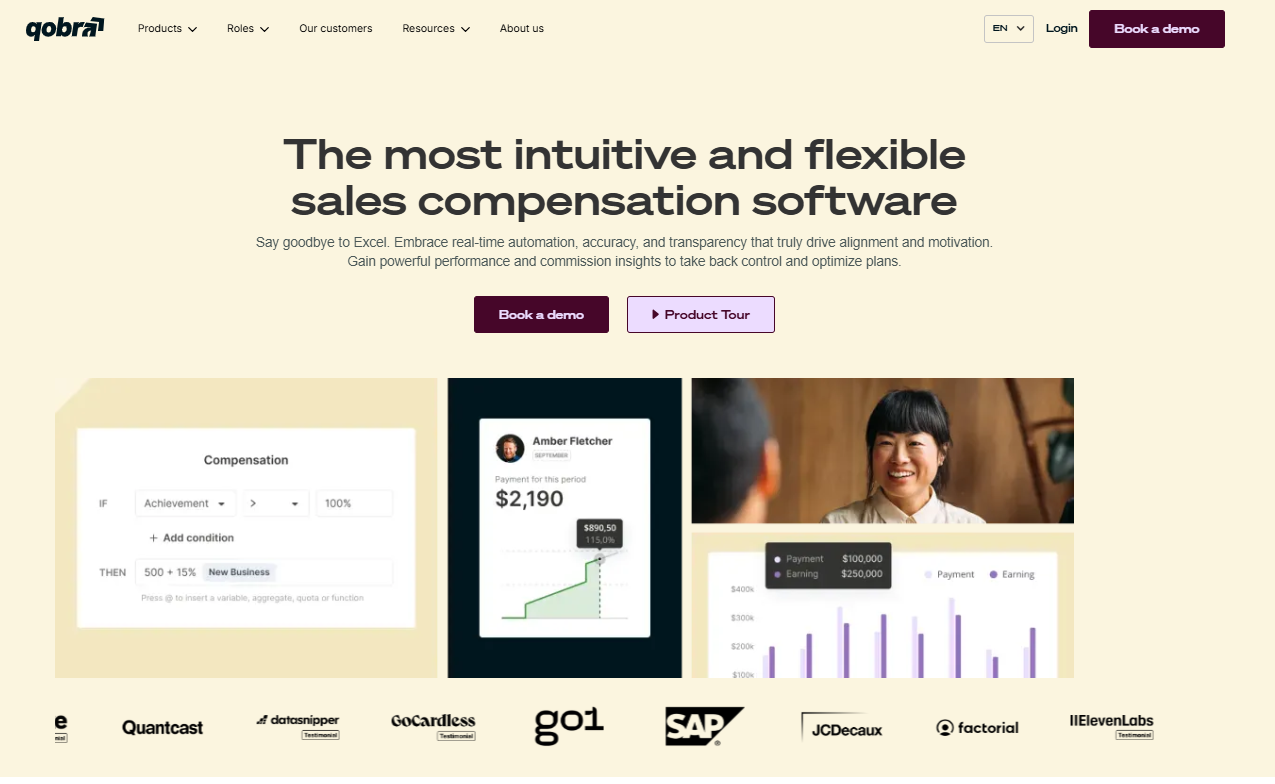
Qobra is a commission automation platform designed to simplify complex compensation plans, especially for SaaS businesses. It replaces spreadsheets with automated workflows while providing transparency for both finance teams and sales reps.
Standout features:
Pros
Cons
Best for: Revenue teams that want to eliminate credit conflicts and improve compensation accuracy (Enterprise marketplace)
Pricing: Custom pricing based on use case and scale
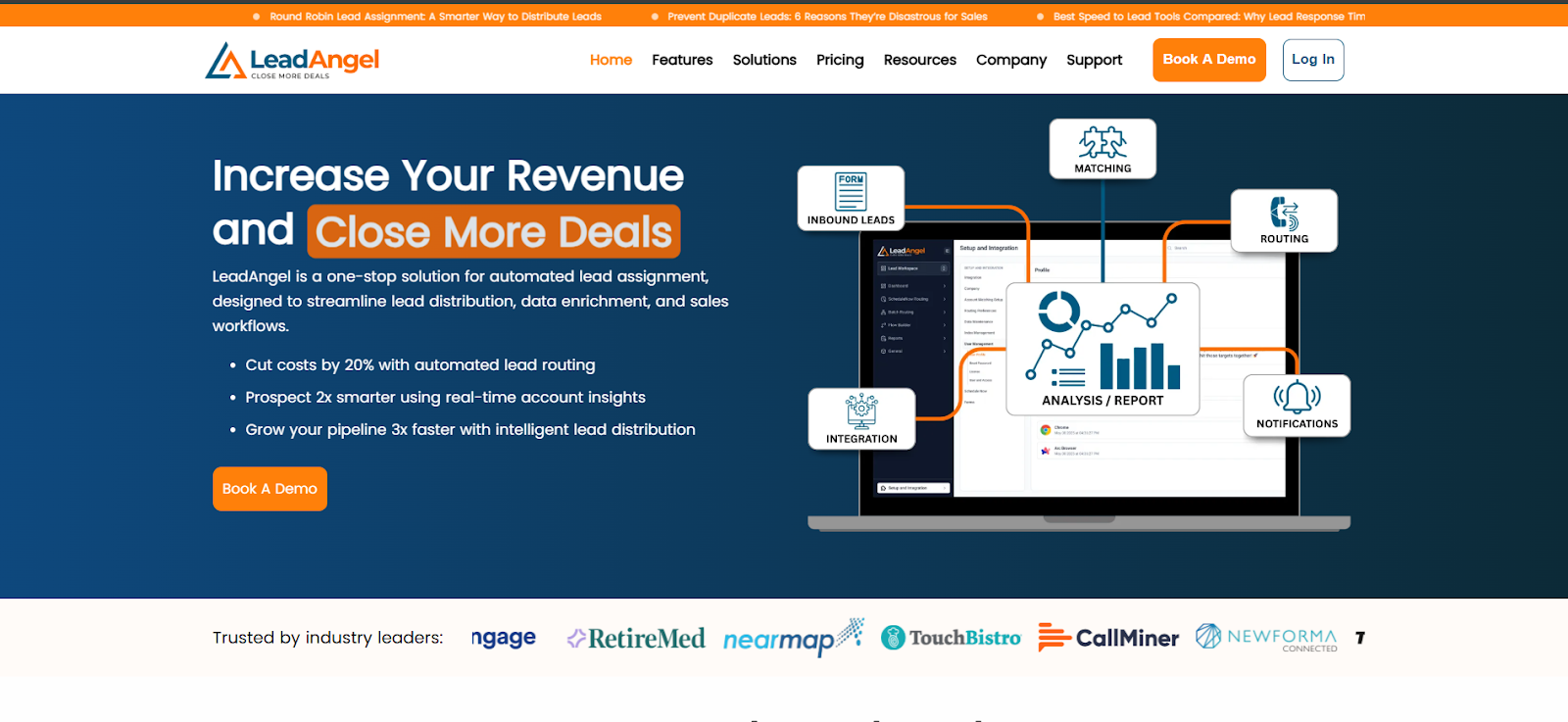
LeadAngel strengthens the foundation of sales compensation by ensuring every lead, account, and opportunity is accurately matched and assigned. With clean data and precise ownership tracking, it helps teams avoid disputes and ensures commissions are based on reliable, real-time information.
By automating lead routing and eliminating duplicates, it creates a system where performance is clearly tied to the right sales reps, making compensation processes smoother and more trustworthy.
Standout features:
Pros
Cons
Successful compensation tools don’t just calculate, they help motivate your team and optimize revenue outcomes.
When choosing a platform, consider:
1. Real-Time Tracking & Dashboards: Provides instant, live visibility into sales targets, commissions, and earnings progress. Reps and managers can track performance in real time, make informed decisions, and stay motivated to hit goals.
2. Automation & Calculations: Automatically calculates commissions and payouts based on predefined rules. Eliminates manual spreadsheet work, reduces errors, ensures consistent, accurate results, and saves time for sales and finance teams.
3. Integrations: Seamlessly connects with CRM, ERP, and payroll systems to sync data automatically. Ensures accuracy, reduces duplicate work, and provides a unified source of truth across your sales and finance tools.
4. Plan Modeling Tools: Allows admins to build, simulate, and test complex compensation structures without coding. Supports tiered plans, accelerators, and variable payouts while optimizing for performance and cost efficiency.
5. Rep-Friendly Interfaces: Provides a clear, intuitive view of how reps earn commissions. Reps can easily understand targets, payouts, and incentives, reducing confusion and disputes and improving engagement and motivation.
The best sales compensation software for your business depends on your team size, the complexity of your compensation plans, and your budget. For most companies in 2026, Driven stands out with its AI-powered planning, automation, and transparency that truly drives sales performance. If you’re ready to simplify commissions and motivate your sales team, book a demo with Driven or request a free compensation audit today to see the impact for yourself.
Spreadsheets are error-prone, time-consuming, and hard to scale. Compensation software improves accuracy, saves time, and reduces disputes with automated calculations.
Sales compensation software is ideal for businesses with commission-based sales teams, including startups, SMBs, SaaS companies, and large enterprises.
AI analyzes performance, targets, and payout data to recommend optimized compensation plans that motivate reps while keeping costs predictable.
Yes, most modern platforms integrate with CRMs like Salesforce and HubSpot to sync sales data automatically and ensure accurate commission calculations.
Pricing varies by provider and team size. Some tools start around per-user pricing, while advanced platforms like Driven offer custom pricing based on needs.
.png)


.png)