Sales compensation plans do more than pay people; they shape behaviour, drive revenue, and define culture. Get the plan right, and your sales team is aligned, motivated, and chasing the numbers that actually matter. Get it wrong, and you'll find yourself dealing with disputes, disengaged reps, and revenue targets that feel like a moving target.
In 2026, building a compensation plan has become significantly more complex and more strategic. The rise of recurring revenue models, hybrid sales teams, AI-driven forecasting, and revenue operations has changed what "good" looks like. This guide walks you through every step of building a modern sales compensation plan that performs.
What Is a Sales Compensation Plan?
A sales compensation plan is a structured framework that defines how sales employees are rewarded based on their performance. At its core, it answers one question: what do we pay people for, and how much?
A typical plan includes:
Base salary: the guaranteed fixed income
Commission structure: variable pay tied to performance
Bonuses: one-time or periodic rewards for hitting specific targets
Quotas: the performance thresholds that trigger commissions
KPIs and metrics: the behaviors and outcomes being measured
Accelerators: higher commission rates for overperformance
A well-designed plan drives profitable growth. A poorly designed one drives the wrong behaviours, or drives your best reps out the door.
Why Sales Compensation Plans Matter More Than Ever in 2026
The sales landscape has shifted. Buyers are more informed, sales cycles are longer, and revenue operations now spans across marketing, sales, and customer success. Compensation plans need to keep up.
Modern sales organizations face new realities:
Recurring revenue models require rewarding renewals and retention, not just new logos
Multi-channel sales mean reps operate across inbound, outbound, and partnerships simultaneously
Team-based selling demands shared accountability, not just individual performance
Customer expansion revenue is often where the real growth happens, but traditional plans ignore it
AI-driven forecasting makes it possible to set smarter, data-backed quotas
If your compensation plan is still built around a simple "close the deal, earn a percentage" model, you're incentivising the wrong behaviours for the business you're running today.
An effective plan helps you:
Increase sales productivity
Reduce payout disputes and shadow accounting
Improve rep retention and satisfaction
Align sales behavior directly with company goals
Forecast revenue with greater confidence
Sales Compensation Cycle
A well-structured sales compensation cycle helps businesses create fair, motivating, and performance-driven incentive plans. From defining business objectives and sales roles to setting quotas, tracking performance, and automating commission management, each step ensures compensation aligns with company goals while driving revenue growth and sales team success.
Step 1: Define Your Business Goals
Every compensation plan should start with strategy, not spreadsheets. Before you touch a formula, define what the business needs to achieve in the next 12 months.
Common business goals that shape compensation include:
Growing new customer acquisition (ARR/MRR)
Improving upsell and cross-sell revenue
Reducing customer churn
Shortening average sales cycles
Expanding into new markets or segments
Improving deal profitability, not just volume
Your compensation structure should directly reinforce these goals. If your priority is retention but your plan only rewards new deals, you're creating a misalignment that will hurt you, and your reps won't even know why. We cover this in detail in our guide on how to align sales compensation with revenue goals.
Step 2: Identify Sales Roles and Responsibilities
Not all salespeople do the same job, and they shouldn't be compensated the same way. Before designing a structure, map out your sales roles and define what success looks like for each one.
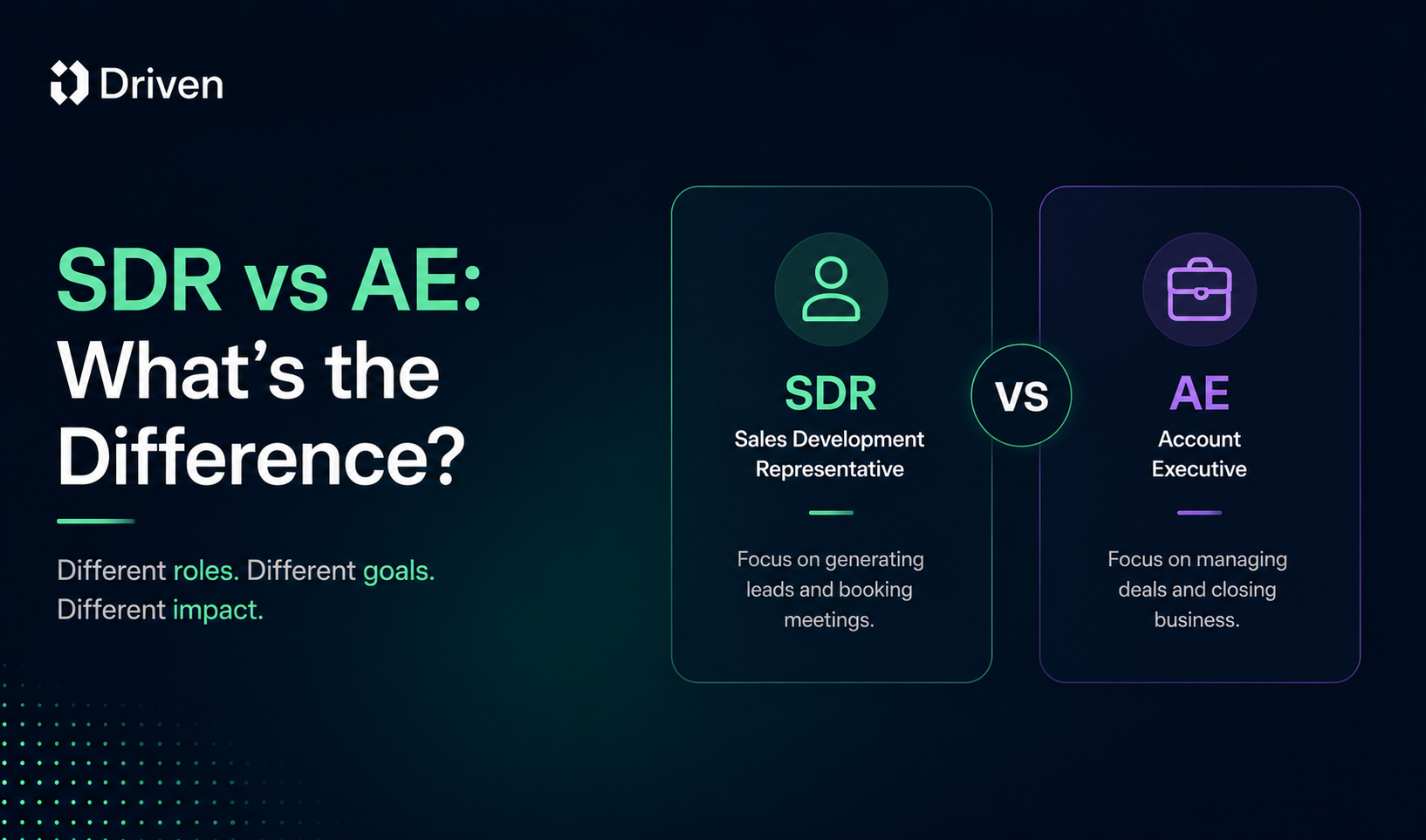
Sales Development Representatives (SDRs): SDRs focus on top-of-funnel activity, prospecting, outreach, and booking qualified meetings. Their comp should reward pipeline creation and meeting-to-opportunity conversion, not closed revenue.
Account Executives (AEs): AEs own the deal. Their compensation should be heavily performance-weighted, with commission tied directly to closed ARR or deal value. Accelerators and overachievement bonuses are particularly effective here.
Customer Success Managers (CSMs): CSMs protect and grow existing revenue. Compensation should reward net revenue retention, expansion revenue, and renewal rates, not new business.
Account Managers: Often sitting between AE and CSM, account managers handle upselling and relationship management within existing accounts. Their plan should blend expansion commission with retention metrics.
Each role needs a compensation structure aligned to what it controls. Paying an SDR on closed revenue, or an AE on customer satisfaction, creates confusion and frustration.
Step 3: Choose the Right Compensation Structure
There's no one-size-fits-all model. The right structure depends on your sales motion, revenue model, and team dynamics. Here are the most common options and when to use them.
Base Salary + Commission
The most common structure for B2B sales teams. Reps receive a stable base income with variable commission tied to performance.
Best for: SaaS, mid-market, and enterprise sales
Typical split: 50/50 or 60/40 base-to-variable ratio
Why it works: Provides income security while maintaining strong performance incentives
Commission-Only
Reps earn entirely based on what they sell, with no guaranteed base.
Best for: Independent agents, channel partners, affiliate-style arrangements
Risk: Higher turnover, particularly during slow periods or ramp time
Tiered Commission
Commission rates step up once reps hit certain performance thresholds. A rep might earn 5% on revenue up to quota, then 8% beyond it.
Best for: High-growth teams where overperformance needs to be aggressively rewarded
Why it works: Creates strong motivation to push past quota, not just reach it
Profit-Based Compensation
Commission is calculated on margin rather than total revenue, rewarding reps for protecting deal quality and avoiding discount-heavy closes.
Best for: Businesses with variable product margins or pricing flexibility
Territory-Based Compensation
Pay is structured around a geographic or account-based territory, reflecting the opportunity available to each rep.
Best for: Large enterprise teams with clearly defined territories
Step 4: Set Realistic Sales Quotas
Quota setting is where many compensation plans fall apart. Set quotas too high, and you demoralise the team. Set them too low, and you leave revenue on the table. The goal is quotas that stretch performance without breaking it.
Good quotas are:
Data-driven: based on historical performance, market size, and pipeline data
Achievable: typically, 60–70% of reps should be able to hit quota in a given period
Transparent: reps should understand exactly how their quota was determined
Consistent: methodology should be applied fairly across comparable roles and territories
Common quota metrics by role:
AEs: Monthly or quarterly ARR/MRR closed
SDRs: Qualified meetings booked, pipeline created
CSMs: Net revenue retention, renewals completed, expansion revenue
AMs: Upsell revenue, retention rate
One of the most common mistakes is setting quotas in isolation, without connecting them to commission thresholds, accelerators, and real pipeline data. When quota-setting and compensation logic are managed separately, errors multiply fast.
How Driven helps: Driven's AI-powered platform connects quota logic directly to your commission structure, so when quotas change, compensation calculations update automatically. No more manual recalculation across spreadsheets.
Step 5: Define KPIs and Performance Metrics
In 2026, the best compensation plans are built around a broader set of performance signals, not just closed revenue. Depending on your role and business model, you might track:
Revenue Metrics
Monthly Recurring Revenue (MRR)
Annual Recurring Revenue (ARR)
Average Deal Size
Pipeline Value Created
Activity Metrics
Calls or emails sent
Meetings booked
Opportunities advanced per stage
Customer Metrics
Net Revenue Retention (NRR)
Expansion Revenue
Customer Satisfaction (CSAT/NPS)
Churn Rate
Efficiency Metrics
Sales Cycle Length
Win Rate
Lead-to-Opportunity Conversion
Selecting the right metrics matters. Incentivising the wrong KPIs leads to gaming, reps optimising for the number they're paid on rather than the outcome the business needs.
Step 6: Include Accelerators and Incentives
The best-designed compensation plans don't just reward hitting quota, they create meaningful rewards for exceeding it. Accelerators and incentive programmes maintain motivation throughout the year and reward your top performers proportionally.
Accelerators automatically increase commission rates once a rep crosses certain performance thresholds. For example:
100%+ quota attainment → commission rate increases from 8% to 12%
120%+ attainment → rate increases to 16%
Additional incentives that work well in modern sales teams:
Quarterly performance bonuses for consistent attainment over multiple periods
President's Club recognition for top annual performers
SPIFFs (Sales Performance Incentive Funds), short-term contests tied to specific products, segments, or behaviors
Team-based incentives for collaborative selling motions
Retention bonuses rewarding CSMs for hitting renewal targets
The key is to ensure accelerators are modelled carefully. Misconfigured accelerators can be extremely costly or fail to motivate at all if the thresholds and rates aren't calibrated to your actual sales data.
Step 7: Build Transparency Into the Plan
A compensation plan that reps don't fully understand is a plan that won't work. Confusion around payout calculations breeds distrust, fuels disputes, and distracts your team from selling.
Your plan documentation should clearly address:
How commission is calculated (the exact formula)
When payouts are processed
How quota attainment is measured
What happens with split deals, partial closes, or clawbacks
How disputes are raised and resolved
Eligibility windows (e.g., deals must close by end of quarter to count)
Transparency isn't just good governance; it's a retention tool. Reps who trust their pay are reps who stay.
How Driven helps: Every rep on the Driven platform gets their own personal dashboard showing real-time earnings, quota progress, and commission breakdowns. No more spreadsheet requests, no more "shadow accounting", and no more end-of-month surprises.
Step 8: Automate Commission Tracking
If you're still running commissions through Excel or Google Sheets, you're accepting a level of operational risk that grows with every new hire. Manual calculations introduce errors. Manual processes slow down payouts. And when reps find mistakes, trust erodes quickly.
Modern commission management tools automate:
Commission calculations based on live CRM data
Quota attainment tracking in real time
Payout approvals and audit trails
Dispute reviews and resolution workflows
Management reporting and compliance documentation
The operational cost of spreadsheet-based commission management is easy to underestimate until you're three days into a monthly close cycle trying to reconcile 40 deals across 15 reps.
How Driven helps: Driven connects natively to HubSpot and Salesforce to pull real-time deal data and calculate commissions automatically. What used to take days takes hours. And with full audit trails built in, finance teams stay compliant without the manual burden.
Common Mistakes to Avoid
Even well-intentioned plans run into problems. Here are the most common pitfalls to watch for:
Overcomplicated structures: If a rep can't explain their own comp plan, it's too complex. Complexity kills motivation and creates disputes, and the damage is often invisible until your best reps start underperforming or leaving. Start simple, then add nuance only where it's genuinely needed.
Misaligned incentives: Paying for volume when you need margin. Paying for meetings when you need closed revenue. Paying for new logos when you need retention. Make sure your commission triggers align with what actually creates business value.
Ignoring customer retention: In recurring revenue businesses, keeping a customer is often worth more than acquiring a new one. If your plan only compensates for acquisition, you're leaving renewal revenue and retention behaviour unincentivised.
Unrealistic quotas: If less than 50% of your team consistently hits quota, your quotas are broken. Aggressive targets that feel unachievable don't push performance, they trigger disengagement and attrition.
Lack of real-time visibility: Reps shouldn't have to wait until month-end to know what they've earned. Without visibility, they disengage from the comp plan entirely. Real-time dashboards keep the incentive top of mind.
Example: SaaS Account Executive Compensation Plan
Here's what a well-structured AE compensation plan might look like for a growth-stage SaaS company:
This structure provides income stability, strong performance incentives, meaningful overachievement rewards, and a small but visible incentive for maintaining customer relationships post-close.
Best Practices for Sales Compensation Plans in 2026
Keep it simple: A plan reps understand is a plan that works. If it takes more than five minutes to explain, simplify it.
Align compensation to revenue goals: Every commission trigger should map to a business outcome. If you're rewarding a behaviour that doesn't drive profitable growth, remove it.
Review plans regularly: Market conditions change. Sales strategies evolve. A plan that worked in Q1 may be misaligned by Q3. Build in quarterly reviews to keep the plan current.
Use data, not gut feel, for quotas: Base quota decisions on real pipeline data, historical conversion rates, and market opportunity, not round numbers or wishful thinking.
Prioritize transparency: Real-time visibility into earnings and progress is no longer a nice-to-have. It's a baseline expectation for modern sales teams.
Trends Shaping Sales Compensation in 2026
The most forward-thinking sales organizations are already adapting to these emerging dynamics:
AI-powered commission forecasting: predictive models that help finance and RevOps teams model compensation cost against projected performance before the quarter starts
Real-time compensation dashboards: reps tracking their earnings live, day by day
Revenue operations alignment: compensation planning owned jointly by Sales, Finance, and RevOps, not just sales leadership
Customer retention incentives: CSMs and AEs both accountable for long-term customer health
Hybrid compensation models: blending individual performance with team outcomes
Automated dispute resolution: AI reviewing deal comments and flagging discrepancies, reducing the manual load on finance teams
The businesses pulling ahead are those treating compensation planning as a strategic, data-driven function, not an annual administrative task.
Final Thoughts
A great sales compensation plan doesn't just pay people. It tells them what matters, shapes how they spend their time, and ultimately determines what kind of revenue your business builds. In 2026, building that plan requires more than a well-formatted spreadsheet. It requires clear strategic alignment, role-specific design, data-driven quotas, and the operational infrastructure to run it accurately and transparently at scale. If you want to go deeper on the design side, our guide on how to design a sales compensation plan that drives peak performance is a natural next step.
With platforms like Driven, businesses can automate commission calculations, provide real-time earning visibility, and simplify compensation management through AI-powered workflows. When compensation is transparent and aligned with business objectives, it becomes a powerful driver of performance instead of an operational burden. Ready to modernise your sales compensation strategy? Book a demo with Driven and simplify compensation without spreadsheet complexity.
Frequently Asked Questions
What is a sales compensation plan?
A sales compensation plan is a structured framework that outlines how sales representatives are paid, including base salary, commissions, bonuses, quotas, and performance incentives. Its purpose is to align sales behavior with business objectives.
How often should a sales compensation plan be reviewed?
Most companies should review their sales compensation plans at least annually. However, fast-growing businesses or organizations undergoing significant changes may benefit from quarterly reviews to ensure incentives remain aligned with business goals.
What is the ideal commission structure for a sales team?
There is no universal commission structure. The best model depends on your sales process, revenue model, and business objectives. Common structures include base salary plus commission, tiered commissions, profit-based commissions, and team-based incentives.
How do you set realistic sales quotas?
Sales quotas should be based on historical performance, pipeline data, market opportunity, and territory potential. As a general benchmark, around 60–70% of sales reps should be able to achieve their quota if targets are set appropriately.
Why is commission tracking software important?
Commission tracking software helps automate calculations, reduce payout errors, improve transparency, and provide real-time visibility into earnings. It also saves significant time for finance, sales operations, and revenue teams.
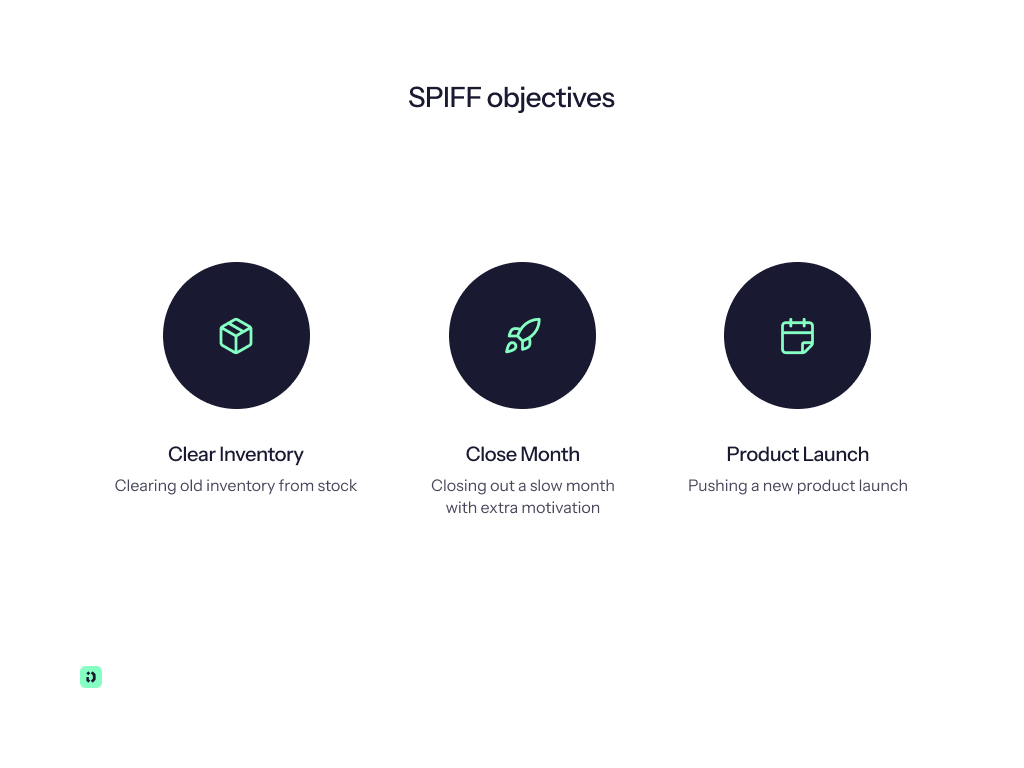
A SPIFF (Sales Performance Incentive Fund) is a short-term cash incentive tied to a specific, immediate action, usually selling a particular product, hitting a short-window target, or pushing a specific behavior the company wants right now.
SPIFFs are built for speed. They're announced, run for a defined stretch, usually days or weeks, and paid out fast, sometimes even same-day or same-week, specifically because the immediacy is what makes them effective. A SPIFF isn't meant to replace commission, it's meant to temporarily redirect a rep's attention toward something specific: clearing old inventory, pushing a new product launch, or closing out a slow month with extra motivation.
A draw in sales compensation is a guaranteed advance payment made to a salesperson against their future commissions. This means it is an advance against future commission, paid out on a regular schedule, usually monthly, so reps have predictable income before their pipeline turns into closed deals and actual commission.
Companies use draws to protect new reps' income during ramp. A brand-new AE with a three-month sales cycle isn't going to close anything in week two, but they still need to pay rent. A draw bridges that gap.
For sales professionals, understanding draw type matters because it affects real take-home pay, not just cash flow timing. Two reps can be offered the exact same dollar amount as a "draw" and end up with completely different financial outcomes, depending on which type it actually is.
Before comparing pay, it helps to be clear on what each role is actually on the hook for. They sit on the same team, but they're not doing the same job.
What Does an SDR Do?
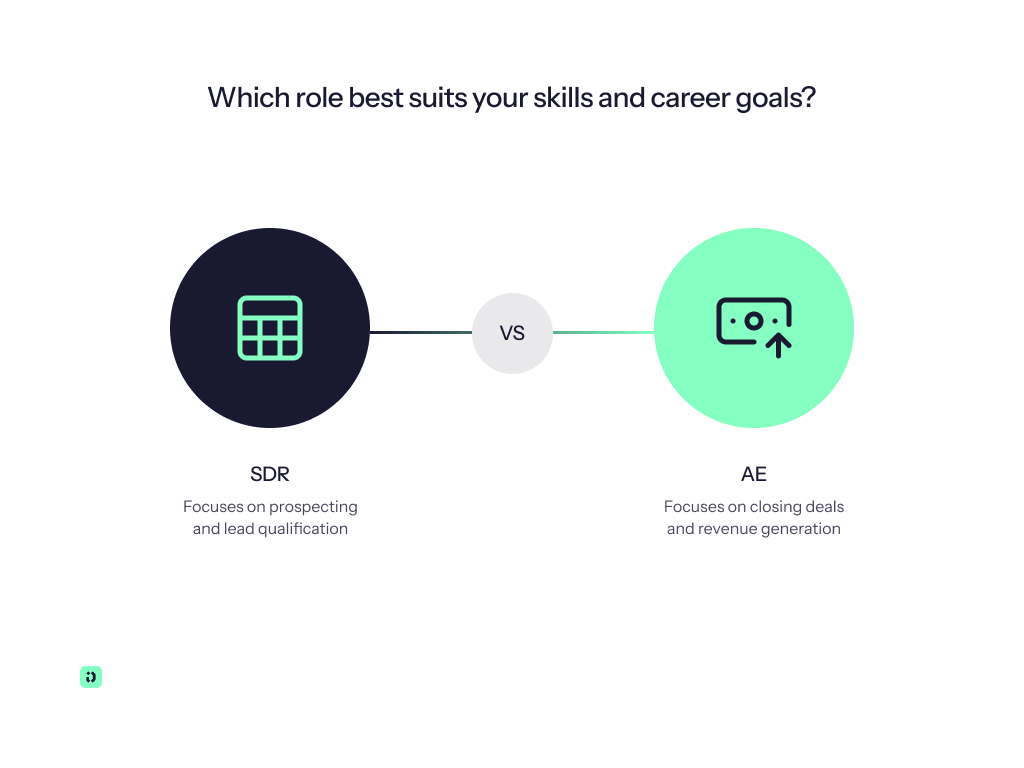
SDRs own the top of the funnel. Their day is built around prospecting, outbound outreach, and lead qualification, all pointed at one outcome: booking meetings and creating a pipeline for AEs to work. SDRs generally aren't responsible for closing deals. Their job ends where the AE's job begins.
What Does an AE Do?
AEs own the deal once it's qualified. That means running discovery calls, delivering product demos, negotiating terms, and closing the deal. AEs carry direct revenue ownership, and in a lot of organizations, they also handle account management once the deal is signed. The pressure sits differently here: an AE's number is measured in dollars closed, not meetings booked.

.png)


.avif)



.png)
.png)
.png)
.png)








.svg%201.avif)