



TL;DR for Busy Teams

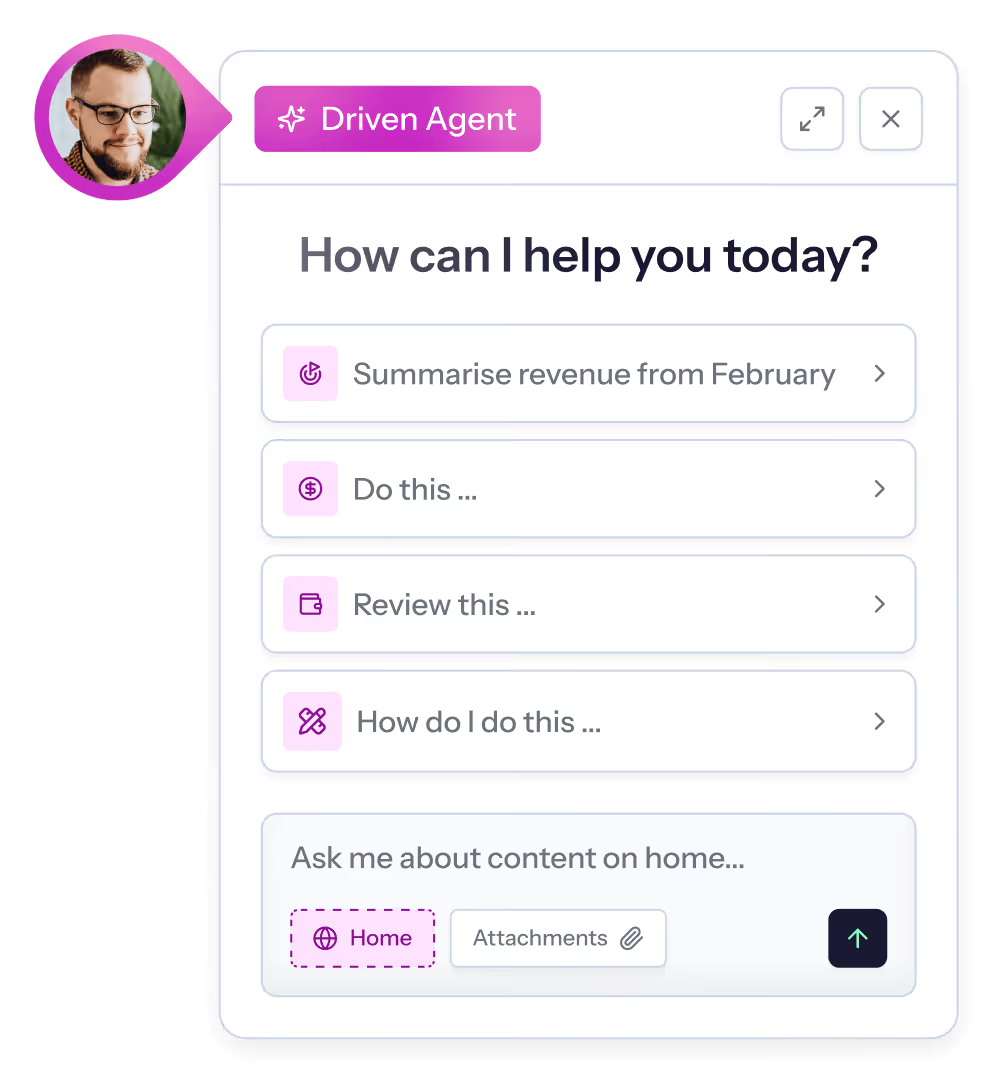
Choose Driven if you want the platform to do the work. An AI agent designs comp plans from a plain-language prompt, reviews disputes and flags anomalies before they hit payroll, nudges reps toward revenue, and builds individual dashboards on its own. You want to be live in hours, you have a lean RevOps or finance team, and you would rather not keep a scripting specialist or an outside consultant on call every time a plan changes. This is where Driven is the clear pick.
Choose Varicent if you run compensation at enterprise scale and depth. If you have thousands of payees across multiple territories, currencies, and regulatory regimes, inherited plans with years of edge cases, and ASC 606 and audit requirements that leave no room for error, Varicent is genuinely one of the best tools you can buy. It is a Gartner Magic Quadrant and Forrester Wave Leader for good reason. With a capable comp team or consulting budget behind it, its flexibility and governance are hard to beat, and for many large enterprises it remains the right and safer call. Driven is the newer, more autonomous platform; Varicent is the proven enterprise system of record.
Compare Features
Compare Driven features with Varicent
Agent-designed comp plans


Autopilot dispute resolution
24/7 AI rep support
Proactive revenue nudges
Natural language plan updates
AI comp plan consult
Automated commission calculations
Autopilot payout reviews
Automated management reports
Real-time commission tracking
Rep performance dashboards
Plan performance insights
AI-generated performance suggestions
Which sales commission platform is right for you?
Varicent has earned its reputation. It was named a Leader in the 2026 Gartner Magic Quadrant for Sales Performance Management and a Leader in the Forrester Wave for Incentive Compensation, and it holds a 4.5 rating across nearly 600 G2 reviews. Reviewers consistently praise the same things: the flexibility to model almost any compensation structure you can imagine, a strong Salesforce integration, deep territory and quota planning, and audit trails that hold up in a finance review. Pitney Bowes reported cutting administrative headcount by 70 percent after moving off spreadsheets. For enterprises with genuinely complex, multi-tier plans and the resources to run them, Varicent is a serious and capable choice, and often the right one.
That capability does come with a cost of ownership, and it is worth understanding before you buy either tool. Implementation complexity is the most common theme in Varicent's reviews, and many teams say they needed outside consultants to get the configuration right. Plan changes typically require an admin with scripting skills, so business teams cannot always self-serve. And because payouts often run in scheduled calculation batches rather than live, some reps keep their own spreadsheets to track what they think they are owed. None of this makes Varicent a weak product. It makes it an enterprise platform that rewards teams who can invest in it, and a heavier lift for teams who cannot.
Driven is built for that second group. The AI agent designs comp plans directly from a plain-language prompt, so changing a rate does not mean filing a ticket or booking a consultant. It reviews disputes and payout anomalies on its own and surfaces the ones that need a human. It sends each rep personalised nudges and builds individual dashboards without anyone configuring them, and when a rep has a commission question at 9pm, the agent answers. The trade-off is honest: Driven is the newer platform and does not yet carry Varicent's decade of enterprise deployments or its depth for the most intricate legacy plans. What it offers instead is operational work done autonomously, out of the box, without a specialist behind it.
So the choice is less about which tool is better and more about which shape fits you. Both calculate commissions, automate approvals, sync with your CRM, and give you the audit trail. If you are a large enterprise with deep complexity, thousands of payees, and a team ready to configure and maintain a powerful system, Varicent is likely the stronger fit. If you are a leaner or faster-moving team that wants the platform itself to design, review, nudge, and answer without waiting on people, that is exactly what Driven was built to do.
That capability does come with a cost of ownership, and it is worth understanding before you buy either tool. Implementation complexity is the most common theme in Varicent's reviews, and many teams say they needed outside consultants to get the configuration right. Plan changes typically require an admin with scripting skills, so business teams cannot always self-serve. And because payouts often run in scheduled calculation batches rather than live, some reps keep their own spreadsheets to track what they think they are owed. None of this makes Varicent a weak product. It makes it an enterprise platform that rewards teams who can invest in it, and a heavier lift for teams who cannot.
Driven is built for that second group. The AI agent designs comp plans directly from a plain-language prompt, so changing a rate does not mean filing a ticket or booking a consultant. It reviews disputes and payout anomalies on its own and surfaces the ones that need a human. It sends each rep personalised nudges and builds individual dashboards without anyone configuring them, and when a rep has a commission question at 9pm, the agent answers. The trade-off is honest: Driven is the newer platform and does not yet carry Varicent's decade of enterprise deployments or its depth for the most intricate legacy plans. What it offers instead is operational work done autonomously, out of the box, without a specialist behind it.
So the choice is less about which tool is better and more about which shape fits you. Both calculate commissions, automate approvals, sync with your CRM, and give you the audit trail. If you are a large enterprise with deep complexity, thousands of payees, and a team ready to configure and maintain a powerful system, Varicent is likely the stronger fit. If you are a leaner or faster-moving team that wants the platform itself to design, review, nudge, and answer without waiting on people, that is exactly what Driven was built to do.

.avif)