How to Design a Sales Compensation Plan That Drives Peak Performance

.jpg)
TL;DR
Sales teams are the backbone of any revenue-driven organization, but even the most talented reps can underperform without the right incentives. A well-crafted sales compensation plan doesn’t just pay your team; it motivates, aligns, and drives consistent, high-level performance. Too often, companies rely on outdated spreadsheets, unclear quotas, or one-size-fits-all commission structures, leaving reps frustrated and sales results inconsistent.
In today’s competitive market, designing a compensation plan that balances fairness, transparency, and ambition is essential. This guide walks you through a tactical approach to building plans that reward the right behaviors, keep reps motivated, and ultimately help your business hit and exceed its revenue goals.
Why a Strong Sales Compensation Plan Matters
A well-designed sales compensation plan does more than just pay your reps since it aligns individual effort with company goals, drives motivation, and helps retain top performers. Poorly structured plans, by contrast, can create confusion, demotivate teams, and even lead to revenue loss. Effective plans balance base salary, commissions, bonuses, and incentives in a way that rewards achievement without causing burnout or conflict.
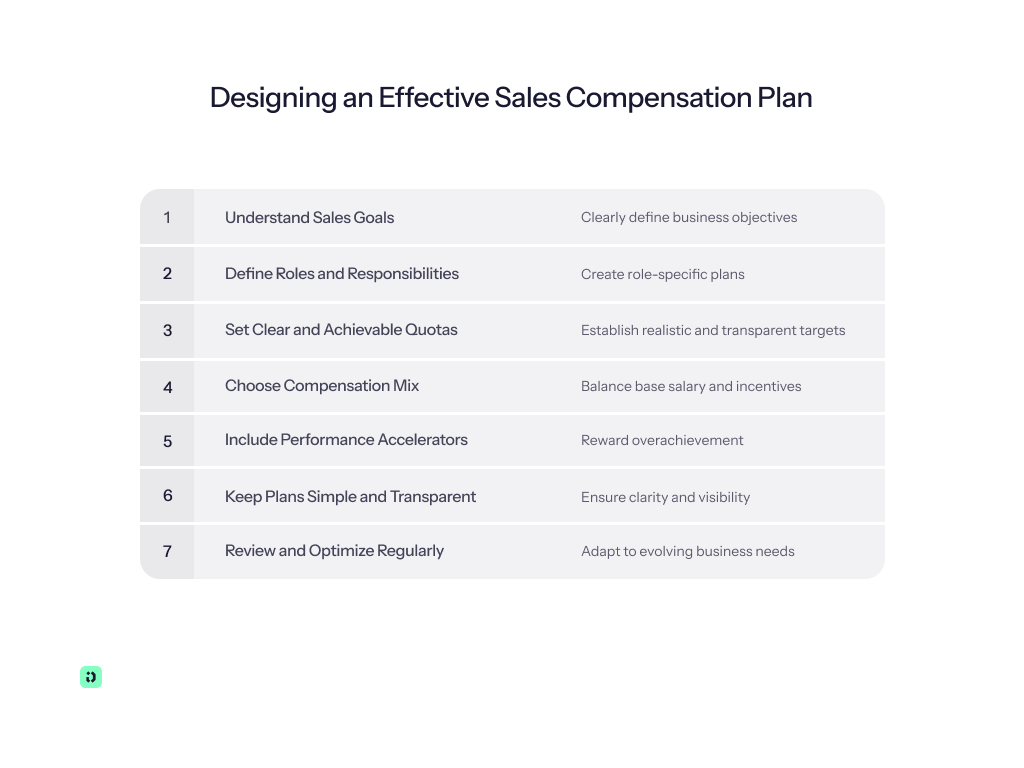
Step 1: Understand Your Sales Goals
Before designing a sales compensation plan, it’s crucial to clearly define your business objectives. Without a clear understanding of what your company is trying to achieve, even the most generous commission plan can fail to motivate the behaviors that drive revenue. Start by identifying key goals such as:
- Revenue growth targets: Are you focused on increasing overall sales revenue, growing specific product lines, or boosting recurring revenue?
- Market expansion goals: Are you aiming to penetrate new geographic regions, industries, or customer segments?
- New customer acquisition vs. upsell strategies: Should your reps prioritize acquiring new clients or expanding business with existing accounts?
When your compensation plan is aligned with these goals, it acts as a behavioral lever, guiding your sales team to focus on the activities that matter most. For example, if your priority is acquiring new customers, structuring a higher commission for new business closes ensures reps are motivated to pursue fresh opportunities rather than just servicing existing accounts.
Step 2: Define Roles and Responsibilities
Sales teams are rarely homogeneous. A one-size-fits-all compensation plan can create confusion, resentment, and underperformance. To maximize impact, create role-specific plans based on responsibilities and expected outcomes:
- Account Executives (AEs): Focused primarily on closing deals and generating new revenue. Their plans often rely heavily on commissions and milestone bonuses.
- Customer Success Managers (CSMs): Responsible for renewals, upsells, and long-term customer retention. Incentives here often reward recurring revenue and account expansion.
- Sales Development Representatives (SDRs): Typically drive lead generation and qualified opportunities. Their compensation might be a mix of base pay plus bonuses for meeting specific metrics, such as number of qualified leads or demo bookings.
By tailoring plans to specific roles, companies can ensure fairness, clarity, and motivation while minimizing conflicts and disputes between team members with different job functions.
Step 3: Set Clear and Achievable Quotas
Quotas are one of the most important motivational tools in a sales compensation plan, but only if they are realistic, challenging, and transparent:
- Realistic: Use historical performance data and market analysis to set achievable quotas. Unrealistic quotas can demoralize reps and lower productivity.
- Challenging: The quota should push reps to perform beyond their comfort zone, encouraging growth and higher revenue.
- Transparent: Clearly communicate quotas, expectations, and progress. Provide regular updates so reps know exactly where they stand relative to targets.
Modern compensation tools, like Driven, allow sales leaders to create data-backed quotas that balance ambition and fairness. This ensures reps remain motivated without risking burnout or frustration.
Step 4: Choose the Right Compensation Mix
The compensation mix defines how much of a rep’s pay is fixed (base salary) versus variable (commissions, bonuses). Choosing the right mix is essential to balance stability with performance incentives:
- Base salary: Provides financial stability and security for reps, reducing stress and creating loyalty.
- Commissions: Reward performance and achievement of sales goals, directly tying pay to results.
- Bonuses & SPIFFs: Incentivize short-term wins, strategic behaviors, or urgent priorities, such as launching a new product.
A 50/50 or 60/40 split between base salary and variable pay is common, but the optimal ratio depends on industry standards, company size, and typical sales cycle length. Properly balancing the mix ensures reps are both motivated and supported.
Step 5: Include Performance Accelerators
Performance accelerators are incentives that reward overachievement, encouraging top performers to exceed quotas. Some effective examples include:
- Tiered commission rates: e.g., 5% on sales up to quota, 8% for sales above quota.
- Milestone bonuses: Reward reps for hitting stretch targets or strategic objectives.
- Annual recognition programs: Celebrate high performers with awards, special perks, or leadership opportunities.
Incorporating accelerators fosters a culture of excellence, boosts morale, and helps retain your highest-performing reps.
Step 6: Keep Plans Simple and Transparent
Complex, opaque plans are demotivating and can cause confusion or disputes. To maximize clarity:
- Ensure plans are easy to understand, with clear payout formulas.
- Show reps exactly how their earnings are calculated.
- Offer real-time visibility into progress and commissions.
Platforms like Driven provide live dashboards that give reps instant insight into their performance and earnings. Transparent, easy-to-read dashboards reduce disputes, build trust, and keep sales teams engaged and focused.
Step 7: Review and Optimize Regularly
Sales environments are constantly evolving. Regularly reviewing your compensation plan ensures it:
- Aligns with evolving business goals as markets or strategies shift.
- Rewards the right behaviors that drive growth and revenue.
- Remains competitive to attract and retain top talent.
Using analytics from sales compensation software like Driven allows leaders to make data-driven adjustments, keeping plans motivating, fair, and aligned with business objectives.
Why Driven Helps You Design High-Performing Plans
Designing a sales compensation plan can be complex, especially as teams grow and plans become more intricate. Driven simplifies this process by combining AI-powered compensation planning with real-time automation and transparency, ensuring that your plan not only motivates reps but also drives measurable business outcomes. Here’s how Driven helps your organization succeed:
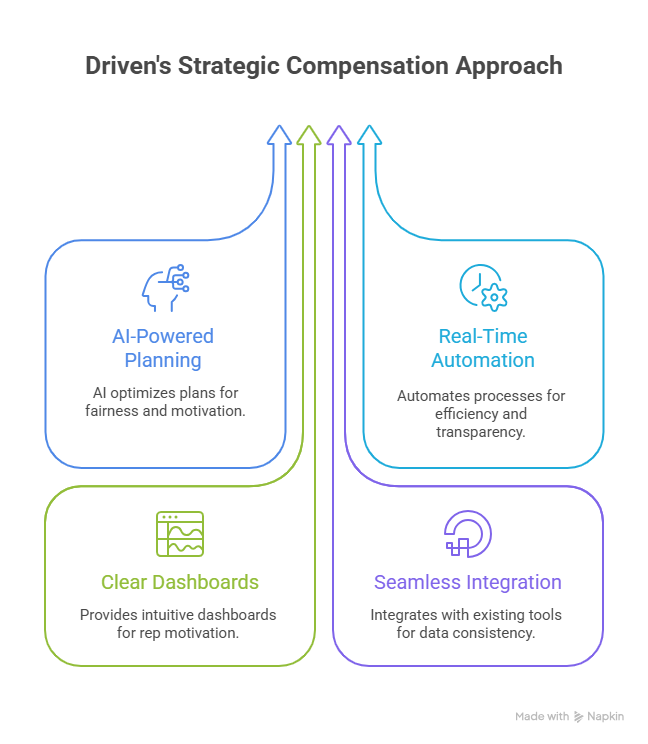
- Automatically model fair, motivating compensation plans
Driven’s AI analyzes historical sales performance, quotas, and payout structures to suggest optimized plans. This removes guesswork, ensures fairness across roles, and aligns incentives with the behaviors that matter most for your business. - Forecast quota achievement and payout impact
Finance and sales leaders can simulate different plan structures to see how quotas, accelerators, and variable pay will impact revenue and budget. This data-driven approach prevents overpayment or under-incentivizing and helps teams plan for sustainable growth. - Provide reps with clear, understandable dashboards
Transparency is key to motivation. With Driven, sales reps have access to intuitive dashboards showing real-time progress toward quotas, expected commissions, and performance trends. This clarity reduces disputes, builds trust, and empowers reps to focus on winning. - Integrate seamlessly with existing CRMs and sales tools
Driven works with your current tech stack, including Salesforce, HubSpot, and other sales and finance systems. Automatic data syncing eliminates manual entries, reduces errors, and keeps information consistent across platforms.
With Driven, your sales compensation plan becomes more than just a payroll mechanism; it transforms into a strategic lever for growth. By aligning compensation with company objectives, motivating reps effectively, and providing actionable insights for leadership, Driven helps you maximize sales performance, drive revenue, and retain top talent.
Conclusion
Designing a sales compensation plan that drives peak performance requires clarity, fairness, and alignment with company goals. By defining roles, setting achievable quotas, choosing the right mix, and incorporating accelerators, you motivate reps to consistently deliver their best.
With tools like Driven, your plans are easy to manage, transparent, and data-driven, empowering reps and leaders alike to achieve peak performance. Ready to design a sales compensation plan that truly drives results? Book a demo with Driven today and start building plans that motivate, reward, and grow your team.



See your comp plan, fully built in minutes

Frequently Asked Questions
About the author
Ludovic Diercxsens






Understanding SPIFFs, Bonuses, and Commissions
Ask a sales rep what's driving their next paycheck, and you'll often hear all three words used interchangeably: SPIFF, bonus, and commission. They get lumped together as "extra money for selling," but they're not the same thing, and treating them like they are leads to confused reps, inconsistent payouts, and comp plans nobody can actually explain.
A SPIFF is a short-term, targeted incentive. A bonus is a lump-sum reward tied to hitting a broader goal. A commission is the ongoing, formula-based pay tied directly to sales, the core of most sales comp plans, not an add-on to it.
This guide breaks down what each one actually means, when companies use them, how they're calculated, and how they stack together so you can build a comp plan where every payout has a clear reason behind it.

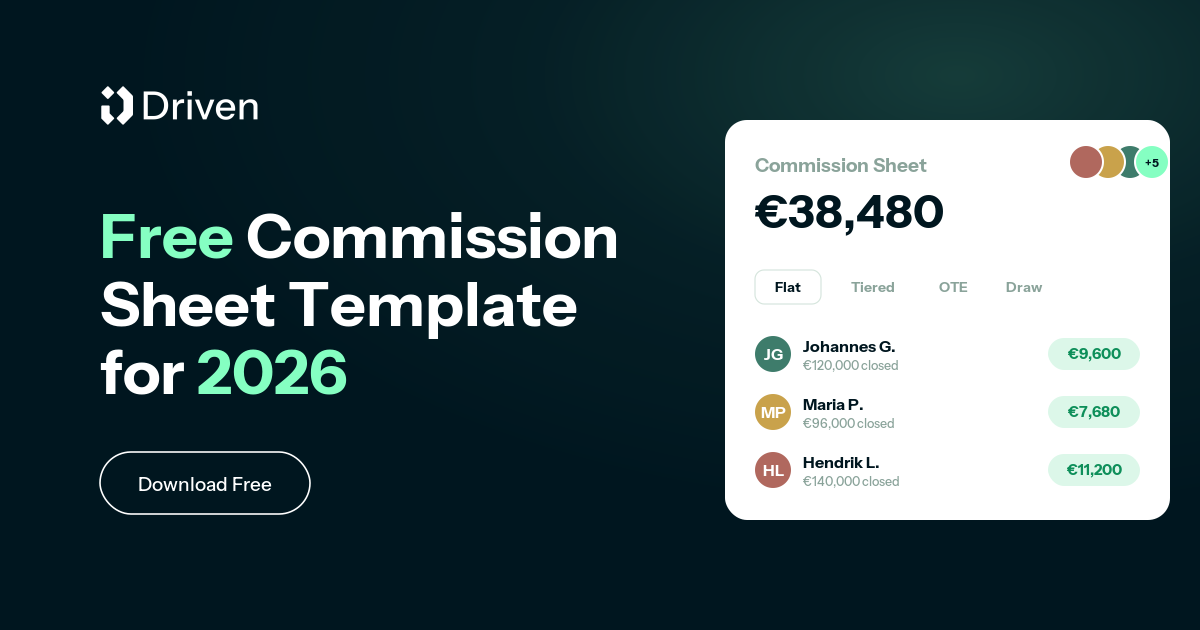
Free Commission Sheet Template: 8 Sales Commission Spreadsheets in One Excel File
Most commission plans don't fail because the idea is wrong. They fail because nobody modelled the numbers before rolling them out. A rate that looks generous on a slide turns into a payout you can't afford at 130% attainment, or an accelerator so flat that your best reps stop pushing the moment they hit quota.
So we built a free commission sheet template to fix that. It's one Excel file with eight ready-to-use sales commission spreadsheets, each structure on its own tab, each with live formulas and a filled-in sample row. Change a rate, a quota, or a revenue number and every payout updates instantly, and because everything lives in one workbook you can compare models side by side without juggling downloads.
Download the commission sheet template, or start for free and let Driven build the plan for you.

New to comp design? Start with our guide to sales compensation structure types, then model your pick here.


Non-Recoverable Draw vs. Recoverable Draw: What's the Difference?
New sales hires often get offered a "draw" against commission, and most sign the offer letter without knowing there are two very different types. That gap in understanding can mean thousands of dollars either staying in a rep's pocket or getting clawed back months later.
A draw is essentially an advance on future commission, designed to give reps steady income while they ramp up pipeline and close their first deals. But whether that advance is recoverable or non-recoverable determines something much bigger: whether it ever has to be paid back.
This guide breaks down what each draw type means, how they're calculated, when companies typically use each one, and the mistakes that turn a helpful ramp tool into a trust problem between reps and the company that hired them.



.svg%201.avif)