The Power of AI in Revenue Operations: Driving Efficiency and Business Growth

TL;DR
In today’s fast-paced business landscape, revenue operations (RevOps) has emerged as a critical function for organizations seeking to align sales, marketing, and customer success teams under a single strategy. While the goal of RevOps is straightforward—maximize revenue through efficiency and collaboration—the execution is often complex. Disconnected systems, manual processes, and fragmented data can create bottlenecks that hinder growth.
Enter artificial intelligence (AI). AI is transforming how companies approach RevOps by automating routine tasks, providing predictive insights, and enabling smarter decision-making. By leveraging AI, organizations can streamline operations, improve productivity, and ultimately drive sustainable revenue growth. In this guide, we explore the transformative power of AI in revenue operations and how businesses can harness it for maximum impact. Platforms like Driven.work are helping businesses unify revenue processes and leverage AI-driven insights for smarter decision-making.
Understanding Revenue Operations (RevOps)
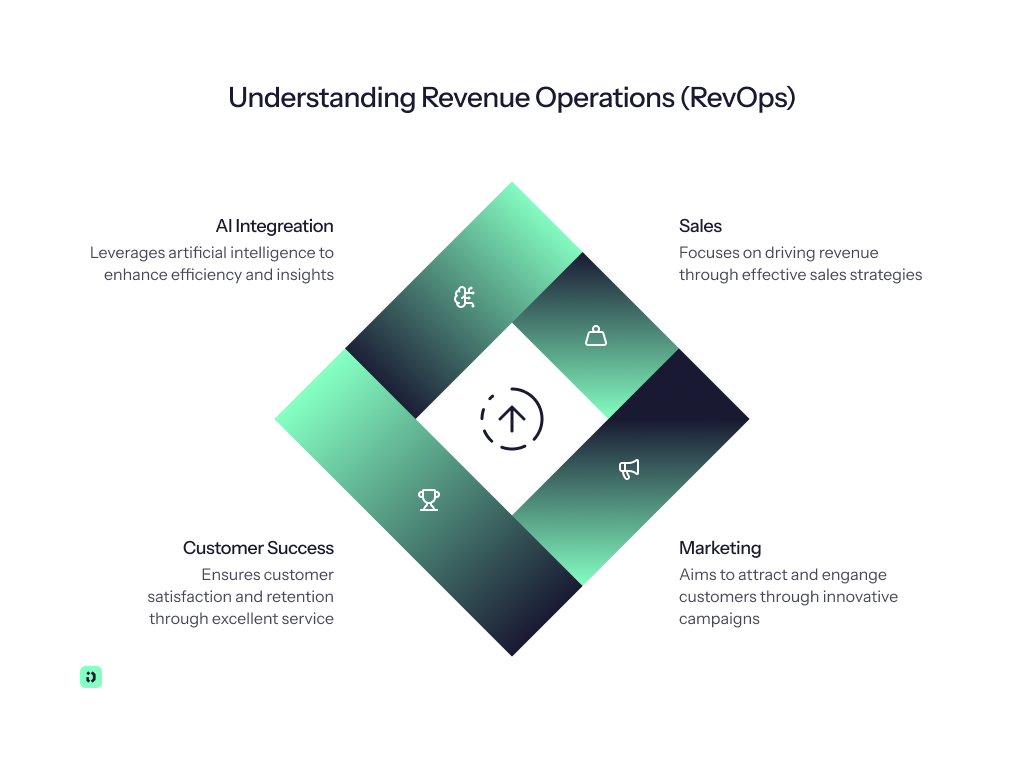
Revenue operations is a strategic approach to managing all revenue-generating functions in a business. Traditionally, sales, marketing, and customer success teams operate in silos, leading to inefficiencies, misaligned goals, and inconsistent customer experiences. RevOps aims to unify these departments under a single operational framework, ensuring that everyone works toward the same revenue objectives.
Key goals of RevOps include:
- Streamlining workflows and processes across departments.
- Improving revenue forecasting accuracy.
- Ensuring data consistency and accessibility.
- Aligning team incentives and performance metrics.
Without AI, RevOps teams face numerous challenges, including manual data entry, inconsistent reporting, and delayed decision-making. These inefficiencies can cost organizations both time and revenue. AI addresses these pain points by automating tasks and providing actionable insights in real time.
How AI is Transforming Revenue Operations
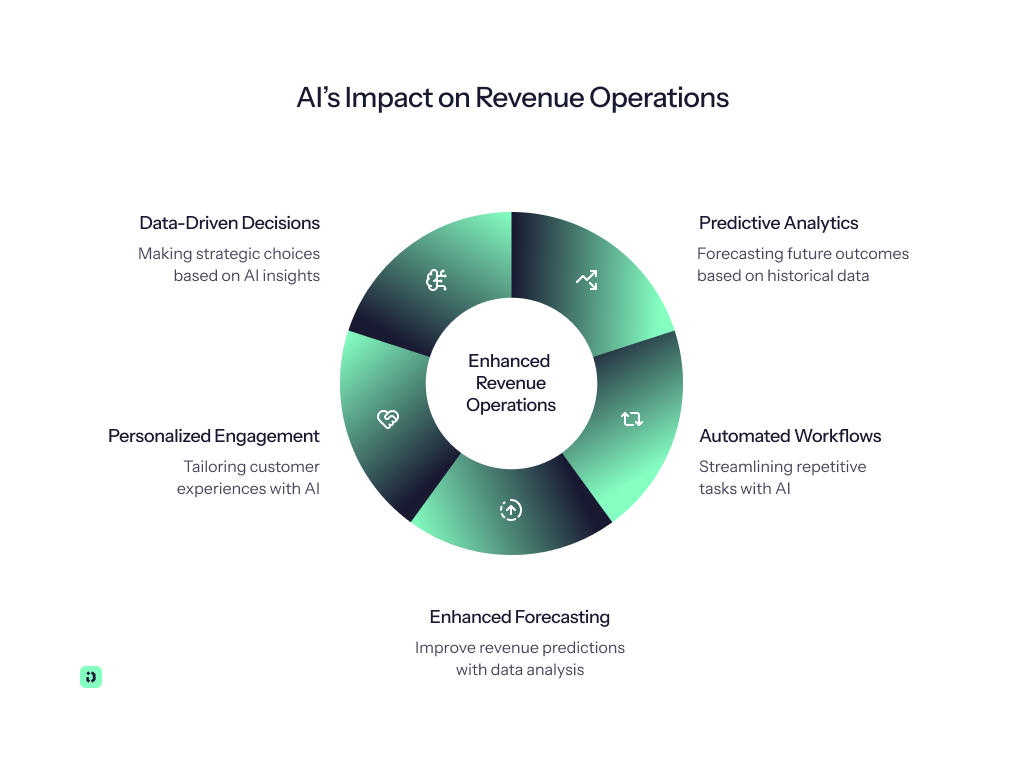
AI is revolutionizing revenue operations across multiple dimensions, helping organizations become more agile, data-driven, and customer-focused. Here’s how AI is making a difference:
1. Predictive Analytics
Predictive analytics uses historical data and machine learning algorithms to forecast future outcomes. In RevOps, AI-powered predictive analytics can:
- Identify high-value leads most likely to convert.
- Anticipate customer churn and recommend retention strategies.
- Predict revenue trends and optimize resource allocation.
By leveraging these insights, revenue teams can make proactive decisions that drive efficiency and growth, rather than reacting to problems after they occur.
2. Automated Workflows
Manual tasks such as data entry, lead routing, and reporting consume significant time for RevOps teams. AI-powered automation can handle these repetitive processes, freeing team members to focus on high-value activities like strategy, coaching, and customer engagement.
Examples of automated workflows include:
- Assigning leads to the right sales reps based on scoring algorithms.
- Sending personalized follow-up emails triggered by specific customer behaviors.
- Generating real-time dashboards and performance reports without manual input.
Automation not only improves efficiency but also reduces errors, ensuring more reliable data for decision-making.
3. Enhanced Forecasting
Traditional revenue forecasting often relies on spreadsheets and subjective judgment, which can lead to inaccuracies. AI improves forecasting by analyzing multiple data points, including historical sales performance, market trends, and customer behavior patterns.
AI-driven forecasting helps RevOps teams:
- Set more realistic revenue targets.
- Identify potential revenue gaps before they occur.
- Make data-backed decisions on resource allocation and investment.
The result is a more accurate view of future revenue, allowing companies to plan effectively and reduce financial risk.
4. Personalized Customer Engagement
Customer expectations are higher than ever. AI enables RevOps teams to deliver tailored experiences at scale by analyzing customer data and behavior patterns.
For example, AI can:
- Suggest personalized product recommendations.
- Identify upsell and cross-sell opportunities.
- Trigger timely communications based on customer lifecycle events.
Personalized engagement increases conversion rates, boosts customer satisfaction, and drives long-term revenue growth.
5. Data-Driven Decision Making
One of AI’s most powerful contributions to RevOps is its ability to process large volumes of complex data quickly. By uncovering patterns and trends that humans might miss, AI provides actionable insights that guide strategic decisions.
This allows leaders to:
- Identify underperforming campaigns or sales strategies.
- Allocate budgets more effectively.
- Make informed decisions about hiring, training, and incentive programs.
In short, AI turns data into a strategic asset, improving both efficiency and revenue outcomes.
Key Benefits of AI in Revenue Operations
Integrating AI into RevOps brings tangible benefits across the organization:
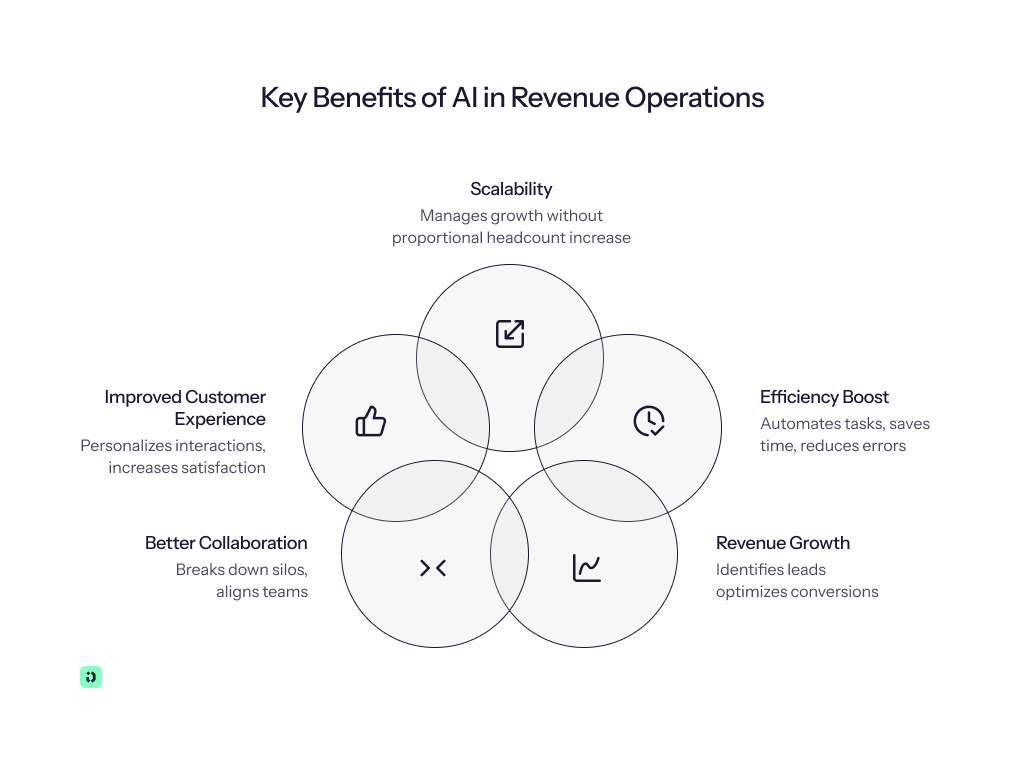
- Efficiency Boost: Automating repetitive tasks saves time and reduces errors, allowing teams to focus on strategic initiatives.
- Revenue Growth: AI identifies high-potential leads and optimizes conversion rates, directly impacting top-line growth.
- Better Collaboration: Unified AI platforms break down data silos, ensuring marketing, sales, and customer success teams are aligned.
- Improved Customer Experience: AI insights enable timely, relevant, and personalized customer interactions.
- Scalability: AI allows revenue operations to manage increased complexity as businesses expand without proportionally increasing headcount.
Overall, AI empowers RevOps teams to work smarter, not harder, delivering more consistent results with less manual effort.
Real-World Use Cases of AI in RevOps
The impact of AI in revenue operations can be seen in practical applications across industries:
- Lead Scoring and Prioritisation: AI evaluates leads based on multiple criteria, ensuring sales reps focus on prospects with the highest likelihood of conversion.
- Churn Prediction and Retention: Machine learning models identify customers at risk of leaving and suggest targeted retention strategies.
- Automated Reporting and Dashboards: AI tools generate real-time performance metrics without manual intervention.
- Pipeline Management: AI predicts the probability of deal closure, helping sales teams prioritize their efforts effectively.
- Marketing Campaign Optimisation: AI analyses campaign data to suggest improvements, increasing engagement and ROI.
These use cases demonstrate how AI transforms raw data into actionable insights that drive efficiency and revenue growth.
Challenges and Considerations
While AI offers tremendous potential, implementing it in RevOps comes with challenges:
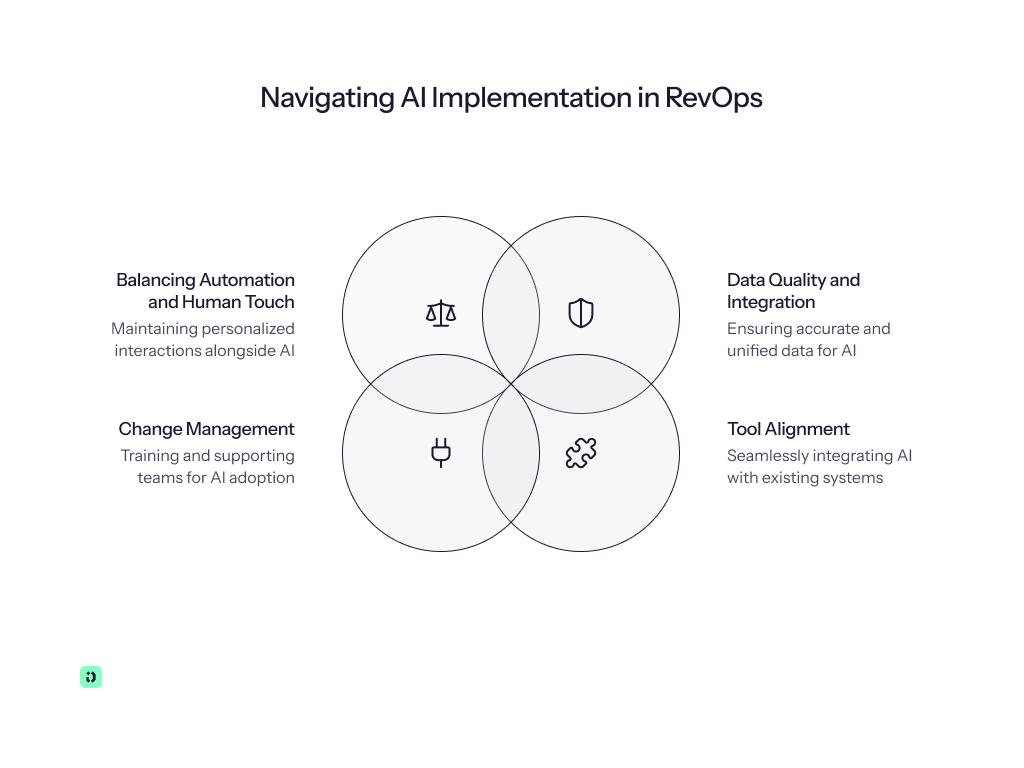
- Data Quality and Integration: AI is only as effective as the data it processes. Poor-quality or fragmented data can lead to inaccurate insights.
- Tool Alignment: AI solutions must integrate seamlessly with existing systems to avoid workflow disruption.
- Change Management: Teams must be trained and supported to adopt AI effectively.
- Balancing Automation and Human Touch: Over-reliance on AI can risk losing personalized customer interactions.
Addressing these challenges early ensures AI implementation delivers maximum value without causing operational friction.
Best Practices for Implementing AI in RevOps
To fully leverage AI in revenue operations, consider these best practices:
- Start with Clear Objectives: Define measurable goals such as increasing conversion rates, reducing churn, or improving forecasting accuracy.
- Cleanse and Unify Data: Ensure your data is accurate, complete, and accessible across departments.
- Choose the Right AI Tools: Select AI platforms that integrate with your CRM, marketing automation, and analytics tools.
- Train Teams Effectively: Invest in employee training so teams can interpret AI insights and apply them strategically.
- Continuously Monitor and Optimise: AI models improve over time. Regularly review performance and refine algorithms to maintain accuracy and relevance.
By following these practices, businesses can maximise the impact of AI while minimising risks.
How Driven Enhances AI in Revenue Operations
As businesses adopt AI in revenue operations, having a platform that connects data, automates workflows, and provides clear insights becomes essential. Driven.work helps bring all of this together in one place.
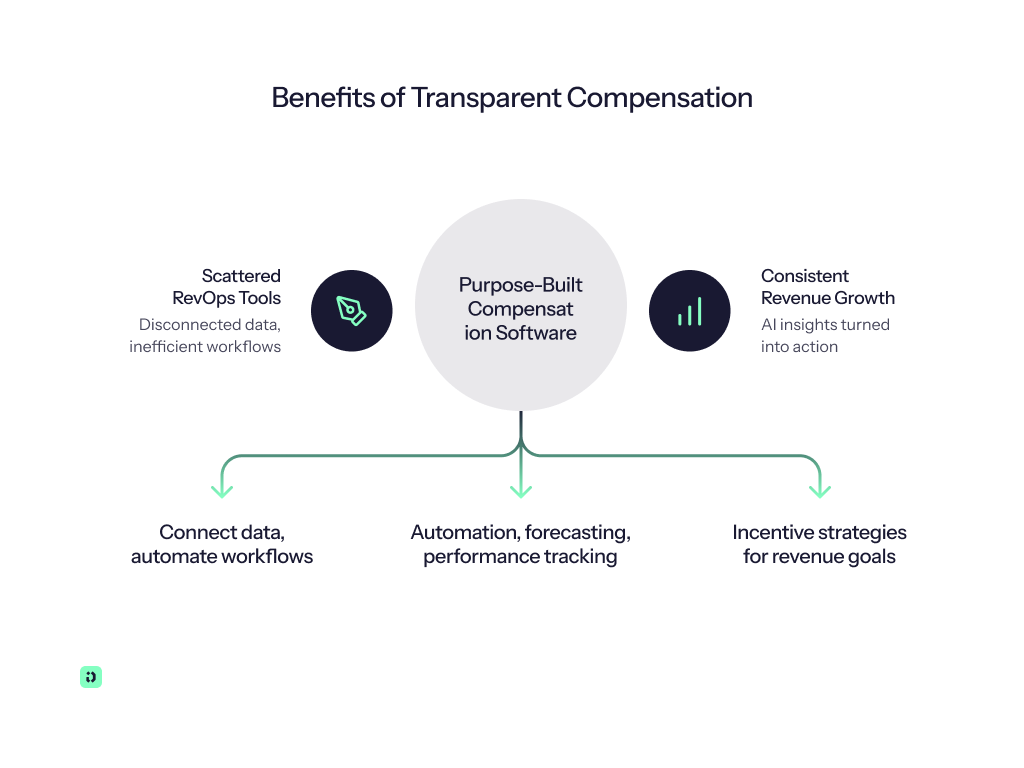
It enables teams to move away from scattered tools and work with a unified system that supports smarter decision-making and better alignment across sales, marketing, and customer success.
Driven simplifies key RevOps functions like automation, forecasting, and performance tracking—making it easier to scale without added complexity. For example, automation plays a big role in saving time and improving efficiency, as explained in this blog on how automating sales compensation can save up to 20 hours a month
It also helps businesses align performance with the right incentive strategies to keep teams motivated and focused on revenue goals, as explored in the blog the future of sales compensation: why ai is changing the game.
Overall, Driven.work makes it easier for companies to turn AI insights into action and drive consistent revenue growth.
The Future of AI in Revenue Operations
AI adoption in revenue operations is expected to grow rapidly as technology evolves. Future trends include:
- Greater Predictive Capabilities: AI will provide more accurate forecasts and deeper insights into customer behavior.
- Hyper-personalisation: Advanced AI models will enable highly tailored customer experiences at scale.
- Seamless Automation: Routine tasks will be almost fully automated, freeing teams to focus entirely on strategy.
- Strategic Decision Support: AI will become a critical partner in planning, resource allocation, and revenue optimization.
Organisations that embrace AI early will gain a competitive edge by operating more efficiently, responding faster to market changes, and delivering superior customer experiences.
Conclusion
Artificial intelligence is no longer a futuristic concept—it’s a practical tool transforming revenue operations today. By automating workflows, providing predictive insights, and enabling smarter decisions, AI empowers RevOps teams to work more efficiently, align cross-functional efforts, and drive sustainable revenue growth.
For businesses seeking to scale, optimise performance, and stay ahead of the competition, integrating AI into revenue operations is not just an option—it’s a necessity. By embracing AI strategically and thoughtfully, companies can unlock unprecedented efficiency, improve decision-making, and fuel long-term business growth.



See your comp plan, fully built in minutes

Frequently Asked Questions
About the author





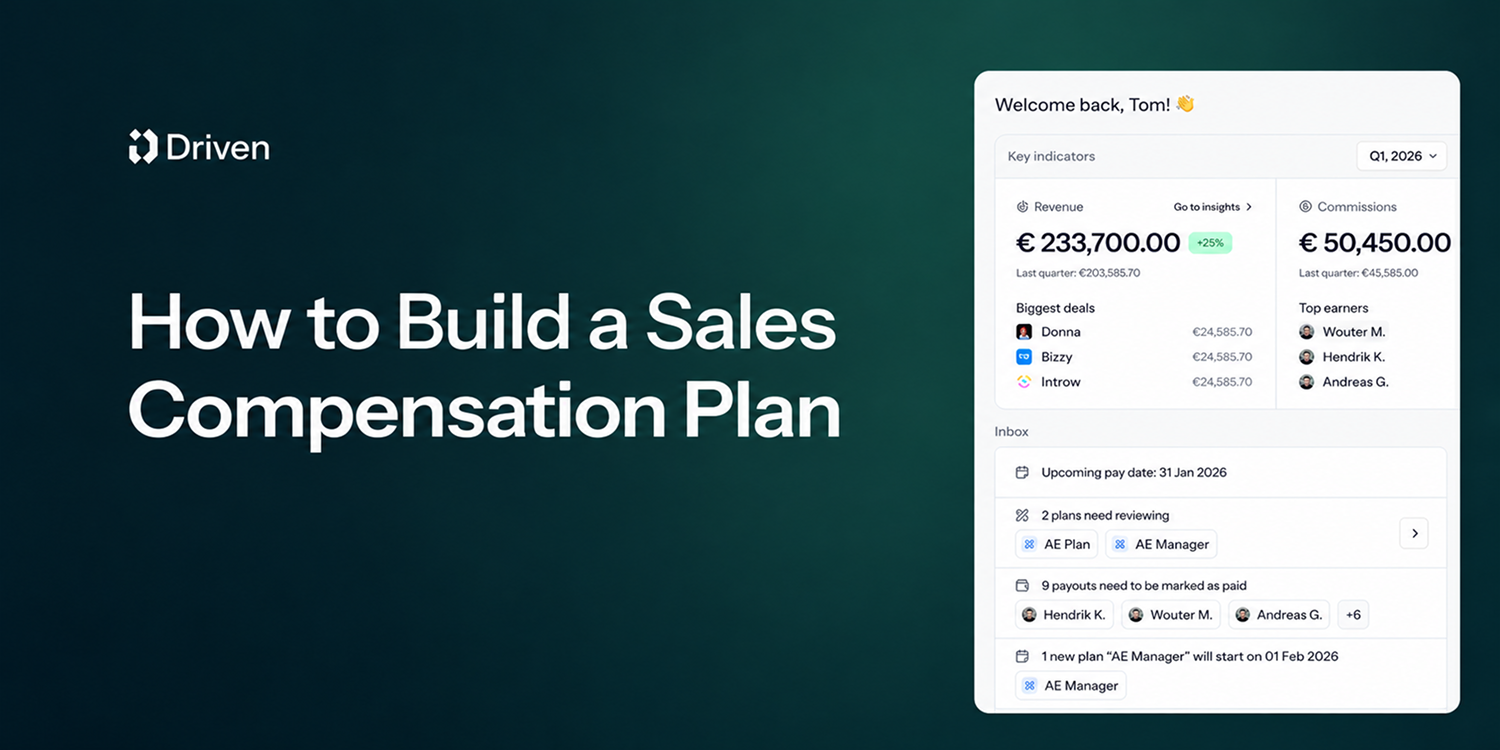
A sales compensation plan defines how your sales team gets paid: a fixed base salary, variable pay like commissions and bonuses, and a quota that decides how much of that variable pay a rep actually earns. Base salary plus target variable pay makes up a rep's on-target earnings (OTE).
Sales compensation plans do more than pay people; they shape behavior, drive revenue, and define culture. Get the plan right, and your team is aligned, motivated, and chasing the numbers that actually matter. Get it wrong, and you'll spend every month-end on disputes, recalculations, and reps who no longer trust their payslip.
This guide covers the core components, the main plan types, and a 10-step process to build your own, followed by three sales compensation plan examples. Jump to the examples. Everything here draws on Driven's work with finance, RevOps, and sales compensation leaders who run these plans every single month.

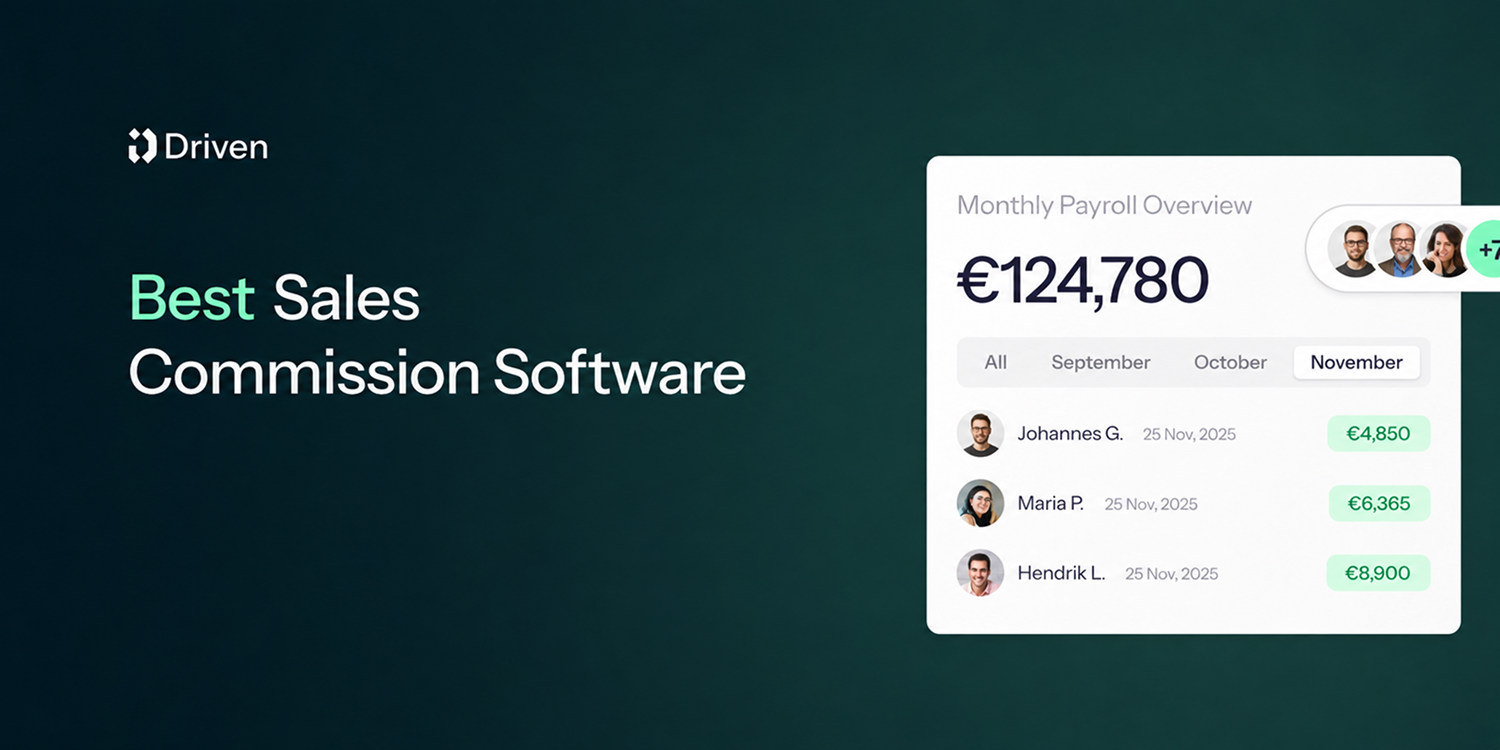
Sales commission software calculates, tracks and explains commissions from your CRM data, so nobody rebuilds a spreadsheet every month. The 9 best tools in 2026:
- Driven: best AI commission agent for HubSpot and Salesforce teams that want to go live in days
- QuotaPath: best for growing teams that want published pricing and broad CRM coverage
- CaptivateIQ: best for mid-market teams with complex, frequently changing plans
- Salesforce Spiff: best for companies that run on Salesforce
- Qobra: best for European RevOps teams that want no-code plans and AI agents
- Xactly Incent: best for large enterprises that also need planning and forecasting
- Performio: best for complex crediting across many data sources and regions
- Sales Cookie: best for small businesses that want month-to-month contracts
- QCommission: best for finance-led teams on QuickBooks or needing on-premise deployment
Choose based on three things: your CRM, how many reps you pay, and how complex your plan is.

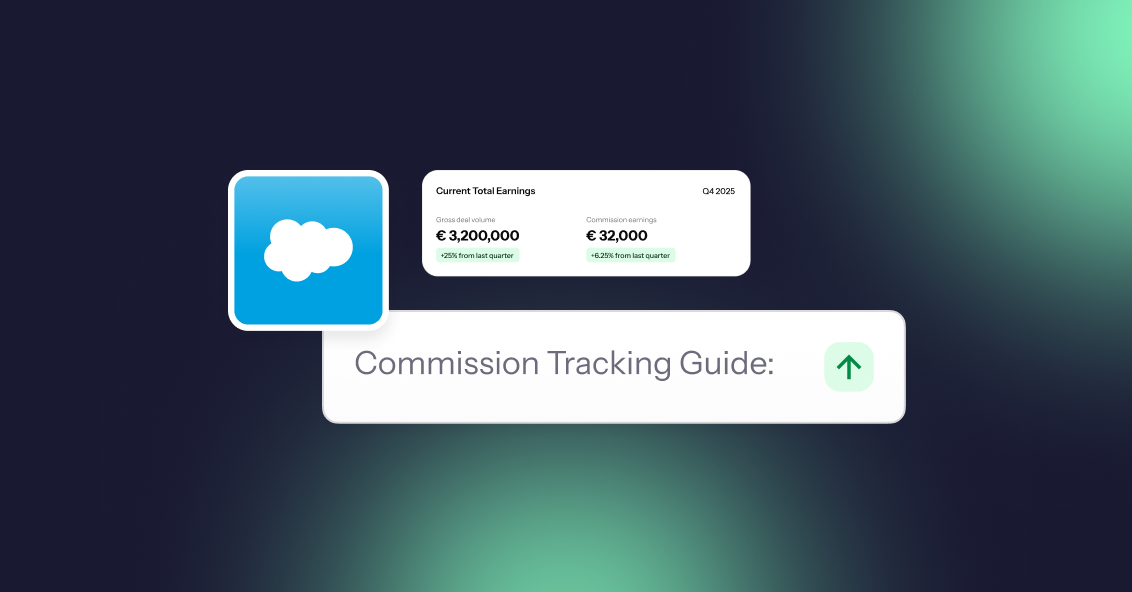
TL;DR: Salesforce stores every field commissions depend on, but core Sales Cloud doesn't calculate, explain or protect payouts. Teams close that gap in one of five ways: native formula fields, a custom build, Salesforce's native ICM (Spiff), a vibe-coded tool, or a third-party commission tool. A flat rate and a few reps can stay native. Tiers, accelerators, splits and frequent plan changes point to a dedicated tool, and to an agentic platform like Driven if you want the plan designed, explained and maintained for you.
It's not uncommon for teams in 2026 to still run sales commissions on spreadsheets. The deal data lives in Salesforce, the rates live in a Google Sheet someone built three finance leads ago, and the payouts get reconciled by hand at the end of every quarter. When a rep asks why their number looks different, no one can fully explain it. When finance needs an accrual, someone exports a report and rebuilds it in Excel. The process is time-consuming, error-prone, and actively eroding rep trust. It's hard to keep a sales team motivated when reps can't trust their own paycheck.
Teams that outgrow the spreadsheet usually reach for formula fields, a custom build, or a paid add-on. But tools for managing sales incentives are now moving from rules engines you configure to agents that work alongside you. Gartner predicts that 40% of enterprise applications will feature task-specific AI agents by the end of 2026, up from less than 5% in 2025. They also say that 60% of B2B seller work will be executed through conversational interfaces by 2028.
This guide breaks down five ways to track Salesforce commissions, including what each approach does well, where it breaks, and how to choose.