The Future of Sales Compensation: Why AI Is Changing The Game

%20(1).png)
TL;DR
Sales compensation has always been one of the most important and most complex aspects of managing a successful sales team. Commission plans motivate sales representatives, align incentives with business goals, and directly influence revenue growth. However, the way companies manage sales compensation has remained largely standard for years. Many organizations still rely on spreadsheets, manual calculations, and time consuming processes that are prone to errors.
Today, that reality is changing rapidly. Artificial Intelligence (AI) and automation are transforming how businesses design, manage, and optimize their compensation plans. With smarter systems and real time knowledge, companies can now handle commission management with greater accuracy, transparency, and efficiency. As businesses adopt modern tools, the future of sales compensation is becoming more automated, data driven, and scalable.
The Challenges of Traditional Sales Compensation Management
For decades, most companies have handled sales compensation using spreadsheets and manual workflows. While this approach may work for small teams initially, it quickly becomes difficult to manage as organizations grow.
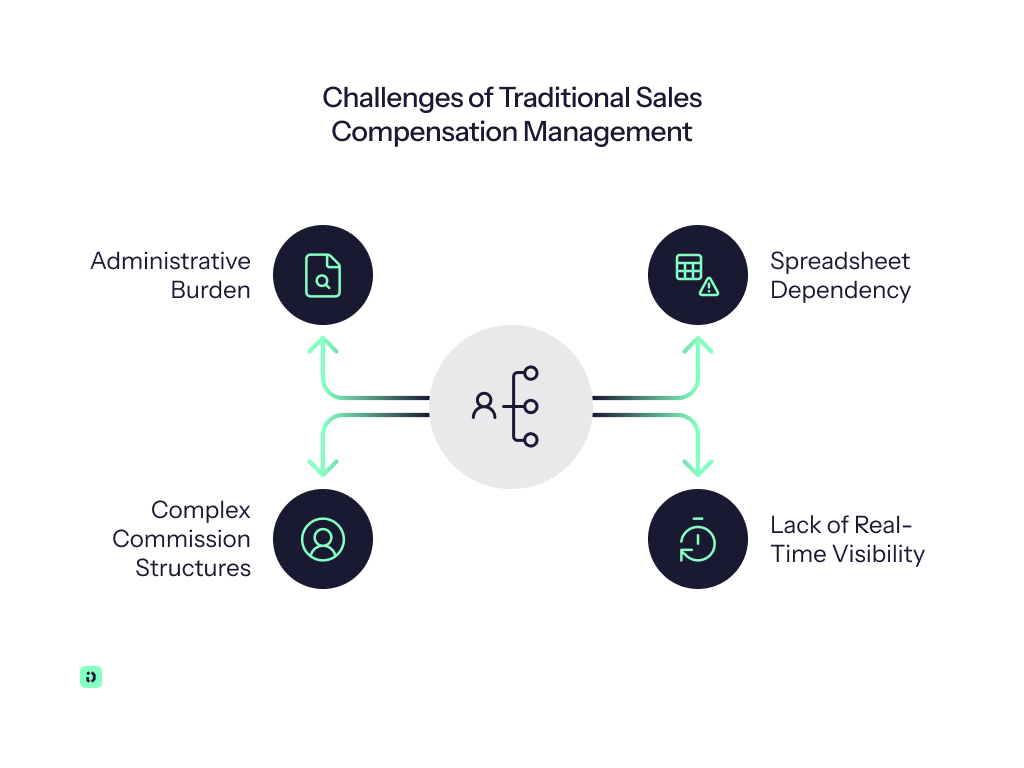
- Spreadsheet Dependency: Spreadsheets are still the most commonly used tool for calculating commissions. However, they come with several limitations. As compensation plans become more complex, spreadsheets require constant updates, manual data entry, and formula adjustments. Even a small error in a formula can lead to incorrect commission calculations, creating frustration among sales teams and finance departments.
- Lack of Real Time Visibility: In many organizations, sales representatives don’t know their exact commission earnings until the end of the month or quarter. This lack of visibility can reduce motivation and make it difficult for reps to track their progress toward targets.
- Complex Commission Structures: Modern sales organizations often use tiered incentives, bonuses, accelerators, and quota based rewards. Managing these complex structures manually can quickly become overwhelming for revenue operations and finance teams.
- Administrative Burden: Sales operations teams often spend countless hours verifying deals, updating spreadsheets, and resolving commission disputes. Instead of focusing on strategic tasks that drive growth, teams get stuck in repetitive administrative work.
These challenges highlight why businesses are increasingly looking for smarter and more automated ways to manage compensation.
The Rise of AI in Sales Compensation
Artificial intelligence is transforming how companies approach sales compensation. Rather than relying on manual calculations, businesses can now leverage AI powered platforms that automatically process sales data and calculate commissions.
AI systems can integrate with CRM platforms, analyze deal data in real time, and apply complex commission structures without human intervention.
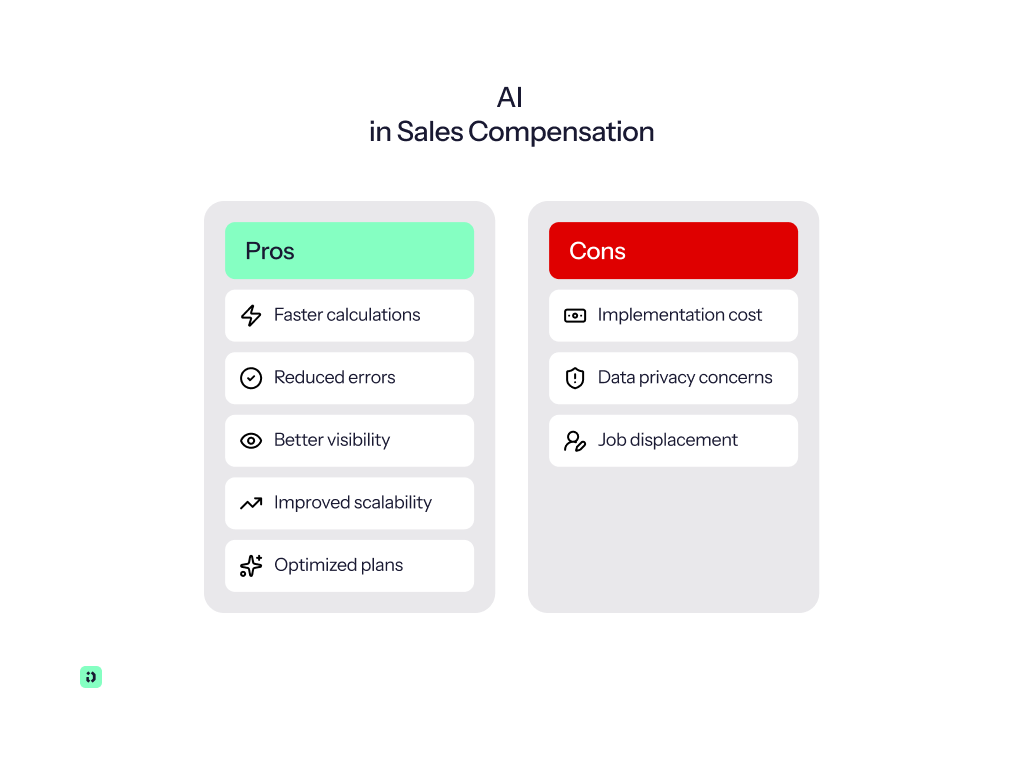
This shift provides several advantages:
- Faster commission calculations
- Reduced risk of human error
- Better visibility into earnings and performance
- Improved scalability for growing teams
AI also allows companies to analyze historical performance data and identify trends that help optimize compensation plans.
Automated Commission Calculations
One of the most immediate benefits of AI driven compensation systems is automation. Instead of manually calculating commissions for each deal, AI systems automatically apply the appropriate rules and incentives based on the compensation structure.
Automation ensures:
- Accurate calculations across large datasets
- Instant commission updates as deals close
- Reduced administrative workload
For sales operations teams managing hundreds or thousands of transactions, this automation can save significant time and resources.
Intelligent Incentive Plan Design
Designing effective incentive plans is not always straightforward. Businesses must balance multiple factors, including revenue targets, product priorities, and market conditions.
AI can analyze past performance data and provide insights into which compensation models drive the best results. By identifying patterns in sales behavior, companies can design incentive plans that encourage high performance while aligning with overall business objectives.
This level of intelligence enables organizations to create more effective and adaptable compensation strategies
Predictive Earnings Forecasting
AI powered systems can also provide predictive insights that help both sales representatives and managers make better decisions.
By analyzing pipeline data and historical performance, AI tools can forecast potential commission earnings based on current deals and expected outcomes. Sales reps can see how close they are to hitting certain commission tiers, which can serve as a powerful motivator.
Managers, on the other hand, gain valuable insights into how compensation costs may evolve as the sales pipeline develops.
Real Time Data and Transparency
Transparency is one of the most important factors in building trust within sales teams. When commission calculations are unclear or delayed, it can lead to confusion and disputes.
AI powered compensation platforms provide real time dashboards where sales representatives can track their deals, commissions, and performance metrics. This visibility allows reps to understand exactly how their efforts translate into earnings.
For organizations, this transparency helps reduce disputes and builds stronger trust between sales teams and management.
How AI Improves Sales Team Motivation
Compensation plays a key role in motivating sales professionals. When sales representatives clearly understand how their efforts affect their earnings, they are more likely to stay engaged and focused on achieving targets.
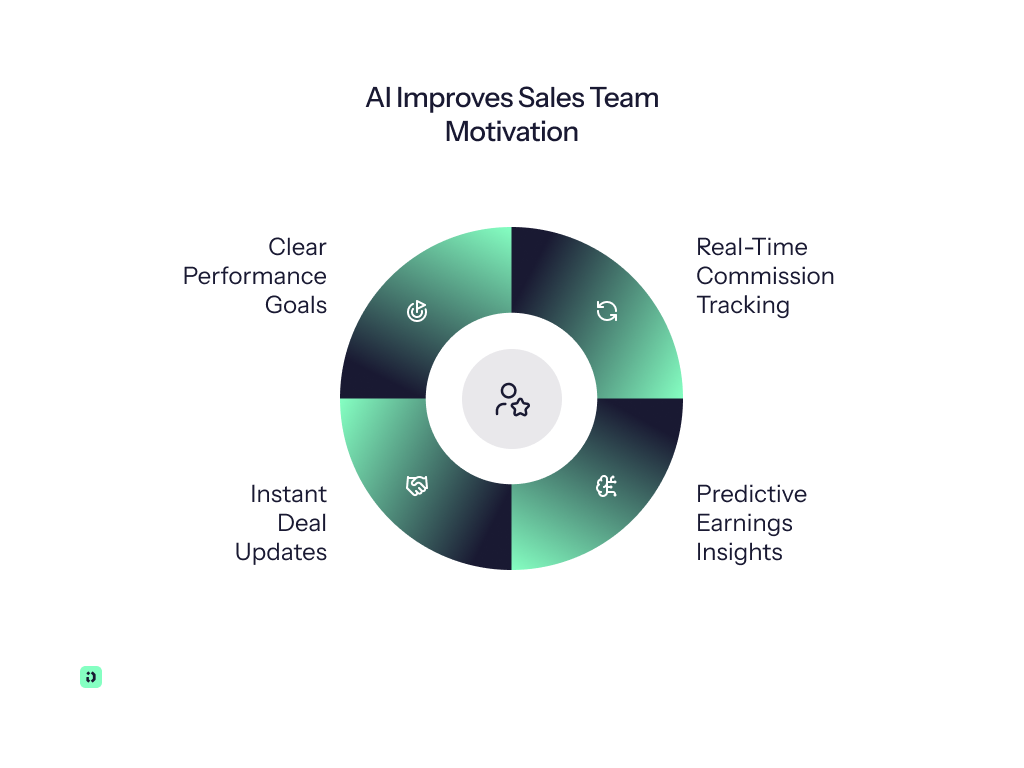
AI driven compensation systems help motivate teams by providing:
- Real time commission tracking
- Clear visibility into performance goals
- Instant updates when deals close
- Predictive earnings insights
These capabilities create a more engaging and transparent environment where sales teams feel rewarded for their performance.
How Modern Platforms Are Simplifying Sales Compensation
As the demand for automation grows, modern sales compensation platforms are emerging to replace outdated spreadsheet systems. Solutions like Driven are designed to help companies streamline commission management while reducing the complexity associated with traditional workflows. Instead of relying on manual calculations, organizations can automate commission tracking, integrate their CRM data, and manage compensation plans from a centralized platform.
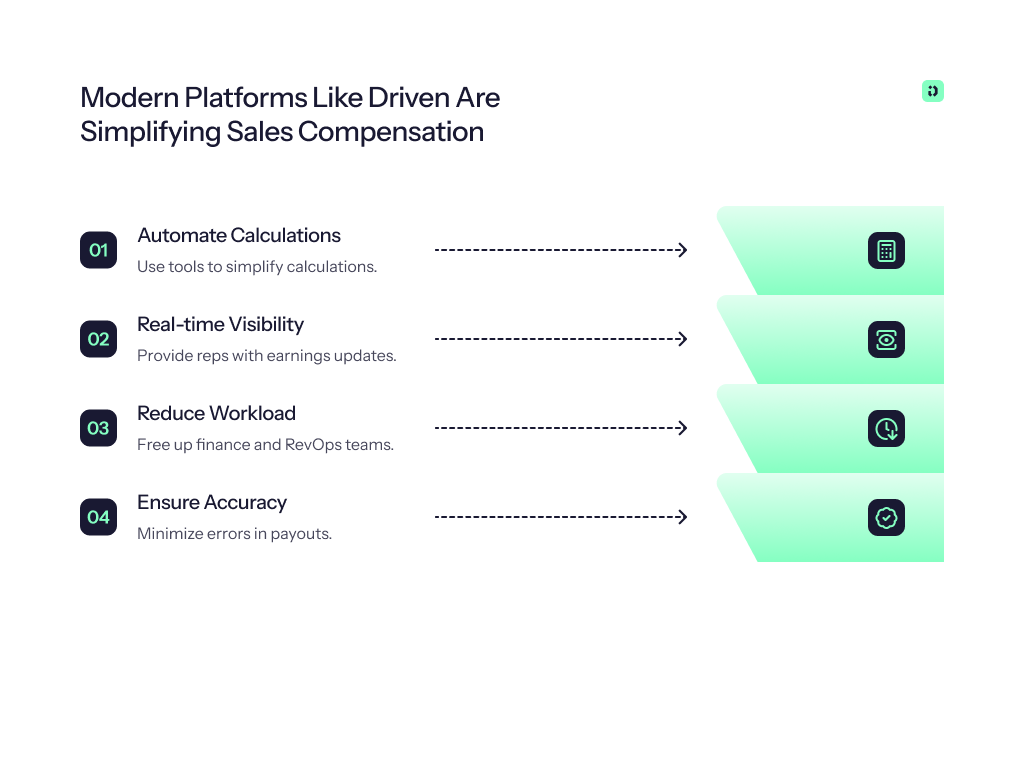
By using tools like Driven, business organizations can:
- Automate complex commission calculations
- Provide sales reps with real time earnings visibility
- Reduce administrative workload for finance and RevOps teams
- Ensure greater accuracy in compensation payouts
These benefits allow organizations to focus more on revenue growth and less on manual operational tasks.
The Future of Sales Compensation
As AI technology continues to evolve, the future of sales compensation will become increasingly intelligent and automated. Several trends are likely to shape the next generation of compensation management:
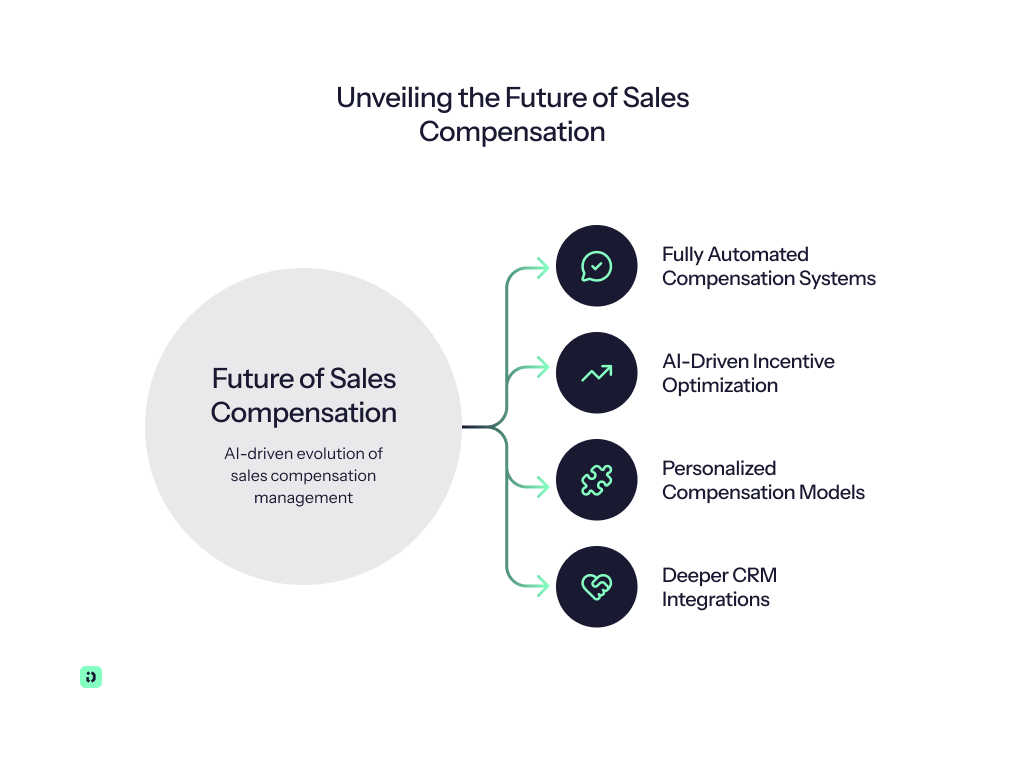
- Fully Automated Compensation Systems: Companies will rely less on manual calculations and more on fully automated platforms that handle everything from commission tracking to payment processing.
- AI Driven Incentive Optimization: AI will analyze sales performance and recommend improvements to compensation plans that maximize productivity and revenue growth.
- Personalized Compensation Models: Instead of one size fits all commission structures, organizations may begin implementing personalized incentive plans based on individual performance patterns.
- Deeper CRM Integrations: Sales compensation systems will integrate more deeply with CRM platforms, enabling real time updates and better performance analytics.
These innovations will make sales compensation more efficient, transparent, and aligned with business goals.
Why Businesses Are Moving Away From Spreadsheets
Spreadsheets were once a practical solution for managing commissions, but they simply cannot keep up with the complexity of modern sales organizations. Businesses are increasingly moving toward dedicated compensation platforms because they offer:

- Greater accuracy
- Real time visibility
- Reduced operational workload
- Better scalability for growing teams
By adopting modern technology, companies can eliminate many of the inefficiencies that come with manual commission management.
Conclusion
Sales compensation is evolving rapidly as AI and automation reshape how organizations manage incentives and commissions. Traditional spreadsheet based systems are being replaced by smarter platforms that offer greater accuracy, transparency, and efficiency. AI driven solutions allow businesses to automate commission calculations, gain deeper insights into sales performance, and design incentive plans that truly motivate teams.
Platforms like Driven are helping organizations simplify complex compensation processes and move toward a more intelligent, automated future. As AI continues to transform revenue operations, companies that adopt modern sales compensation tools will be better positioned to scale their sales teams and drive sustainable growth. Ready to simplify your sales compensation process? Book a demo to know how Driven can help you automate commission tracking, eliminate spreadsheets, and give your sales team complete visibility into their earnings.



See your comp plan, fully built in minutes

FAQs
About the author
Ludovic Diercxsens






Understanding SPIFFs, Bonuses, and Commissions
Ask a sales rep what's driving their next paycheck, and you'll often hear all three words used interchangeably: SPIFF, bonus, and commission. They get lumped together as "extra money for selling," but they're not the same thing, and treating them like they are leads to confused reps, inconsistent payouts, and comp plans nobody can actually explain.
A SPIFF is a short-term, targeted incentive. A bonus is a lump-sum reward tied to hitting a broader goal. A commission is the ongoing, formula-based pay tied directly to sales, the core of most sales comp plans, not an add-on to it.
This guide breaks down what each one actually means, when companies use them, how they're calculated, and how they stack together so you can build a comp plan where every payout has a clear reason behind it.

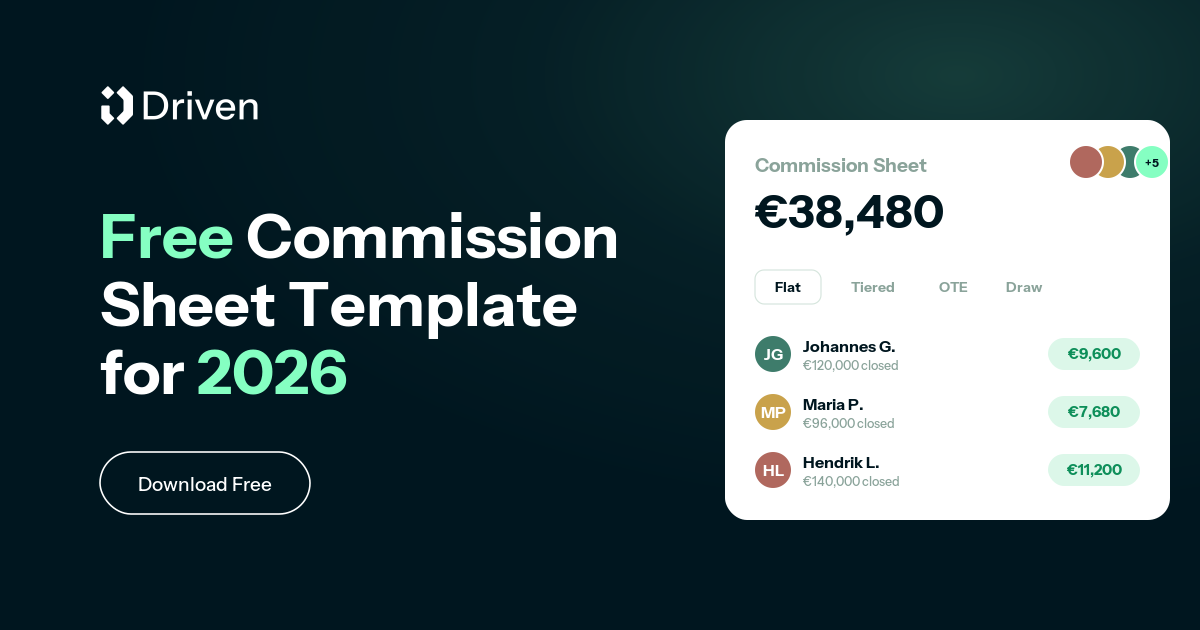
Free Commission Sheet Template: 8 Sales Commission Spreadsheets in One Excel File
Most commission plans don't fail because the idea is wrong. They fail because nobody modelled the numbers before rolling them out. A rate that looks generous on a slide turns into a payout you can't afford at 130% attainment, or an accelerator so flat that your best reps stop pushing the moment they hit quota.
So we built a free commission sheet template to fix that. It's one Excel file with eight ready-to-use sales commission spreadsheets, each structure on its own tab, each with live formulas and a filled-in sample row. Change a rate, a quota, or a revenue number and every payout updates instantly, and because everything lives in one workbook you can compare models side by side without juggling downloads.
Download the commission sheet template, or start for free and let Driven build the plan for you.

New to comp design? Start with our guide to sales compensation structure types, then model your pick here.


Non-Recoverable Draw vs. Recoverable Draw: What's the Difference?
New sales hires often get offered a "draw" against commission, and most sign the offer letter without knowing there are two very different types. That gap in understanding can mean thousands of dollars either staying in a rep's pocket or getting clawed back months later.
A draw is essentially an advance on future commission, designed to give reps steady income while they ramp up pipeline and close their first deals. But whether that advance is recoverable or non-recoverable determines something much bigger: whether it ever has to be paid back.
This guide breaks down what each draw type means, how they're calculated, when companies typically use each one, and the mistakes that turn a helpful ramp tool into a trust problem between reps and the company that hired them.


.svg%201.avif)