A sales team's compensation structure directly influences performance, motivation, retention, and revenue growth. When designed correctly, it encourages the right behaviors, rewards top performers, and aligns sales activities with business goals. When designed poorly, it can create confusion, reduce motivation, and drive unwanted behaviors.
Whether you're building your first sales team or refining an existing compensation plan, understanding sales compensation structures is essential for long-term success.
What Is a Sales Compensation Structure?
A sales compensation structure is the framework that determines how sales representatives are paid. It combines fixed compensation, such as base salary, with variable compensation tied to performance, including commissions, bonuses, incentives, or profit-sharing arrangements.
The purpose of a compensation structure is not simply to pay employees. It is designed to:
Motivate sales performance
Attract and retain top talent
Align sales activities with company objectives
Reward desired outcomes
Maintain predictable compensation costs
An effective compensation plan creates a clear connection between performance and earnings while remaining simple enough for employees to understand.
Base salary is the fixed portion of a salesperson’s compensation and is paid regardless of sales performance. It provides financial stability and predictable income, making it particularly valuable in roles with longer sales cycles, complex deals, or responsibilities that extend beyond direct revenue generation.
Commission
Commission is performance-based compensation earned when a salesperson generates sales. It is usually calculated as a percentage of revenue, profit, or contract value. This component directly links earnings to results, motivating sales representatives to close deals and consistently achieve their targets.
Bonuses
Bonuses are additional payments awarded for meeting specific performance goals. They may be tied to individual achievements, team success, or company-wide objectives. Bonuses help recognize exceptional performance, encourage goal attainment, and reward contributions that go beyond standard expectations.
Accelerators
Accelerators increase a salesperson’s commission rate after they exceed a predefined quota or performance target. By rewarding overachievement with higher earnings potential, accelerators motivate top performers to continue selling even after reaching their initial goals and help drive additional revenue growth.
Incentives and SPIFs
Incentives and SPIFs (Sales Performance Incentive Funds) are short-term rewards designed to encourage specific sales activities or behaviors. Companies often use them to promote new products, boost sales during slow periods, increase qualified leads, or focus attention on strategic business priorities.
While these components can be managed manually in spreadsheets, growing organizations often find it difficult to accurately track commissions, bonuses, accelerators, and incentive pay outs at scale. Many businesses implement sales compensation software to automate calculations and improve accuracy, while dedicated incentive compensation management platforms help provide transparency and visibility across compensation programmes.
Why Your Compensation Structure Matters
Compensation plans shape sales behaviour. If representatives are paid solely for revenue generation, they may prioritize volume over profitability. If compensation rewards customer retention, they may focus on long-term relationships rather than short-term transactions.
To maximise effectiveness, organizations should align sales compensation with revenue goals and broader business objectives. When compensation plans support company priorities, they can encourage the behaviours that contribute most to sustainable growth.
The right compensation structure helps businesses:
Increase sales productivity
Improve employee retention
Align compensation with strategic goals
Encourage accountability
Reduce turnover among top performers
A well-designed plan also creates transparency and trust, allowing salespeople to understand exactly how their efforts translate into earnings.
Common Types of Sales Compensation Structures
Sales compensation structures can vary significantly depending on a company's goals, sales process, and revenue model. Each structure offers a different balance of risk, reward, and motivation. Understanding the most common types can help businesses design plans that drive performance while supporting long-term growth.
1. Base Salary Only
A base salary-only compensation structure provides sales representatives with a fixed income regardless of their sales performance. This model prioritizes stability and predictability over performance-based rewards, making it suitable for roles focused on customer relationships, support, or long-term account management rather than direct revenue generation.
Example: A sales representative earns $60,000 per year regardless of the number of sales closed.
Advantages:
Predictable compensation costs
Income stability for employees
Encourages teamwork and collaboration
Disadvantages:
Limited incentive to exceed targets
May reduce motivation among high performers
Best For: Customer success teams, account managers, and sales support roles.
2. Salary Plus Commission
The salary plus commission structure combines a fixed base salary with performance-based earnings. Employees receive financial security through their salary while earning additional income from successful sales. This balanced approach is one of the most common compensation models because it motivates performance without creating excessive income uncertainty.
Example: Base Salary: $50,000 Commission: 8% of sales revenue Annual Sales: $300,000 Commission Earned: $24,000
Advantages:
Balances stability and motivation
Attracts a wider range of sales talent
Encourages consistent performance
Disadvantages:
More complex than salary-only plans
Requires effective commission tracking
Best For: B2B sales teams, SaaS companies, and professional service firms
3. Commission-Only Structure
Under a commission-only structure, sales representatives earn compensation solely from the sales they generate. There is no guaranteed salary, meaning earnings are directly tied to performance. This model offers significant earning potential but also carries higher financial risk for employees.
Example: A salesperson receives 12% commission on every sale and earns $72,000 after generating $600,000 in revenue.
Advantages:
Strong performance incentive
Lower fixed payroll costs
Direct alignment between revenue and compensation
Disadvantages:
Income instability
Higher employee turnover risk
Can encourage short-term sales behavior
Best For: Real estate agents, insurance brokers, and independent sales contractors.
4. Tiered Commission Structure
A tiered commission structure rewards higher performance with increased commission rates. As sales representatives achieve specific revenue thresholds or quotas, they move into higher commission tiers. This approach encourages continuous selling efforts even after initial targets have been reached. Tiered commission plans can become challenging to manage as sales teams grow. Automated commission software helps ensure that payouts are calculated accurately while providing sales representatives with real-time visibility into their earnings and quota progress.
Best For: Growth-focused organizations with ambitious sales targets.
5. Revenue Commission Structure
In a revenue commission structure, salespeople earn a percentage of the total revenue generated from their sales. Compensation is based solely on sales value rather than profitability, making it a simple and transparent model that is easy for both employers and employees to understand.
Example: A representative closes a $100,000 contract and earns a 6% commission, resulting in a $6,000 payout.
Advantages:
Easy to calculate and administer
Clear link between sales and earnings
Encourages revenue generation
Disadvantages:
Ignores profit margins
May encourage excessive discounting
Best For: Businesses with consistent profit margins across products and services.
6. Gross Margin Commission Structure
Gross margin commission compensates salespeople based on the profitability of a sale rather than total revenue. By rewarding higher-margin deals, this model aligns sales incentives with overall business profitability and discourages representatives from offering unnecessary discounts to close deals.
Best For: Businesses with varying product margins or complex pricing structures.
7. Residual Commission Structure
Residual commission allows sales representatives to earn ongoing commissions from repeat purchases or recurring customer revenue. Instead of receiving a one-time payout, representatives continue earning as long as the customer remains active, encouraging stronger customer relationships and retention efforts.
Example: A salesperson earns 5% of a customer's monthly subscription fee for the duration of the account.
Advantages:
Encourages customer retention
Supports recurring revenue growth
Rewards long-term account management
Disadvantages:
Compensation costs can accumulate over time
More challenging forecasting
Best For: SaaS businesses, subscription services, and managed service providers.
8. Territory Volume Commission
A territory volume commission structure rewards sales representatives based on the overall sales performance of a designated territory, region, or team. Compensation is linked to collective results rather than individual sales alone, encouraging collaboration and shared responsibility for achieving goals.
Example: A regional sales team earns a bonus when total territory revenue exceeds $2 million during a quarter.
Advantages:
Promotes teamwork
Supports team-based selling strategies
Encourages regional growth
Disadvantages:
Individual contributions may be difficult to measure
High performers may feel under-rewarded
Best For: Enterprise sales organizations and regional sales teams.
9. Draw Against Commission
A draw against a commission structure provides sales representatives with an advance payment that is later offset by future commissions earned. This approach offers income stability during slow periods or onboarding while maintaining a performance-based compensation model.
Example: A salesperson receives a monthly draw of $3,000. If they earn $5,000 in commissions, they receive the remaining $2,000 after the draw is deducted.
Advantages:
Provides predictable income
Helps new hires during ramp-up periods
Reduces financial uncertainty
Disadvantages:
Can create repayment obligations
More complex administration
Best For: Companies with long sales cycles or newly hired sales representatives.
How to Choose the Right Sales Compensation Structure
No single compensation structure works for every organization.When selecting a model, consider the following factors:
Sales Cycle Length: Long sales cycles often require higher base salaries. Short transactional sales can support larger commission components.
Revenue Goals: Growth-focused businesses may benefit from tiered commissions and accelerators. Profit-focused businesses often prefer margin-based plans.
Team Experience: Experienced sales professionals may be comfortable with larger variable pay components. Newer representatives often value income stability.
Product Complexity: Complex solutions usually require consultative selling, making salary-plus-commission structures more effective.
Customer Retention Requirements: Businesses relying on recurring revenue often benefit from residual commissions or retention-based incentives.
Common Sales Compensation Mistakes
Many organizations unintentionally create compensation plans that generate confusion or misaligned behavior. Common mistakes include:
Overly complex commission formulas
Unclear quota definitions
Rewarding the wrong metrics
Frequent plan changes
Lack of transparency
Ignoring profitability
Failing to review performance regularly
Additionally, relying on manual commission tracking can increase the risk of calculation errors, delayed payouts, and administrative inefficiencies, particularly as compensation plans become more sophisticated and sales teams grow.
Best Practices for Building a Sales Compensation Plan
To create a successful compensation structure:
Align compensation with business goals.
Keep calculations easy to understand.
Establish measurable performance metrics.
Balance fixed and variable compensation.
Reward both revenue and customer value.
Review plans annually.
Use compensation software to reduce errors and improve visibility.
Final Thoughts
A sales compensation structure is far more than a payroll mechanism. It is one of the most powerful tools for influencing sales behaviour, driving revenue growth, and retaining top-performing talent. The ideal structure depends on your sales cycle, company objectives, profitability requirements, and team dynamics. While salary-plus-commission remains the most common approach, many organizations achieve better results through tiered commissions, residual commissions, margin-based incentives, or hybrid models. By designing a compensation plan that aligns rewards with business outcomes, companies can create a motivated sales force that consistently delivers long-term growth.
Managing compensation plans is one thing. Managing them accurately as your business grows is another. As commission structures become more complex, organizations often face challenges with tracking payouts, maintaining transparency, and reducing administrative workload. The right compensation management solution can help streamline these processes while giving sales teams greater visibility into their earnings and performance. Explore how Driven helps businesses simplify sales compensation management.
Frequently Asked Questions
What is a sales compensation structure?
A sales compensation structure is the framework used to determine how sales representatives are paid. It typically includes a combination of base salary, commissions, bonuses, incentives, and other performance-based rewards designed to motivate sales performance and support business objectives.
What is the most common sales compensation structure?
Salary plus commission is one of the most common sales compensation structures. It provides employees with a stable income while offering additional earning potential based on sales performance, creating a balance between security and motivation.
How do companies calculate sales commissions?
Sales commissions are usually calculated as a percentage of revenue, profit margin, deal value, or recurring revenue generated by a salesperson. The exact calculation depends on the company's compensation plan and business goals.
What are the benefits of sales compensation software?
Sales compensation software helps automate commission calculations, reduce errors, improve transparency, manage incentive programs, and provide real-time visibility into sales performance and earnings.
How often should sales compensation plans be reviewed?
Most organizations review compensation plans annually. However, businesses experiencing significant growth, changes in sales strategy, or market shifts may benefit from more frequent evaluations to ensure plans remain aligned with company objectives.
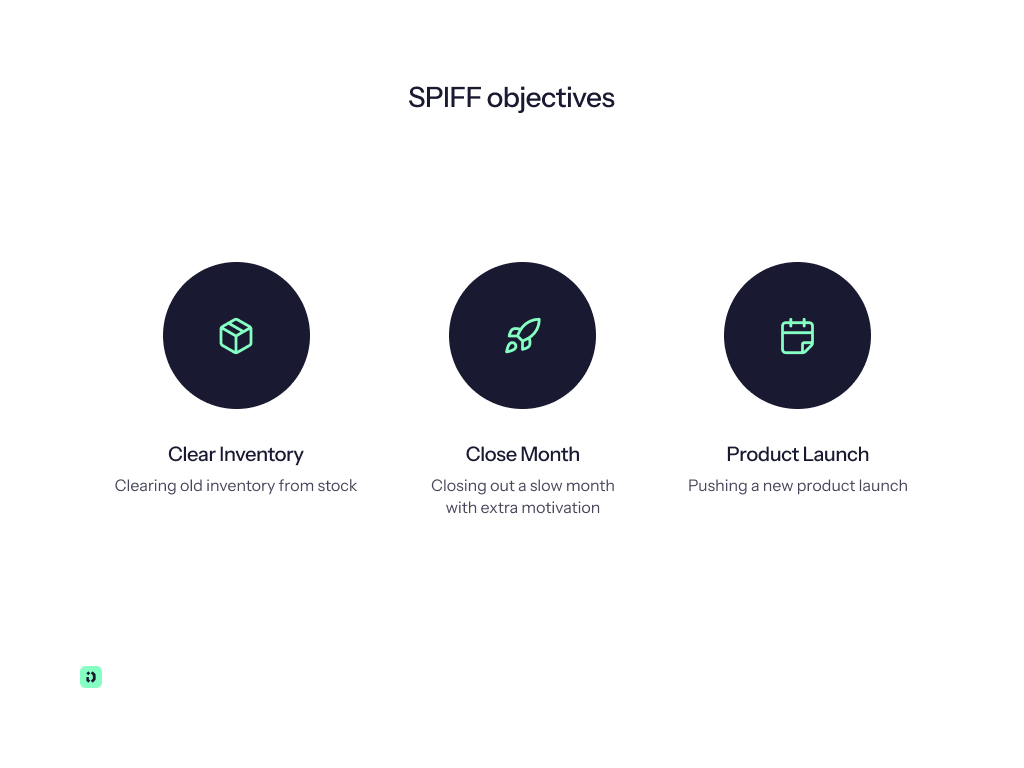
A SPIFF (Sales Performance Incentive Fund) is a short-term cash incentive tied to a specific, immediate action, usually selling a particular product, hitting a short-window target, or pushing a specific behavior the company wants right now.
SPIFFs are built for speed. They're announced, run for a defined stretch, usually days or weeks, and paid out fast, sometimes even same-day or same-week, specifically because the immediacy is what makes them effective. A SPIFF isn't meant to replace commission, it's meant to temporarily redirect a rep's attention toward something specific: clearing old inventory, pushing a new product launch, or closing out a slow month with extra motivation.
A draw in sales compensation is a guaranteed advance payment made to a salesperson against their future commissions. This means it is an advance against future commission, paid out on a regular schedule, usually monthly, so reps have predictable income before their pipeline turns into closed deals and actual commission.
Companies use draws to protect new reps' income during ramp. A brand-new AE with a three-month sales cycle isn't going to close anything in week two, but they still need to pay rent. A draw bridges that gap.
For sales professionals, understanding draw type matters because it affects real take-home pay, not just cash flow timing. Two reps can be offered the exact same dollar amount as a "draw" and end up with completely different financial outcomes, depending on which type it actually is.
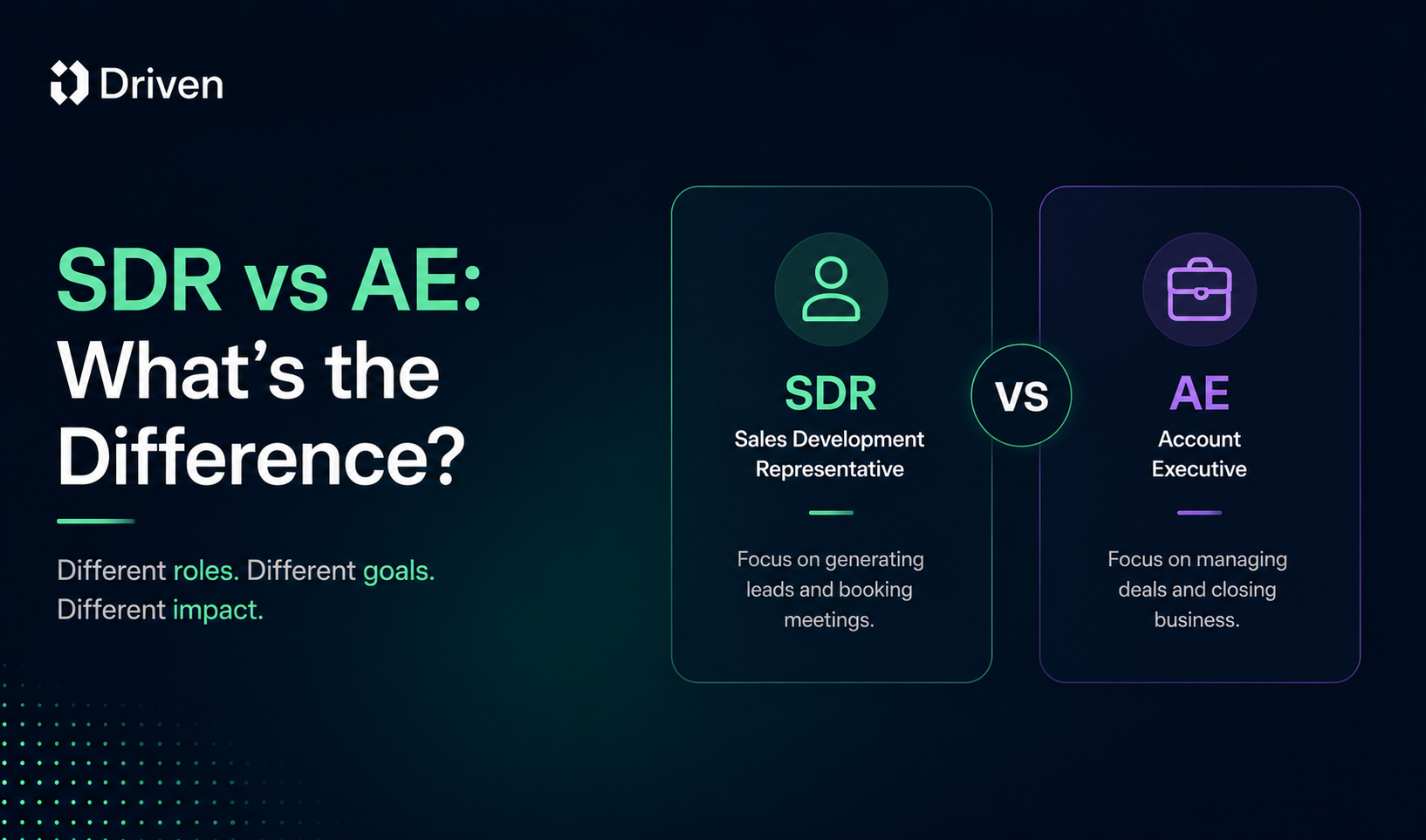
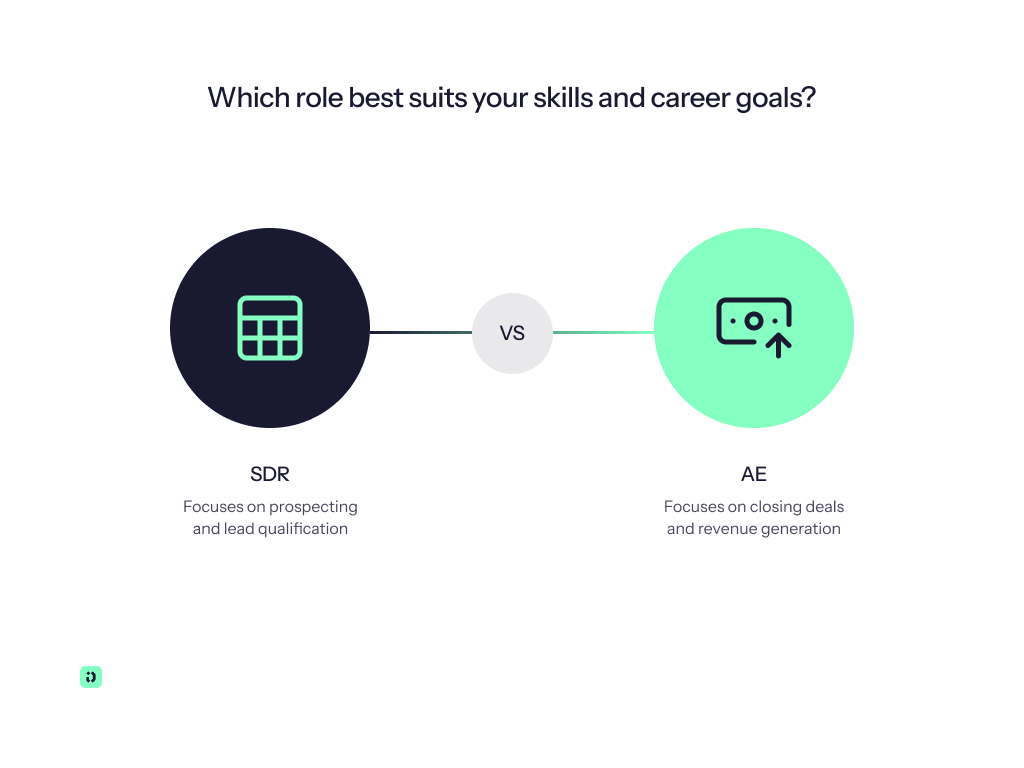
Before comparing pay, it helps to be clear on what each role is actually on the hook for. They sit on the same team, but they're not doing the same job.
What Does an SDR Do?
SDRs own the top of the funnel. Their day is built around prospecting, outbound outreach, and lead qualification, all pointed at one outcome: booking meetings and creating a pipeline for AEs to work. SDRs generally aren't responsible for closing deals. Their job ends where the AE's job begins.
What Does an AE Do?
AEs own the deal once it's qualified. That means running discovery calls, delivering product demos, negotiating terms, and closing the deal. AEs carry direct revenue ownership, and in a lot of organizations, they also handle account management once the deal is signed. The pressure sits differently here: an AE's number is measured in dollars closed, not meetings booked.

.png)


.avif)



.png)
.png)
.png)
.png)








.svg%201.avif)