What is a SPIF and how does it work?

.jpg)
TL;DR
In today’s competitive business landscape, keeping sales teams motivated and driving performance is crucial. One highly effective short-term strategy companies use is a SPIF (Sales Performance Incentive Fund). SPIFs are designed to reward sales reps for achieving specific goals within a set timeframe, boosting focus and productivity.
Unlike regular commissions, they offer immediate incentives for targeted actions, such as selling a new product or hitting a revenue milestone. In this blog, we’ll break down what SPIFs are, how they work, their benefits, different types, and best practices for running successful programs. We’ll also answer the most common questions sales managers and reps have to help you implement SPIFs effectively.
What Does SPIF Stand For?
SPIF is an acronym for Sales Performance Incentive Fund. Essentially, it’s a reward program designed to motivate sales teams to achieve specific goals within a set timeframe. Unlike regular commissions, which are earned based on overall sales, SPIFs are short-term incentives that focus on particular behaviors, products, or outcomes.
For example, a company launching a new product may offer a SPIF to sales reps who sell a certain number of units in a month. Unlike standard commission structures, SPIFs are often extra, immediate rewards that can include cash, gift cards, or other prizes.
The Purpose of a SPIF
The primary goal of an SPIF is to drive specific sales behaviors in the short term. They are highly effective because they:
- Motivate the team: Immediate rewards create excitement and urgency.
- Focus on strategic goals: SPIFs can target specific products, regions, or customer segments.
- Boost engagement: They create friendly competition and energy within the sales team.
- Accelerate revenue growth: By promoting targeted sales, SPIFs can quickly impact business results.
Essentially, SPIFs align the interests of the sales team with the company’s short-term objectives.
How SPIFs Work
SPIFs operate on a simple principle: meet the goal, earn the reward. Here’s a breakdown of how they typically function:
.png)
- Set a Goal: This is the foundation of any SPIF program. The company identifies a specific and measurable target it wants sales reps to achieve. These goals could include selling a particular product line, reaching a certain revenue number, increasing the volume of add-on sales, or bringing in new customers. The objective must be clear so sales teams know exactly what they’re working toward.
- Define the Reward: Once the goal is set, the company decides what reward will motivate the sales team to achieve it. Rewards may be cash bonuses, digital or physical gift cards, free merchandise, travel experiences, or special prizes like gadgets. The key is choosing a reward that feels exciting and valuable enough to boost effort and participation.
- Set a Timeframe: SPIFs are always short-term incentives. The company defines a tight timeline—usually a few days, a week, or up to a month—to create urgency. A shorter timeframe pushes reps to take immediate action and maintain high energy, as the reward is achievable within a limited window.
- Track Performance: During the SPIF period, managers keep a close eye on sales activity. They track who is progressing, how quickly goals are being met, and whether the rules are being followed. This step ensures that rewards are allocated accurately and transparently while also allowing managers to motivate reps throughout the process.
- Reward Achievement: Once a salesperson or team reaches the target, the reward is provided without delay. Quick fulfillment reinforces motivation, boosts trust, and keeps reps enthusiastic for future SPIFs. The immediate recognition and gratification are essential to the effectiveness of the incentive.
The key to an effective SPIF is clarity and simplicity. Sales reps should immediately understand what they need to achieve and what they will earn.
Types of SPIFs
SPIFs come in various forms, tailored to different goals and team structures:
.png)
- Individual SPIFs: Rewards given to individual sales reps for achieving specific personal sales targets. This motivates each rep independently and helps drive higher productivity and accountability in their own performance.
- Team SPIFs: Rewards shared among a group for meeting collective goals. This encourages teamwork, collaboration, and a unified effort toward achieving overall sales targets and improving team performance.
- Product SPIFs: Incentives offered for selling a particular product or service, usually to promote new launches or boost sales of low-performing items, helping companies focus attention where it’s most needed.
- Tiered SPIFs: Rewards structured across multiple sales levels, where reps earn higher incentives as they achieve more. This motivates consistent effort, pushing salespeople to exceed basic targets and aim for bigger rewards.
By understanding the type of SPIF that aligns with your objectives, you can maximize its impact.
Real-World Example of a SPIF in Driven
SPIFs made simple, fast, and effective. Imagine running a SPIF where sales reps earn €100 for every meeting booked. With Driven, this SPIF can be set up in just 10 minutes, directly from CRM filters in HubSpot or Salesforce—no manual data entry required.
Fast, Easy, and Integrated
- Instant Setup: Select your criteria (e.g., new meetings, product demos) from CRM data.
- Automated Tracking: Every qualifying activity is automatically tracked in Driven.
- Immediate Rewards: Reps see their progress and potential payout in real-time.
SPIF Impact: Before vs During
Example: Booking rates increased during a 2-week SPIF period.
| Metric | Before SPIF | During SPIF |
|---|---|---|
| Meetings booked/week | 15 | 35 |
| Qualified leads/week | 10 | 22 |
| Average revenue/week | €12,000 | €28,000 |
SPIF Checklist
☑ Goal: Clear, measurable target
☑ Reward: Valuable enough to motivate reps
☑ Timeline: Defined start and end date
☑ Tracking: Automatic, CRM-integrated
☑ Payout: Instant visibility and payment
Benefits of Using SPIFs
SPIFs offer powerful advantages for businesses and sales teams. They provide immediate motivation, sharpen focus on priority goals, and energize day-to-day sales efforts to drive faster results and stronger performance.
- Increased Motivation: Instant, tangible rewards create excitement among sales reps, pushing them to perform better. This immediate gratification helps boost daily energy levels and encourages reps to go the extra mile to achieve targets.
- Boosted Focus: SPIFs help sales teams concentrate on specific goals, products, or campaigns. By narrowing attention, they reduce distractions and ensure reps prioritize the areas that matter most to the company’s growth.
- Higher Engagement: These incentives make routine sales activities more enjoyable and meaningful. Reps feel more involved, stay enthusiastic throughout the workday, and actively participate in achieving short-term and long-term objectives.
- Revenue Acceleration: With clear rewards tied to quick sales wins, SPIFs speed up the sales cycle. They push reps to close deals faster, especially for new launches, strategic offerings, or products that need a performance boost.
- Positive Competition: SPIFs spark healthy competition within teams, encouraging reps to innovate, collaborate, and perform their best. This motivating environment lifts overall productivity while strengthening teamwork and creativity.
Ultimately, SPIFs are an effective way to align sales team efforts with company priorities while keeping morale high.
Common Mistakes to Avoid
Even the best-intentioned SPIF programs can fail if not executed carefully. Avoid these pitfalls:
- Overcomplicating Rules: Confusing criteria discourage participation.
- Too Frequent SPIFs: Running them constantly diminishes excitement.
- Low-Value Rewards: Incentives must be meaningful to motivate performance.
- Misalignment: SPIFs should never contradict long-term company goals.
- Ignoring Feedback: Failing to evaluate results can prevent improvement.
By learning from these mistakes, you can create a SPIF program that truly drives results.
Conclusion
SPIFs are more than just a perk—they are a strategic tool that motivates sales teams, drives short-term revenue, and encourages focus on critical business goals. When designed properly, SPIFs provide immediate gratification for sales reps while advancing the company’s objectives. Clear rules, meaningful rewards, and timely execution are key to maximizing the impact of SPIF programs.
Whether you’re a sales manager looking to boost performance or a rep seeking opportunities to earn more, understanding how SPIFs work is essential to success in today’s competitive sales environment.



See your comp plan, fully built in minutes

Frequently Asked Questions (FAQs)
About the author
Ludovic Diercxsens






Understanding SPIFFs, Bonuses, and Commissions
Ask a sales rep what's driving their next paycheck, and you'll often hear all three words used interchangeably: SPIFF, bonus, and commission. They get lumped together as "extra money for selling," but they're not the same thing, and treating them like they are leads to confused reps, inconsistent payouts, and comp plans nobody can actually explain.
A SPIFF is a short-term, targeted incentive. A bonus is a lump-sum reward tied to hitting a broader goal. A commission is the ongoing, formula-based pay tied directly to sales, the core of most sales comp plans, not an add-on to it.
This guide breaks down what each one actually means, when companies use them, how they're calculated, and how they stack together so you can build a comp plan where every payout has a clear reason behind it.

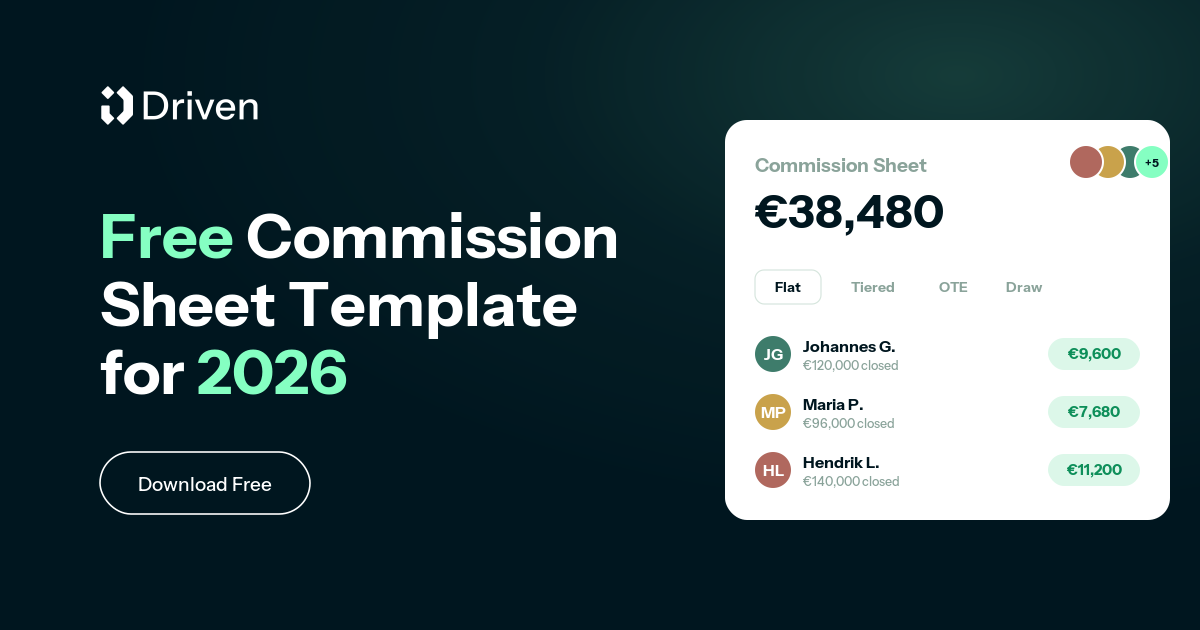
Free Commission Sheet Template: 8 Sales Commission Spreadsheets in One Excel File
Most commission plans don't fail because the idea is wrong. They fail because nobody modelled the numbers before rolling them out. A rate that looks generous on a slide turns into a payout you can't afford at 130% attainment, or an accelerator so flat that your best reps stop pushing the moment they hit quota.
So we built a free commission sheet template to fix that. It's one Excel file with eight ready-to-use sales commission spreadsheets, each structure on its own tab, each with live formulas and a filled-in sample row. Change a rate, a quota, or a revenue number and every payout updates instantly, and because everything lives in one workbook you can compare models side by side without juggling downloads.
Download the commission sheet template, or start for free and let Driven build the plan for you.

New to comp design? Start with our guide to sales compensation structure types, then model your pick here.


Non-Recoverable Draw vs. Recoverable Draw: What's the Difference?
New sales hires often get offered a "draw" against commission, and most sign the offer letter without knowing there are two very different types. That gap in understanding can mean thousands of dollars either staying in a rep's pocket or getting clawed back months later.
A draw is essentially an advance on future commission, designed to give reps steady income while they ramp up pipeline and close their first deals. But whether that advance is recoverable or non-recoverable determines something much bigger: whether it ever has to be paid back.
This guide breaks down what each draw type means, how they're calculated, when companies typically use each one, and the mistakes that turn a helpful ramp tool into a trust problem between reps and the company that hired them.



.svg%201.avif)