Sales Compensation Statistics Every RevOps Leader Should Know
.png)
Sales compensation has moved from a back-office payroll function to one of the most strategically important levers a revenue organisation can pull. For RevOps leaders, compensation data isn't just interesting; it's operational intelligence. The right benchmarks reveal whether your quota structure is realistic, whether your commission model is driving the right behaviours, whether your reps trust the plan they're working under, and whether your finance team is spending 40 hours a month on a process that should take four.
In 2026, the data tells a clear story: most organizations are underperforming on compensation design, overspending on manual administration, and underinvesting in the transparency that keeps sales teams engaged and motivated. This guide compiles the most important sales compensation statistics. RevOps leaders need to know this year and translate each data point into a practical implication for strategy and execution.
Why Compensation Data Matters for RevOps
Revenue Operations sits at the intersection of sales, finance, and strategy. Compensation is one of the primary mechanisms that drives, or misaligns, that engine. When compensation data is absent, RevOps teams operate reactively: quotas get set on gut feel, disputes consume operational bandwidth, and retention problems get blamed on culture when the real root is pay dissatisfaction.
When compensation data is used proactively, the picture changes entirely. RevOps teams can forecast payout cost against projected performance, spot quota risk before it materialises, and build transparency into the system before disputes arise. The statistics below aren't just benchmarks; they're diagnostic tools for identifying exactly where your compensation strategy has gaps.
Quota Attainment: The Numbers Are Worse Than You Think

Only 28% of sales reps hit 100% of quota. Global average attainment sits at approximately 43%, meaning more than half of all salespeople are underperforming against the targets they were hired to hit. This isn't primarily a motivation problem; it's a quota design problem.
RepVue's Q2 2025 data reinforces this: 57.31% of sales reps missed quota in that period alone, continuing a trend that has persisted since 2023, when 69% of reps missed quota for the third consecutive year. This is not a cyclical blip. It reflects a structural failure in how most organizations set targets.
Only 39% of organizations report having 51–75% of their sellers reaching quota, the range most compensation experts consider "healthy". The benchmark to aim for: in a well-designed plan, 60–70% of reps should be able to hit quota in any given period. If your distribution falls consistently below that threshold, the quota methodology needs to be reviewed before you touch the commission structure.
RevOps takeaway: Review quota attainment distribution quarterly, not just aggregate numbers but territory by territory. Low attainment in specific segments usually reveals territory sizing issues, ramp time problems, or lead quality mismatches. Our guide on how to align sales compensation with revenue goals covers the direct connection between quota design and compensation alignment.
Compensation Structure: How Teams Are Being Paid in 2026
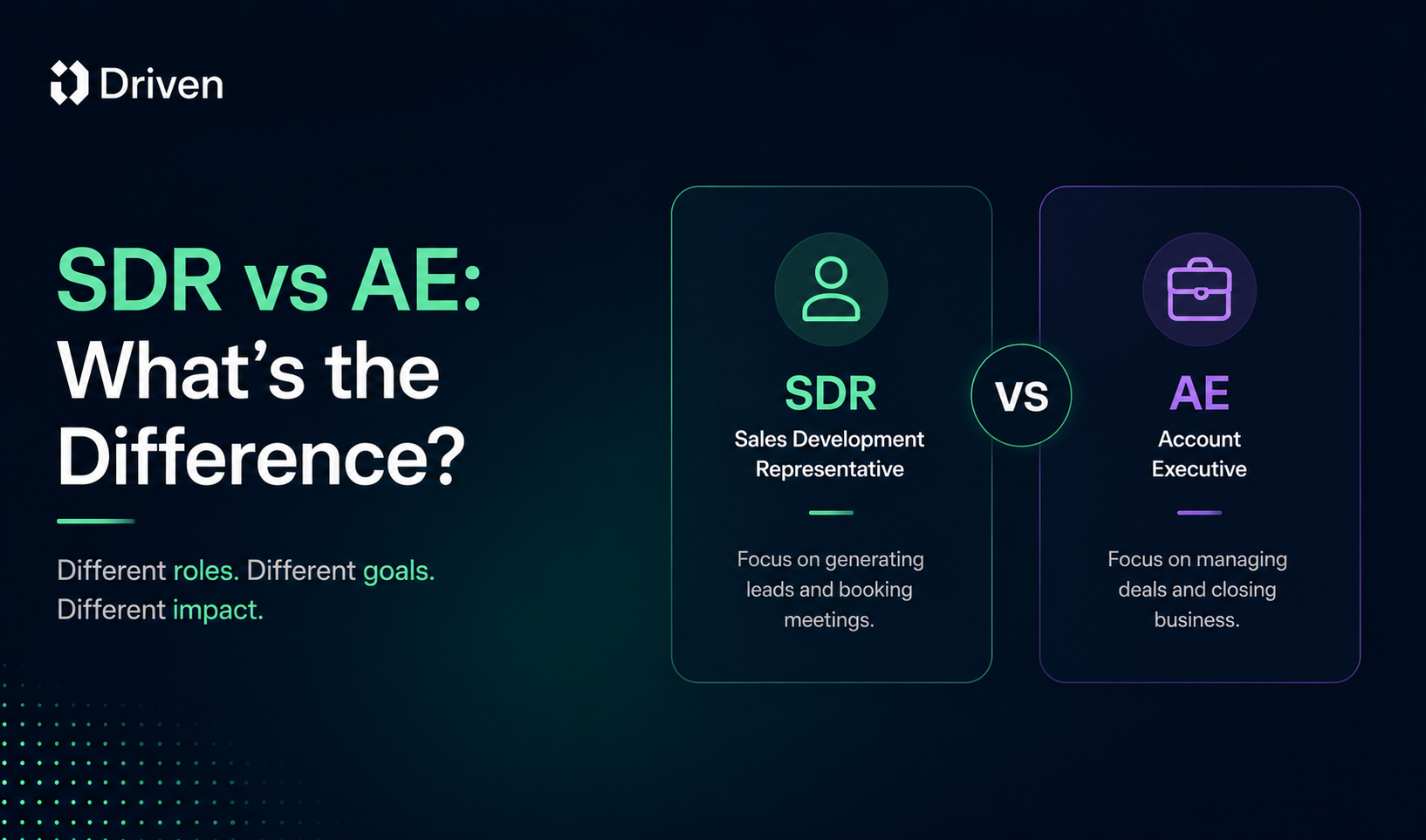
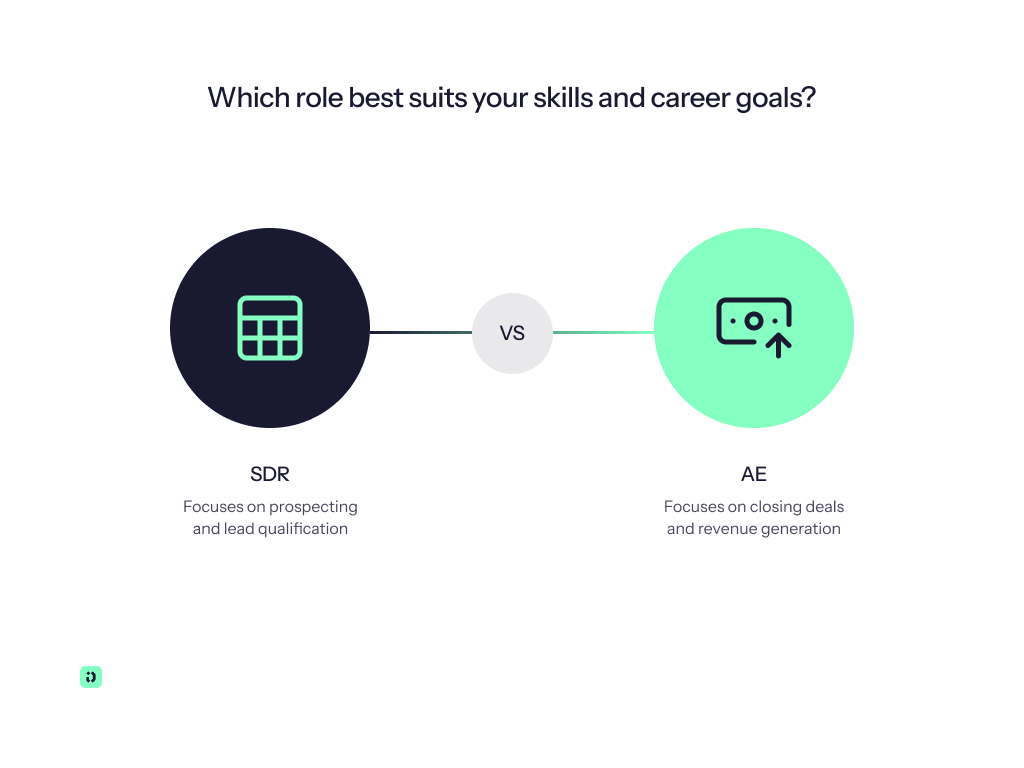
71% of organizations now use pay-for-performance models, directly tying earnings to specific, measurable outcomes, a significant shift away from flat commission structures. Meanwhile, the 50/50 base-to-variable split remains the most common structure for account executives, with SDRs sitting closer to 60–70% base and 30–40% variable.
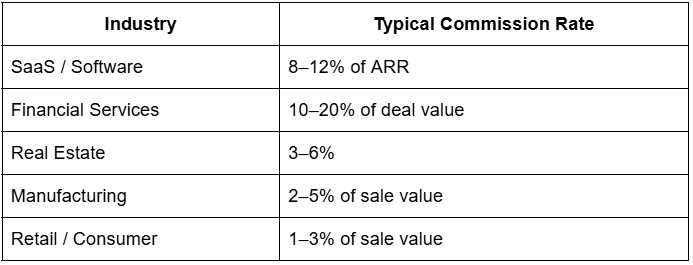
Commission rates continue to vary widely by industry:

One structural trend worth flagging: the pay gap between top-performing and average account executives hit $200,000 in 2025, the widest spread in five years, according to Xactly. Simultaneously, newer reps are earning less than their equivalents in 2021, and account manager bonuses have flattened. This is the emerging problem of pay compression: top performers pull far ahead while the middle of the sales organisation stagnates, which is exactly where most of your revenue volume comes from.
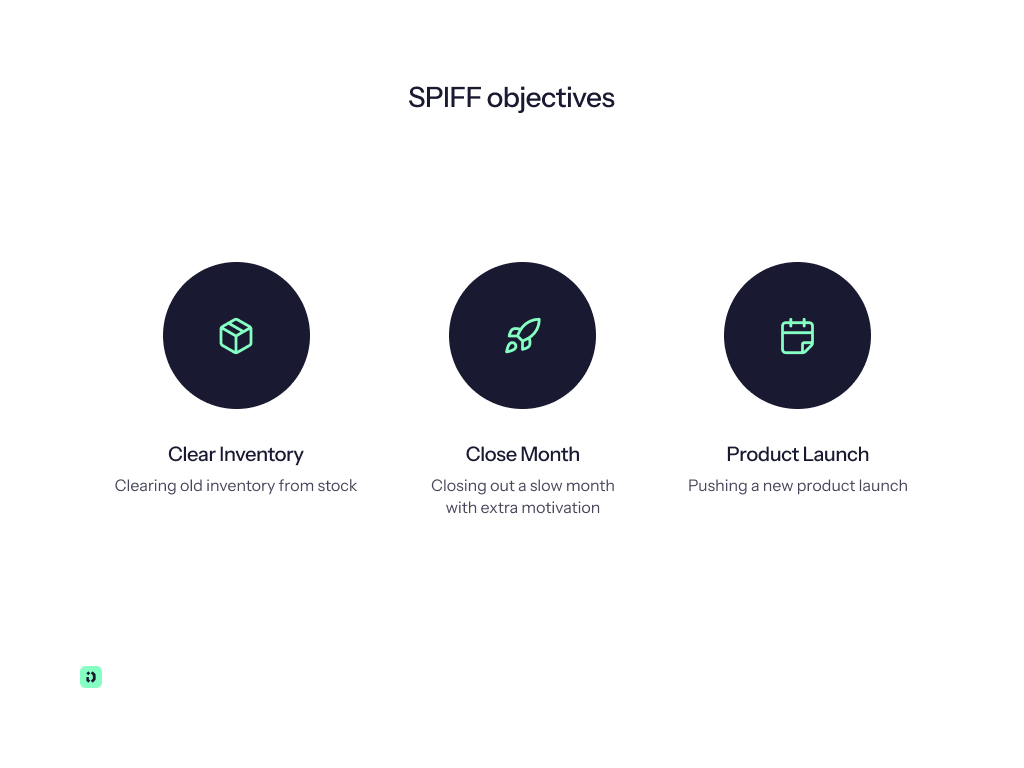
Understanding the full range of incentive structures available, from tiered commission to MBOs to SPIFFs, is essential as organizations shift toward more sophisticated models. Our breakdown of variable incentive pay types and how to design high-impact plans is a useful companion here.
RevOps takeaway: Commission rates should be set by working backward from your OTE target. If a rep hits quota at your target rate, do they reach OTE? If the math doesn't work, the rate is wrong, regardless of what competitors pay.
Operational Efficiency: The Hidden Cost of Manual Commission Management
This is where the data gets uncomfortable for most RevOps teams.

- Sales ops teams spend 20–40 hours per month on manual commission runs that automated tools handle in minutes. For a two-person RevOps function, that can represent nearly a full working week per month, every month, dedicated to data extraction, formula reconciliation, manager sign-offs, and dispute resolution.
- Commission errors affect an average of 8.8% of total payouts annually (Gartner), and most go unchallenged because reps don't know they occurred. For a 30-person sales team with average OTE of $120,000 and 50% variable pay, an 8.8% error rate on $1.8 million in variable compensation means roughly $158,000 in incorrect payouts per year, a number that typically appears nowhere in the P&L.
- CaptivateIQ's 2026 State of Incentive Compensation Report found that 64% of organizations experienced payout errors in the past year, even as 91% reported high payee trust. This is the "trust is a lag indicator" problem: reps trust the process right up until they find a mistake, at which point that trust collapses fast and is difficult to recover.
- Despite all of this, 47% of organizations still rely on spreadsheets for incentive compensation. And more than half of all organizations using spreadsheets produce incorrect payments at some point. The global ICM market is valued at $3.03 billion in 2026 and projected to reach $12.23 billion by 2035, driven largely by organizations finally moving off manual processes that have been quietly eroding rep trust and operational efficiency for years.
The full picture of what manual commission tracking actually costs, in hours, errors, and attrition, is covered in detail in our piece on the hidden costs of manual commission tracking and how to fix them.
RevOps takeaway: Run a simple audit. How many hours per month does your team spend on commission administration across calculation, validation, approval, and dispute resolution? If the number exceeds 10 hours for a team of under 20 reps, you're running a process that will only get more expensive as you scale.
How Driven helps: Driven connects natively to HubSpot and Salesforce to pull real-time deal data and calculate commissions automatically. Organizations switching from manual processes to automation report a 60–80% reduction in administration time, and finance teams close the books 3–5 days faster.
Compensation Disputes: A Transparency Problem, Not Just an Accuracy Problem
58% of enterprises report commission disputes occurring at least twice per quarter. Each dispute requires manual investigation, data reconciliation, and manager time, pulling RevOps and finance away from higher-value work. A dispute rate above 15% per pay cycle is widely considered a signal of systemic process issues.
68% of employees are dissatisfied with manual commission management, citing errors, delays, and lack of transparency as the primary drivers. This dissatisfaction isn't passive; it directly contributes to disengagement and attrition.
The important nuance here: high dispute rates are often a transparency problem as much as an accuracy problem. Reps who fully understand how their commission is calculated and can verify it against a real-time data file have significantly fewer disputes, even when the output is identical. The dispute is frequently triggered by confusion, not error.
RevOps takeaway: For every dispute, track the root cause, calculation error, crediting ambiguity, timing question, or plan interpretation issue. Root cause analysis is one of the most effective tools for identifying which specific parts of your compensation plan are creating the most friction.
Technology & AI Adoption in Compensation
The technology gap in compensation management is significant, and closing fast.
Only 27% of companies have fully automated their end-to-end commission process (CaptivateIQ 2025). The majority still rely on some combination of spreadsheets, manual data entry, and fragmented tools. Yet reps with real-time earnings visibility hit quota at 14% higher rates than those who wait until month-end (Salesforce State of Sales). The performance case for automation is unambiguous.
On AI specifically: 81% of incentive compensation teams now use AI in some capacity, but only 28% use it extensively. The gap matters, extensive AI users report a 67% rate of being "very prepared" for market shifts, compared to much lower rates among light users. 41% of companies are now using AI-powered ICM tools to streamline compensation processes, a figure that will continue rising as the ICM market grows at 16.76% CAGR.
AI is being applied across the following: quota planning, scenario modelling, commission forecasting, dispute review, and performance coaching. The organizations getting the most value from AI in compensation are using it to model decisions before they make them, not just to automate calculations after the fact. For a deeper look at where this is heading, our piece on the future of sales compensation and why AI is changing the game covers the full trajectory.
One more operational data point that rarely gets discussed: 39% of organizations take one to two months to implement plan changes, and only 12% can do it in under two weeks. In a market where strategy shifts quarterly, a two-month implementation lag means you're paying on yesterday's plan while operating on today's strategy. That's a strategic agility problem hiding inside a process problem.
How Driven helps: Driven's AI agent designs and updates compensation plans instantly, surfaces performance insights, identifies which behaviors are driving revenue, and reviews disputes automatically, without months of consultancy work or manual spreadsheet rebuilds.
Retention: What Bad Compensation Plans Actually Cost
Sales turnover is 35% annually, nearly triple the 13% cross-industry average. Replacing a sales rep costs an average of $115,000 when accounting for recruitment, training, and lost pipeline. In a talent market where the best reps have more options than at any point in recent memory, a compensation plan that was adequate three years ago may now be actively accelerating attrition.
The good news: companies that introduced clear OTEs and pay transparency improved rep retention by 12–15% (PayScale 2025 Compensation Best Practices Report). This effect is separate from the actual pay level; it's about trust in the process, not just the number on the cheque. A rep who understands and trusts their commission process is more engaged, files fewer disputes, and is significantly harder to poach.
31% of sales reps cite the lack of meaningful bonuses as a contributing factor in wanting to leave their role. Compensation dissatisfaction is a leading indicator of attrition; it surfaces months before a rep starts interviewing elsewhere, and it's almost always visible in engagement and dispute data if you're tracking the right signals.
For a broader look at how compensation connects to rep motivation and what to do when it breaks down, our piece on why sales reps lose motivation and how to fix it covers the full picture.
RevOps takeaway: When a rep leaves, ask whether compensation played a role, and if so, whether it was the structure, the level, or the transparency that drove dissatisfaction. Attrition data is one of the best diagnostic signals for compensation plan health.
Key Statistics at a Glance

How Driven Helps RevOps Teams Act on These Statistics
Every problem these statistics point to is quota misalignment, manual errors, payout disputes, lack of rep visibility, and slow plan changes, exactly what Driven is built to solve.
Driven is an AI-native sales compensation platform built specifically for RevOps, finance, and sales leaders who are done managing commissions through spreadsheets and endless back-and-forth with finance.
Here's what it looks like in practice:

- Instant plan design, zero maintenance. Driven's AI agent designs or updates your compensation plan on demand, no consultancy engagement, no months of back-and-forth. When your strategy shifts, your comp plan keeps up.
- Real-time commission calculations. Driven connects natively to HubSpot and Salesforce to pull live deal data and calculate commissions automatically. The 8.8% error rate that plagues manual processes? It disappears. Finance teams close the books 3–5 days faster. RevOps gets back 20–40 hours per month.
- Personal rep dashboards. Every rep gets a live view of their earnings, quota attainment, and deal-by-deal commission breakdown, eliminating shadow accounting, reducing disputes, and directly improving the 14% quota attainment gap that real-time visibility creates.
- Automated dispute review. Driven's agent reviews deal comments and flags discrepancies automatically, ending the manual burden on finance teams and resolving the root cause of the 58% quarterly dispute rate most enterprises experience.
- Instant management reporting. Audit-ready performance reports generated automatically so leadership stays informed and compliance stays covered without anyone manually assembling data.
The result: what used to take three days now takes three hours. Compensation stops being a source of confusion and starts functioning as the performance driver it was always meant to be.
Final Thoughts
The statistics in this guide tell a consistent story: most organizations are operating compensation plans that are more expensive, less accurate, and less motivating than they should be, and the gap between where they are and where they could be is largely an infrastructure and transparency problem, not a strategy problem.
The organizations pulling ahead are those that treat compensation as a strategic revenue function: designed with role-specific precision, backed by real-time data, and delivered with the transparency that earns rep trust. If even two or three of the benchmarks above revealed a gap in your current approach, the path forward is clear. Start with the data. Fix the process. Build the transparency. The performance follows. Ready to eliminate commission errors and give your RevOps team their time back? Book a demo with Driven and see how AI-powered compensation management changes what's possible.
Frequently Asked Questions
.png)
Sales Compensation Structure: Types, Examples, & How to Choose the Right Model
A sales compensation structure is the framework that determines how sales representatives are paid. It combines fixed compensation, such as base salary, with variable compensation tied to performance, including commissions, bonuses, incentives, or profit-sharing arrangements.
The purpose of a compensation structure is not simply to pay employees. It is designed to:
- Motivate sales performance
- Attract and retain top talent
- Align sales activities with company objectives
- Reward desired outcomes
- Maintain predictable compensation costs
An effective compensation plan creates a clear connection between performance and earnings while remaining simple enough for employees to understand.
.png)
Sales Compensation Statistics Every RevOps Leader Should Know
Revenue Operations sits at the intersection of sales, finance, and strategy. Compensation is one of the primary mechanisms that drives, or misaligns, that engine. When compensation data is absent, RevOps teams operate reactively: quotas get set on gut feel, disputes consume operational bandwidth, and retention problems get blamed on culture when the real root is pay dissatisfaction.
When compensation data is used proactively, the picture changes entirely. RevOps teams can forecast payout cost against projected performance, spot quota risk before it materialises, and build transparency into the system before disputes arise. The statistics below aren't just benchmarks; they're diagnostic tools for identifying exactly where your compensation strategy has gaps.
.png)
How to Build a Sales Compensation Plan
A sales compensation plan is a structured framework that defines how sales employees are rewarded based on their performance. At its core, it answers one question: what do we pay people for, and how much?
A typical plan includes:
- Base salary: the guaranteed fixed income
- Commission structure: variable pay tied to performance
- Bonuses: one-time or periodic rewards for hitting specific targets
- Quotas: the performance thresholds that trigger commissions
- KPIs and metrics: the behaviors and outcomes being measured
- Accelerators: higher commission rates for overperformance
A well-designed plan drives profitable growth. A poorly designed one drives the wrong behaviours, or drives your best reps out the door.

.avif)


.svg%201.avif)