Why Sales Reps Lose Motivation and How to Fix It

%20(1)%20(1).png)
TL;DR
Sales is one of the most performance driven roles in any business. But even the most ambitious reps can lose motivation over time. When that happens, it doesn’t just affect individual performance; it impacts revenue, team morale, and long term growth. The real issue is not that sales reps suddenly stop caring. It’s that the systems meant to motivate them often do the opposite.
In many organizations, unclear compensation plans, unrealistic targets, and outdated tools create confusion instead of clarity. And when reps stop trusting how they are paid, motivation drops fast. The good news is that this problem is fixable. With the right approach and AI driven systems, companies can rebuild trust, align incentives, and keep sales teams focused on what matters most: closing deals.
Why Sales Rep Motivation Matters
Motivation is directly tied to performance in sales. When reps clearly understand how their effort translates into earnings, they are more focused, consistent, and productive. On the opposite side, poorly structured compensation plans lead to low morale, reduced engagement, and higher attrition. In fact, unclear or inconsistent pay structures are a major driver of dissatisfaction and turnover in sales teams. Motivation is not just about energy or mindset. It is about trust in the system.
Why Sales Reps Lose Motivation
Sales reps lose motivation when they feel uncertain about how their efforts translate into rewards, especially when compensation plans lack transparency and consistency. When trust in the pay structure breaks down, even high performers can become disengaged and less driven to close deals.
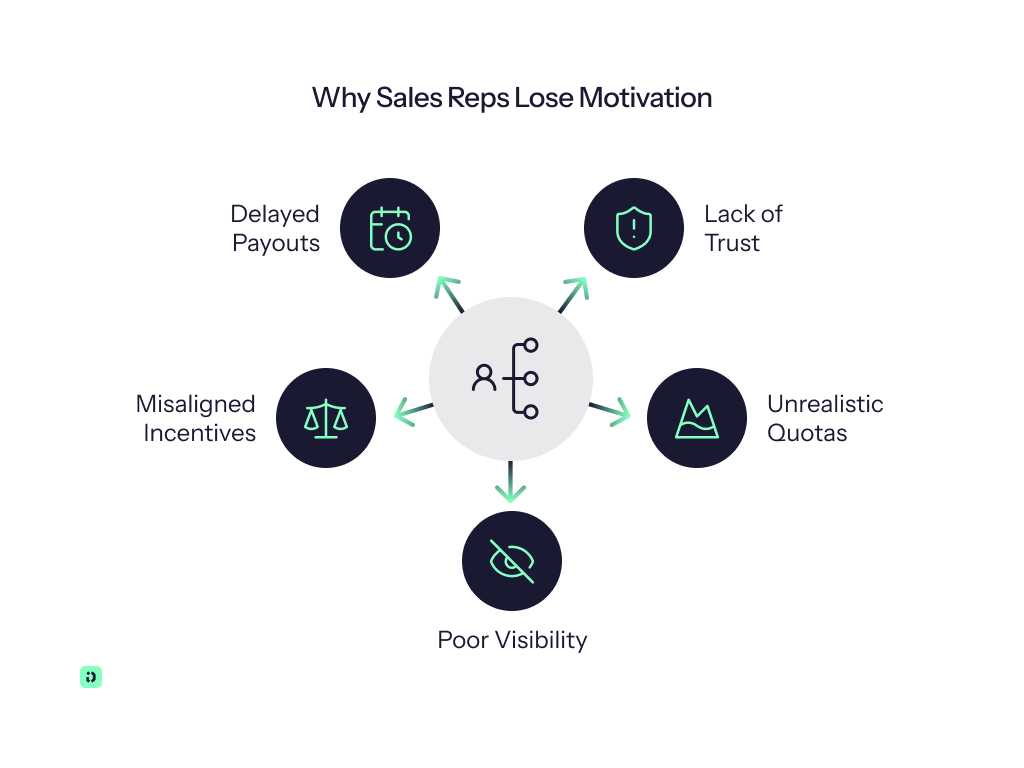
1. Lack of Trust in Compensation Plans
When commission structures are unclear or payouts feel inaccurate, reps begin to question the fairness of the system. Confusion quickly turns into frustration, especially when calculations are handled manually. Errors, delays, and disputes further damage confidence. Over time, this lack of trust reduces motivation and leads reps to put in only minimal effort.
2. Unrealistic Quotas and Targets
Targets that feel impossible to achieve can quickly discourage even high performing reps. Instead of feeling motivated, they experience constant pressure without meaningful reward. When consistent effort fails to produce results, it creates frustration and self doubt. This gap between effort and outcome eventually leads to burnout, reduced engagement, and a noticeable drop in performance.
3. Poor Visibility into Performance
Clear visibility into performance is essential for maintaining focus. When tracking is delayed or unclear, reps struggle to understand their progress toward goals. This uncertainty makes it harder to prioritize deals or adjust strategies. Without real time insights, motivation becomes inconsistent, and reps may lose direction during critical stages of the sales cycle.
4. Misaligned Incentives
Compensation plans should encourage the right behaviors, but poorly designed incentives can have the opposite effect. Rewarding volume over quality may drive short term gains while hurting long term results. It can also create imbalance within teams, where some reps benefit unfairly. This lack of alignment leads to frustration, disengagement, and reduced trust in the system.
5. Delayed or Complicated Payouts
Timely and simple payouts play a key role in keeping reps motivated. When commissions are delayed or difficult to understand, the connection between effort and reward weakens. Sales performance relies on momentum, and any delay disrupts that rhythm. Over time, this creates uncertainty, lowers trust, and reduces the drive to consistently perform at a high level.
Signs Your Sales Team Is Losing Motivation
Sales motivation doesn’t disappear overnight; it fades when systems fail to support performance. When reps lose trust in how they are paid, even the best teams start to disengage. Below are some of the signs that indicate your sales team is losing motivation.
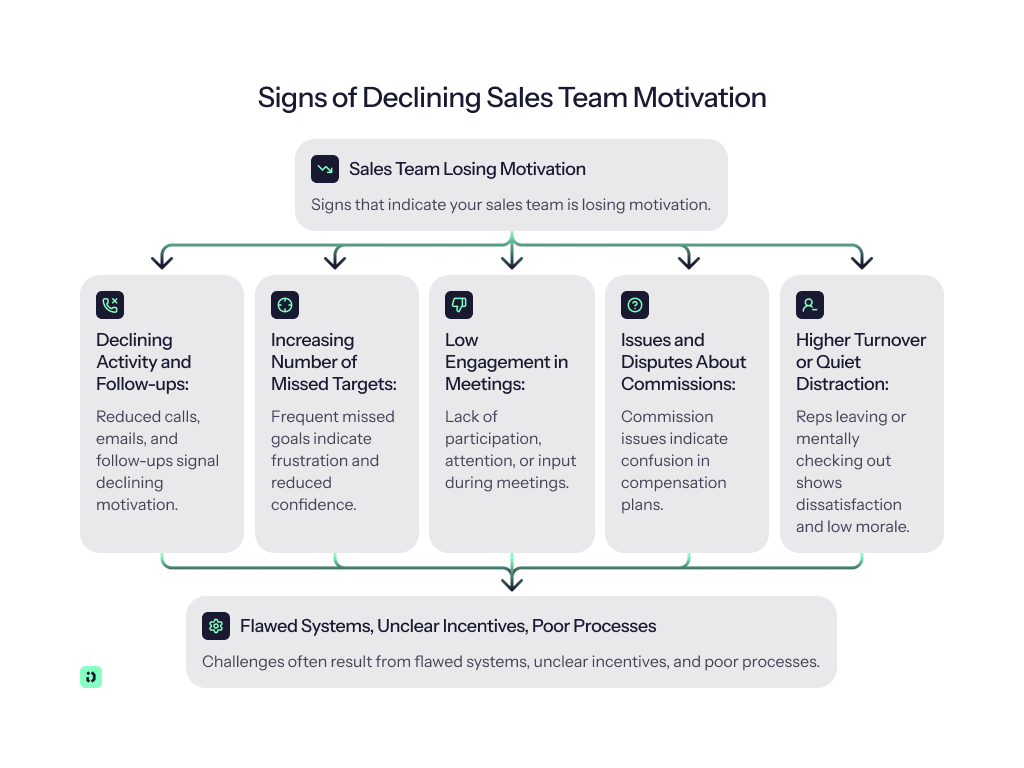
- Declining activity and follow ups: Reduced calls, emails, and follow ups signal declining motivation, leading to weaker pipelines, missed opportunities, and lower overall sales performance.
- Increasing number of missed targets: Frequent missed targets indicate disengagement, reduced confidence, and a growing disconnect between effort and results over time.
- Low engagement in meetings: Lack of participation, attention, or input during meetings reflects declining interest, weak team connection, and reduced motivation to perform.
- More questions and disputes about commissions: Frequent commission disputes suggest confusion or mistrust in compensation plans, creating friction and reducing focus on selling activities.
- Higher turnover or quiet disengagement: Reps leaving or mentally checking out shows dissatisfaction, low morale, and long term risk to team stability and performance.
These challenges often result from flawed systems, unclear incentives, and poor processes rather than individual performance or capability.
How to Fix Sales Rep Motivation
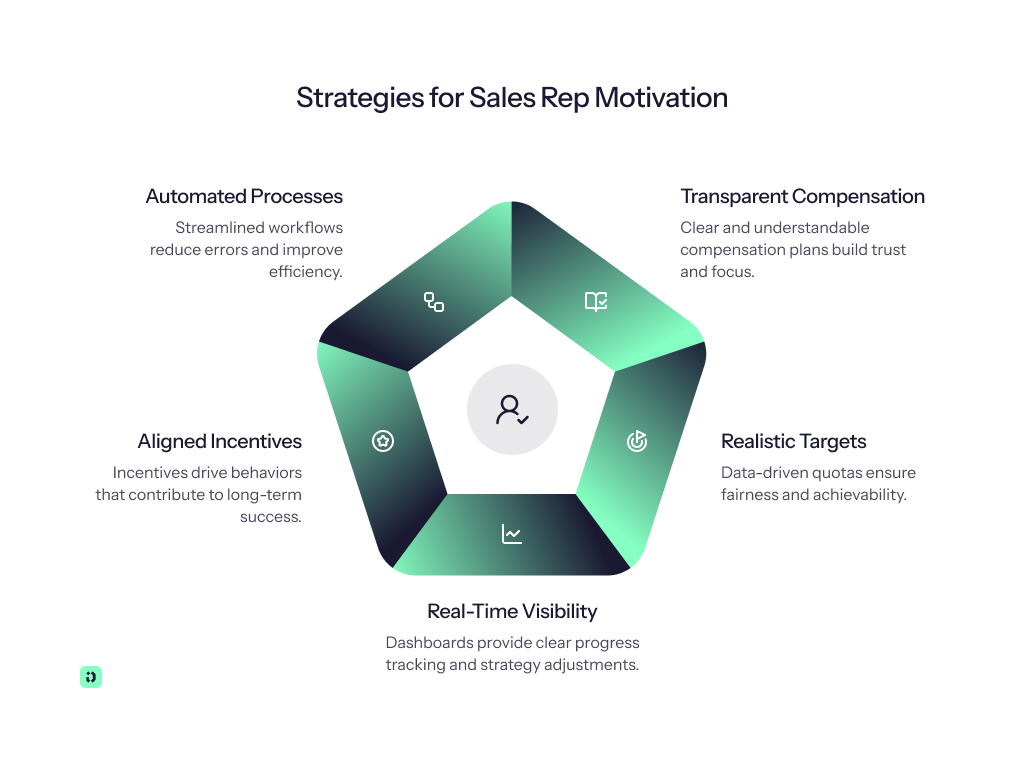
1. Build Transparent Compensation Plans
Clarity is everything. When reps clearly understand how compensation works, it builds trust and removes uncertainty. A transparent structure keeps them focused on performance instead of questioning payouts.
- How they earn
- What they earn
- What they need to do to earn more
Transparent plans eliminate confusion, reduce disputes, and create a strong connection between effort and reward.
2. Set Realistic, Data Driven Targets
Targets should challenge reps without making success feel impossible. When quotas are based on real performance data, they feel fair and achievable, which keeps motivation high.
- Use historical performance data
- Set achievable and fair quotas
- Adjust targets based on market conditions.
This approach ensures that consistent effort leads to meaningful results and sustained engagement.
3. Provide Real Time Performance Visibility
Sales reps perform better when they can clearly see their progress. Real time visibility helps them stay focused, prioritize deals, and adjust strategies when needed.
- Access to real time dashboards
- Clear tracking of targets and earnings
- Ability to adjust strategies quickly
With better visibility, uncertainty reduces and reps stay motivated throughout the sales cycle.
4. Align Incentives with Business Goals
Compensation should drive the right behaviors, not just reward outcomes. When incentives are aligned, reps focus on actions that contribute to long term success.
- High quality deals
- Long term customer value
- Sustainable growth
Well designed plans don’t just reward performance; they actively shape it.
5. Automate and Simplify Processes
Manual systems often create delays, errors, and confusion. Simplifying processes through automation improves accuracy and builds confidence in the system.
- Reduce manual calculations
- Minimize errors and disputes
- Streamline workflows
Modern solutions like Driven help bring this all together by automating compensation and providing clarity, so reps can focus on selling instead of chasing numbers.
The Role of AI in Keeping Sales Teams Motivated
AI driven compensation platforms eliminate guesswork and bring clarity to every part of the process. Instead of relying on spreadsheets and delayed updates, businesses can create systems that are accurate, transparent, and easy to trust.
- Real time commission tracking
- Smart incentive design based on data
- Automatic adjustments to targets and plans
- Full transparency across teams
AI transforms compensation from a source of confusion into a clear, reliable driver of performance and motivation.
How Driven Solves the Motivation Problem
Driven is built to solve the core issue behind sales rep disengagement: lack of trust in compensation. Instead of relying on complex spreadsheets and unclear plans, it creates a system that is transparent, accurate, and easy to understand. Driven offers:
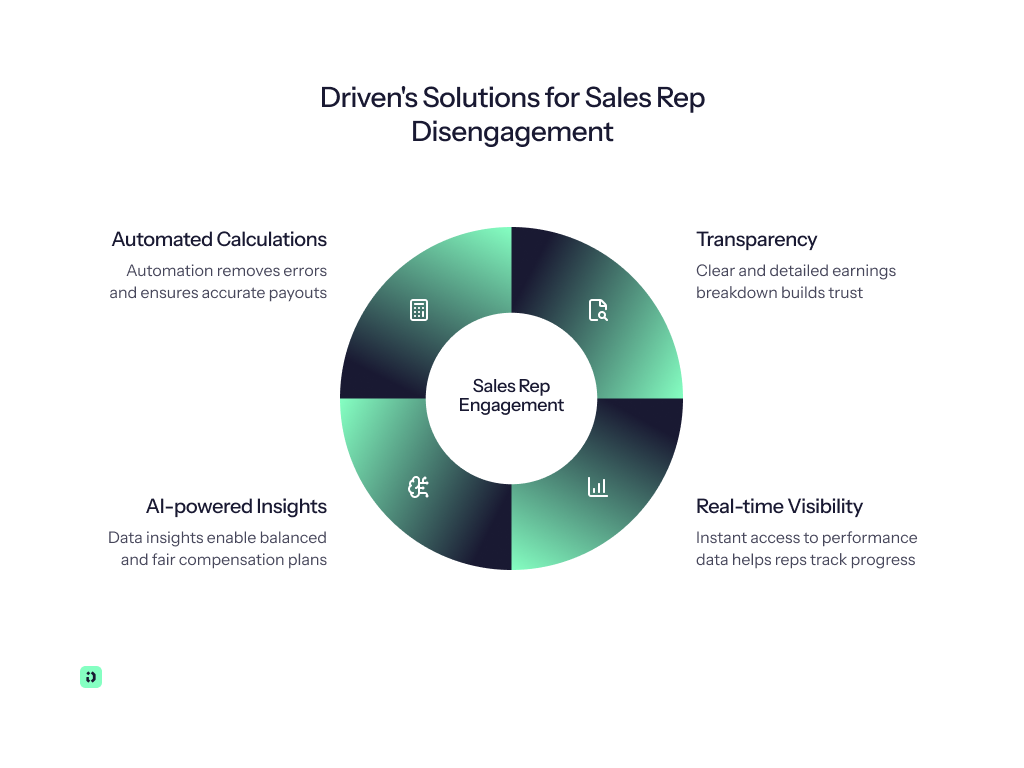
- Complete transparency: A clear and detailed breakdown of earnings removes confusion, builds trust, and ensures reps always understand how their effort translates into rewards.
- Real time visibility: Instant access to performance data helps reps track progress, stay focused on targets, and make better decisions throughout the sales cycle.
- AI powered insights: Advanced data insights enable businesses to create balanced, performance driven plans that feel fair, achievable, and aligned with business goals.
- Automated calculations: Automation removes manual errors, ensures accurate payouts, and reduces disputes, giving reps confidence in the system and its reliability.
With Driven, compensation is no longer a black box. Reps understand their targets, trust the system, and stay focused on closing deals.
By connecting incentives directly to performance and making everything visible, Driven helps teams stay aligned, motivated, and productive.
Conclusion
Sales reps don’t lose motivation because they lack ambition. They lose motivation because the systems around them fail to support them. When compensation is unclear, unfair, or delayed, trust breaks. And when trust breaks, performance follows. The solution is simple but powerful. Clear, transparent, and AI driven compensation plans rebuild trust, align incentives, and keep sales teams motivated.
If your sales team is struggling with low morale, unclear incentives, or constant commission disputes, it’s time to rethink your approach. Discover how Driven can help you create transparent, AI powered compensation plans that keep your reps motivated and focused on closing more deals.



See your comp plan, fully built in minutes

Frequently Asked Question
About the author
Andres De Jonge






Understanding SPIFFs, Bonuses, and Commissions
Ask a sales rep what's driving their next paycheck, and you'll often hear all three words used interchangeably: SPIFF, bonus, and commission. They get lumped together as "extra money for selling," but they're not the same thing, and treating them like they are leads to confused reps, inconsistent payouts, and comp plans nobody can actually explain.
A SPIFF is a short-term, targeted incentive. A bonus is a lump-sum reward tied to hitting a broader goal. A commission is the ongoing, formula-based pay tied directly to sales, the core of most sales comp plans, not an add-on to it.
This guide breaks down what each one actually means, when companies use them, how they're calculated, and how they stack together so you can build a comp plan where every payout has a clear reason behind it.
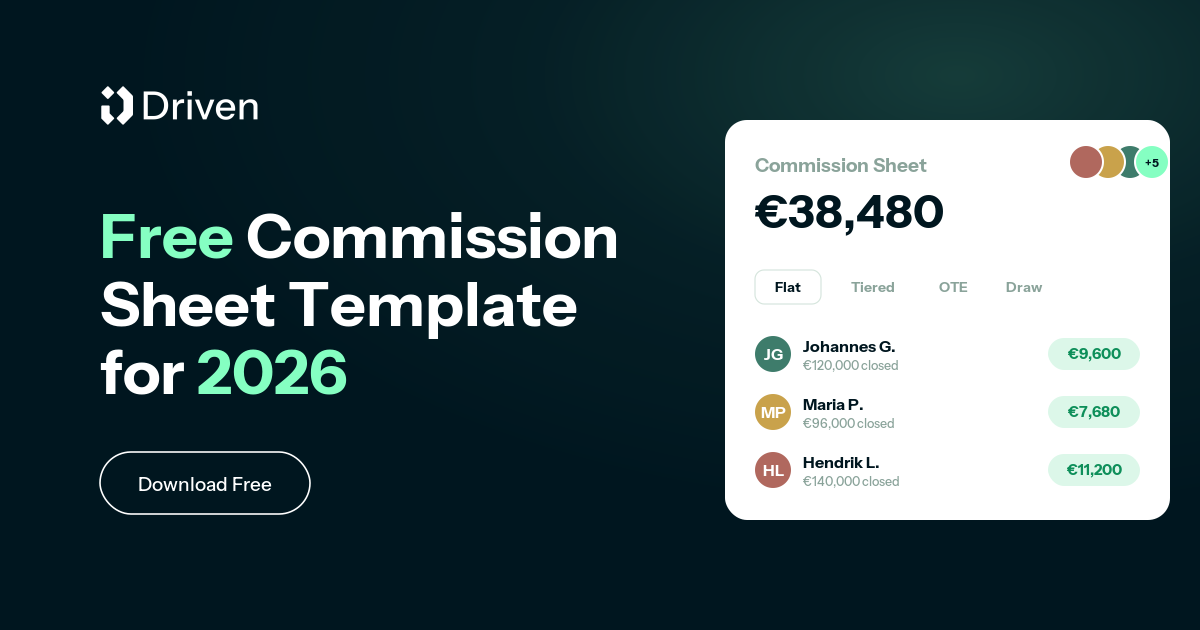
Free Commission Sheet Template: 8 Sales Commission Spreadsheets in One Excel File
Most commission plans don't fail because the idea is wrong. They fail because nobody modelled the numbers before rolling them out. A rate that looks generous on a slide turns into a payout you can't afford at 130% attainment, or an accelerator so flat that your best reps stop pushing the moment they hit quota.
So we built a free commission sheet template to fix that. It's one Excel file with eight ready-to-use sales commission spreadsheets, each structure on its own tab, each with live formulas and a filled-in sample row. Change a rate, a quota, or a revenue number and every payout updates instantly, and because everything lives in one workbook you can compare models side by side without juggling downloads.
Download the commission sheet template, or start for free and let Driven build the plan for you.

New to comp design? Start with our guide to sales compensation structure types, then model your pick here.


Non-Recoverable Draw vs. Recoverable Draw: What's the Difference?
New sales hires often get offered a "draw" against commission, and most sign the offer letter without knowing there are two very different types. That gap in understanding can mean thousands of dollars either staying in a rep's pocket or getting clawed back months later.
A draw is essentially an advance on future commission, designed to give reps steady income while they ramp up pipeline and close their first deals. But whether that advance is recoverable or non-recoverable determines something much bigger: whether it ever has to be paid back.
This guide breaks down what each draw type means, how they're calculated, when companies typically use each one, and the mistakes that turn a helpful ramp tool into a trust problem between reps and the company that hired them.




.svg%201.avif)