5 Signs Your Sales Compensation Plan Is Hurting Your Revenue

TL;DR
A well designed sales compensation plan should motivate your team, align their efforts with business goals, and drive consistent revenue growth. It acts as a silent manager, constantly signalling to your reps what matters, what gets rewarded, and where to focus their energy. However, when the structure is unclear or misaligned, it can quietly create confusion, reduce motivation, and lead to poor sales outcomes.
Many organisations assume performance issues come from weak pipelines or difficult market conditions, but often the root cause lies within the compensation plan itself. The way incentives are designed directly influences how your sales team behaves and what they prioritise day to day. If your team is consistently missing quotas, focusing on low value deals, or feeling disengaged, your compensation plan may be holding your revenue back instead of accelerating it. The good news is that these problems are identifiable and fixable. Below are five of the most common warning signs and what you can do about them.
1. Your Sales Team Is Missing Quotas Consistently
When quota attainment drops across the team, it is rarely just a performance issue. Consistent underperformance often signals that the targets or incentives are not aligned with reality. Even strong performers can struggle when the plan does not clearly connect effort with rewards. Over time, this disconnect reduces motivation and creates uncertainty around expectations.
Common signs to watch for:
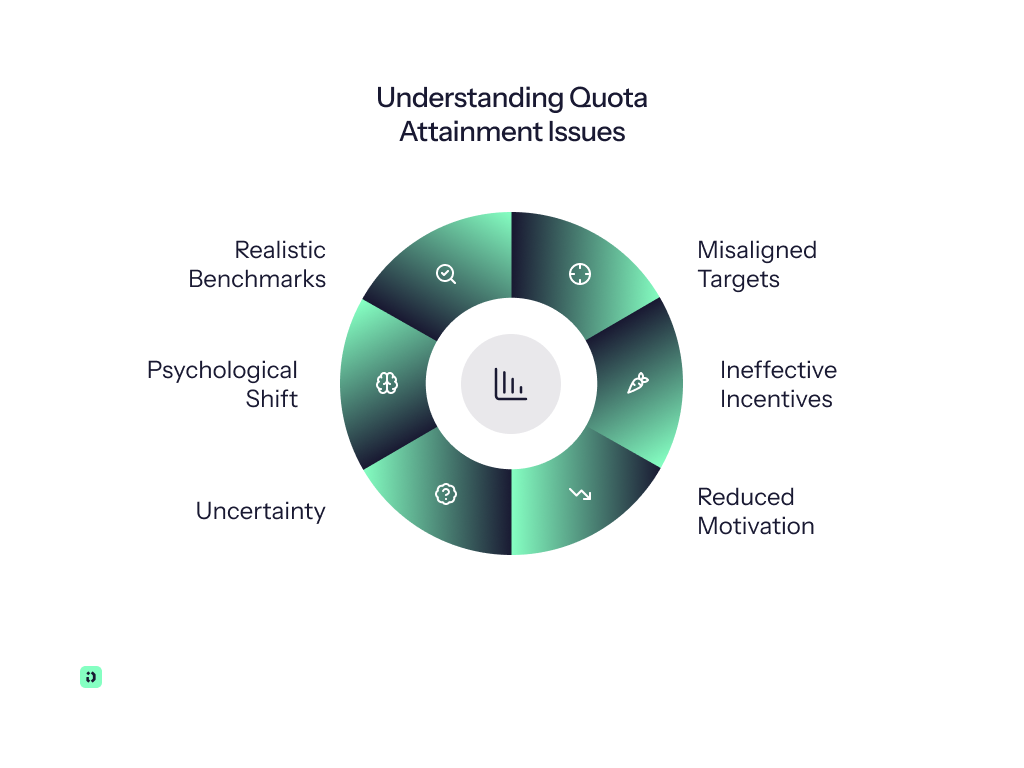
- Majority of reps falling below quota each cycle
- Top performers struggling to hit targets they previously met with ease
- Quota numbers that feel unrealistic or completely disconnected from current market conditions
- Reps stopping to push for stretch performance mid quarter
When reps begin to perceive their targets as unachievable, they stop trying to hit them. That psychological shift is far more damaging than any individual missed quota.
It is worth asking: Are your quotas built on historical data, or are they aspirational numbers handed down without a clear methodology? Quotas that are not grounded in realistic benchmarks, factoring in:
- Territory potential
- Product maturity
- Sales cycle length
- Current market conditions
They consistently set your team up to fail, no matter how talented they are.
Key takeaway: If most of your team is missing quotas, the issue is likely not effort but misaligned incentives that fail to create a clear and motivating path to success.
2. Reps Are Closing the Wrong Deals
Sales teams always follow incentives. If your compensation plan rewards speed or volume over value, reps will naturally prioritize deals that are easier to close rather than those that truly benefit the business. This leads to short term revenue gains but long term challenges, especially when high value or strategic opportunities are consistently being overlooked.
Red flags that your deal quality is suffering:

- Heavy focus on low value or quick win deals over strategic accounts
- High volume but low quality pipeline that inflates activity metrics
- Enterprise or complex deals being consistently deprioritized
- High churn rates among newly acquired customers
If your enterprise deals take three months to close but smaller transactional deals close in a week, and both are rewarded the same way, your reps will always chase the faster win. The commission structure is quietly making the decision for them.
Beyond deal size, misaligned incentives also affect customer quality. Reps incentivized purely on new logos may chase accounts that churn quickly, inflating short term numbers while eroding long term revenue. A compensation plan that rewards the right behavior, including:
- Customer fit and profile match
- Total contract value
- Upsell and expansion potential
- Retention likelihood
This will produce a healthier, more sustainable pipeline over time.
Key takeaway: When incentives are misaligned, reps focus on what gets rewarded rather than what drives long term revenue, leading to poor deal quality and missed strategic opportunities.
3. Compensation Plans Are Too Complex to Understand
A compensation plan only motivates if people understand it. When reps struggle to calculate their potential earnings or cannot explain how their commissions are structured, they lose confidence in the system entirely. This leads to constant questions, disputes, and distractions that pull focus away from selling.
Warning signs your plan is too complex:
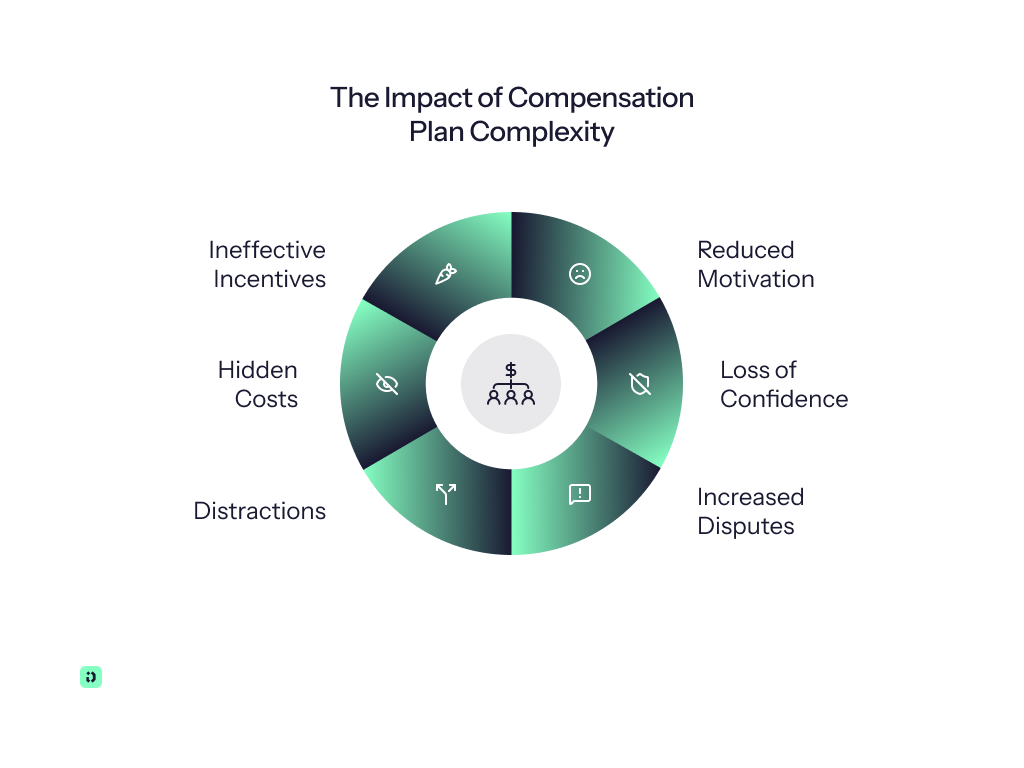
- Frequent questions from reps about how payouts are calculated
- Ongoing disputes between sales and finance teams over commission amounts
- Reps independently tracking earnings in personal spreadsheets
- Low engagement with accelerators or bonus structures because reps do not understand them
When a rep closes a deal and cannot tell you within seconds roughly what they will earn from it, that is a clear signal the plan is too complicated.
Complexity also creates a hidden motivation cost. Reps begin making conservative assumptions about their earnings, which lowers their drive to push for stretch performance. The features meant to excite them, accelerators, SPIFs, and tiered bonuses, lose their power entirely when they are too hard to model. Ask yourself:
- Can a new rep explain the plan after one read through?
- Can reps calculate their earnings on a deal without a spreadsheet?
- Does your finance team spend days reconciling at the end of each cycle?
If the answer to any of these is no, simplicity is not a compromise; it is an urgent design priority.
Key takeaway: If your team does not fully understand how they are paid, motivation drops and trust weakens, making it harder for them to stay focused on driving consistent results.
4. High Performers Are Frustrated or Leaving
Top performers are highly sensitive to how they are rewarded relative to their output. When compensation does not reflect their effort or results, or when they feel the plan treats all reps equally regardless of performance level, frustration builds quickly. This often leads to disengagement or attrition, which directly impacts revenue and team stability.
Signs your top talent is at risk:
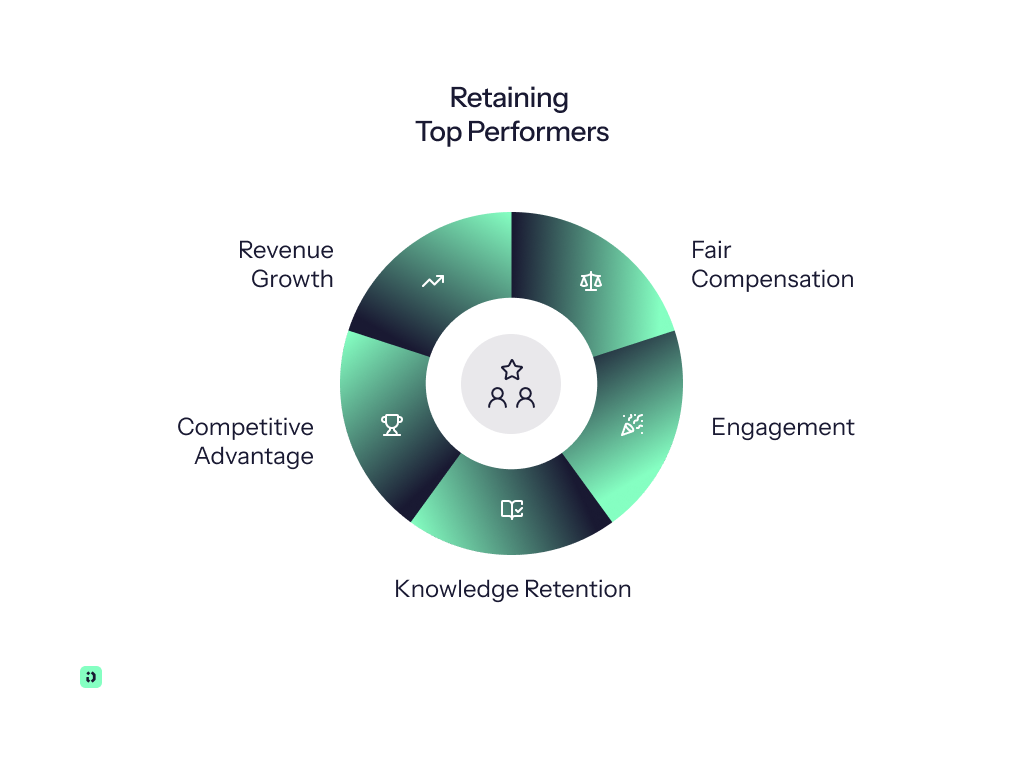
- Vocal complaints about pay fairness from your best reps
- Reduced engagement or coasting behavior after hitting quota
- Higher attrition specifically among high performers
- Top reps being recruited away by competitors with better commission structures
Losing a top performer is not just a headcount problem. It represents:
- Lost pipeline and deals in progress
- Lost institutional knowledge about customers and processes
- A warning signal to the rest of the team about how performance is valued
High performers often leave not because of base salary but because of how variable compensation is structured. Commission caps are one of the most common culprits. When a rep hits their ceiling early in the quarter and realizes additional effort yields no additional reward, they coast, or they start interviewing elsewhere. Uncapped, well structured upside for your best people is one of the most effective retention tools available.
Key takeaway: If your best performers feel undervalued or frustrated, your compensation plan is failing to reward impact, which can lead to attrition and significant revenue loss over time.
5. You Are Spending Too Much Time Managing Commissions
A compensation plan should support growth, not create operational drag. When teams rely on manual processes, spreadsheets, email chains, and manual reconciliation, errors and delays become common. This not only strains finance and operations teams but also erodes trust and confidence among reps.
Signs your commission process has become a bottleneck:
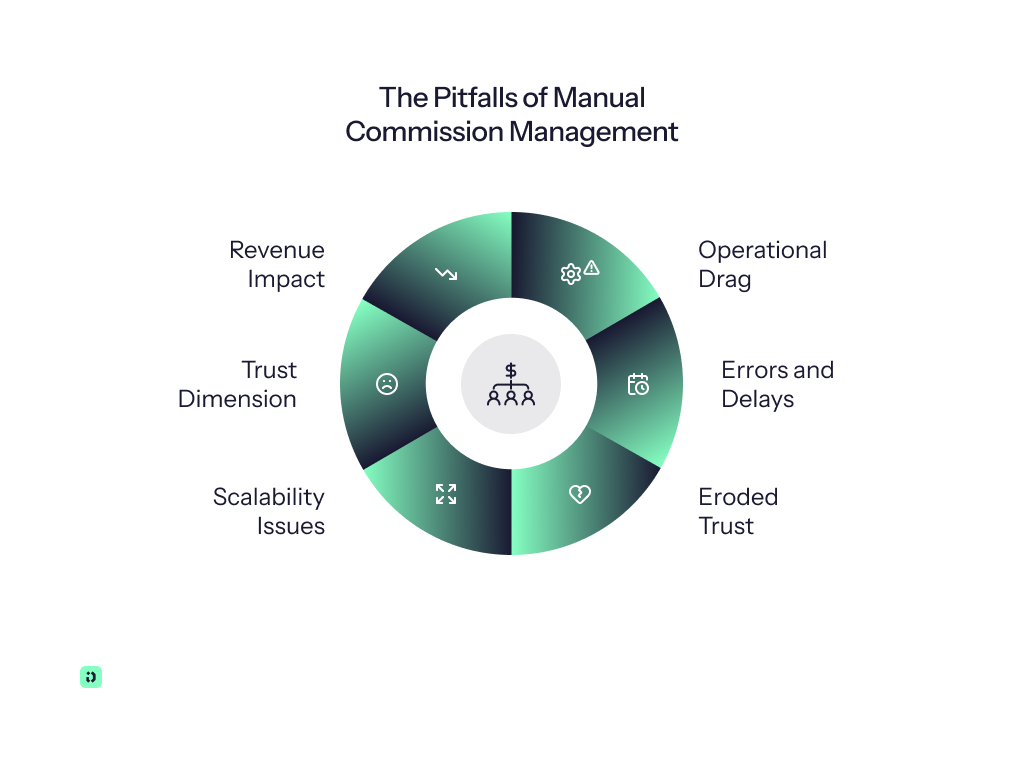
- Heavy reliance on spreadsheets that break or go out of sync
- Frequent calculation errors that require correction after payouts
- Meaningful time spent each month resolving disputes
- Finance and ops teams dreading the end of every commission cycle
Manual commission management also introduces a compounding risk: as your team grows, the complexity scales faster than your capacity to manage it. What works for a 10 person team becomes unmanageable at 50. The cracks do not close over time, they widen.
Beyond efficiency, there is a critical trust dimension here. Reps who receive incorrect or late commission payments, even when the errors are eventually corrected, begin to doubt the integrity of the system. That doubt:
- Lowers motivation and engagement
- Increases the noise around compensation conversations
- Distracts reps from focusing on performance
- It is very hard to fully reverse once it takes hold
Key takeaway: If managing commissions takes excessive time and effort, inefficiencies are likely affecting accuracy, trust, and overall sales performance, ultimately slowing your ability to scale revenue effectively.
How to Fix It
Improving your compensation plan starts with simplifying and realigning it with your actual business goals. To move in the right direction:
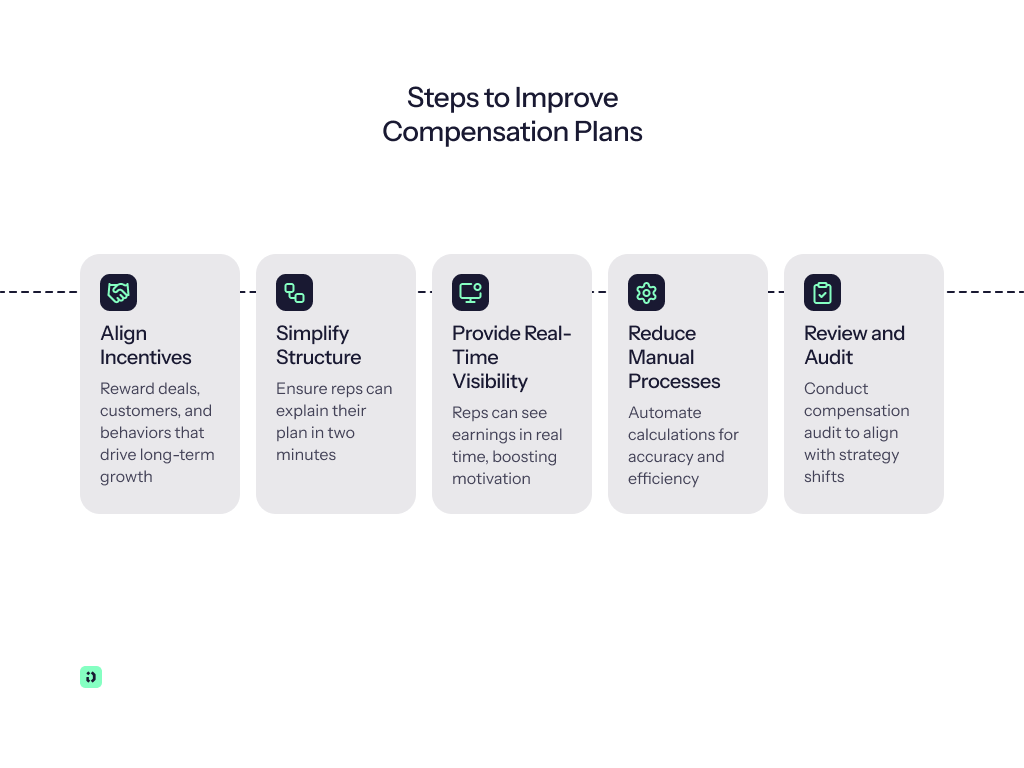
- Align incentives with revenue priorities; reward the deals, customers, and behaviors that matter most to your long term growth
- Keep the structure simple; if a rep cannot explain their plan in two minutes, it needs to be simplified
- Provide real time earnings visibility; reps should never have to guess what they will earn
- Reduce manual processes , and automate calculations to improve accuracy and free up operational bandwidth
- Review plans regularly, and conduct a compensation audit annually, or whenever your go-to-market strategy shifts
When reps can clearly see how their performance impacts their earnings in real time, motivation increases naturally and sustainably.
How Driven Helps
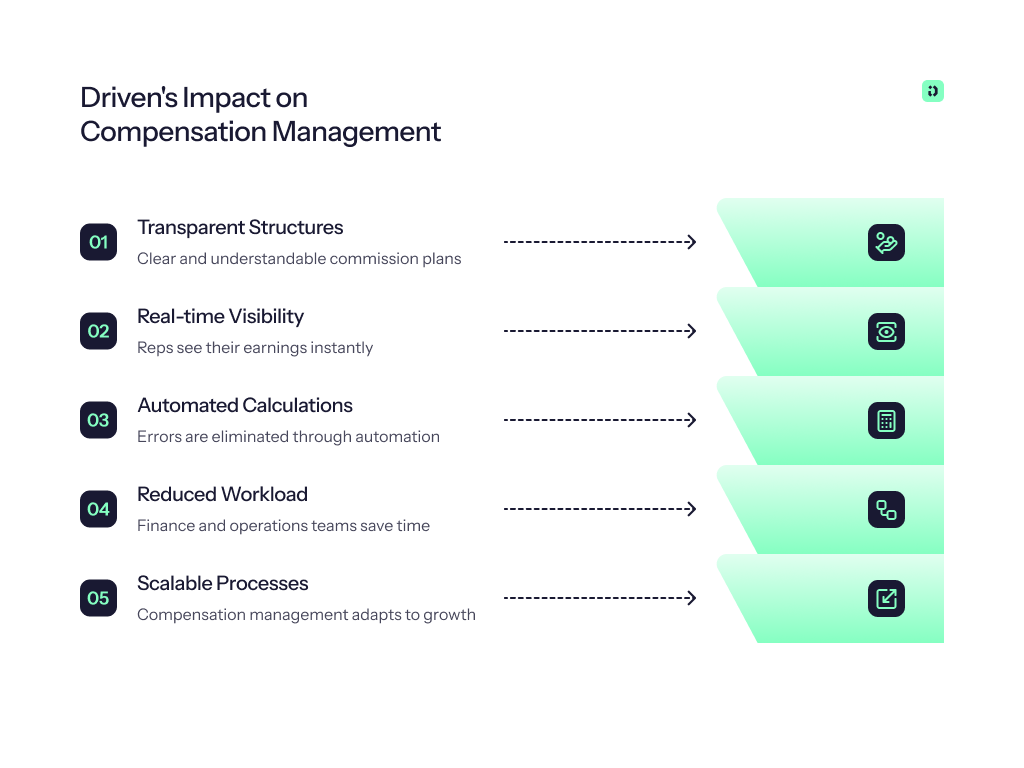
Managing compensation effectively becomes much easier with the right tools in place. With Driven, you can:
- Build transparent commission structures that are easy for reps to understand and trust
- Provide real time earning visibility so reps stay motivated throughout the quarter
- Automate calculations and eliminate the errors that damage trust and drain operational time
- Reduce administrative workload for your finance and operations teams
- Scale your compensation processes as your team grows without adding complexity
The result is better alignment, improved motivation, and a stronger connection between sales effort and revenue outcomes.
Conclusion
Your sales compensation plan plays a more critical role in shaping performance than most organizations realize. When it is misaligned, overly complex, or poorly executed, it quietly creates confusion, reduces motivation, and limits growth, often long before the symptoms become obvious.
By identifying these warning signs early and making the right adjustments, you can transform your compensation plan from a source of friction into one of your most powerful tools for driving consistent and scalable revenue.
Start by asking your sales team one simple question: do you fully understand how you are paid, and do you believe it rewards the right behavior? Their answer will tell you more than any quota report.



See your comp plan, fully built in minutes

Frequently Asked Questions
About the author





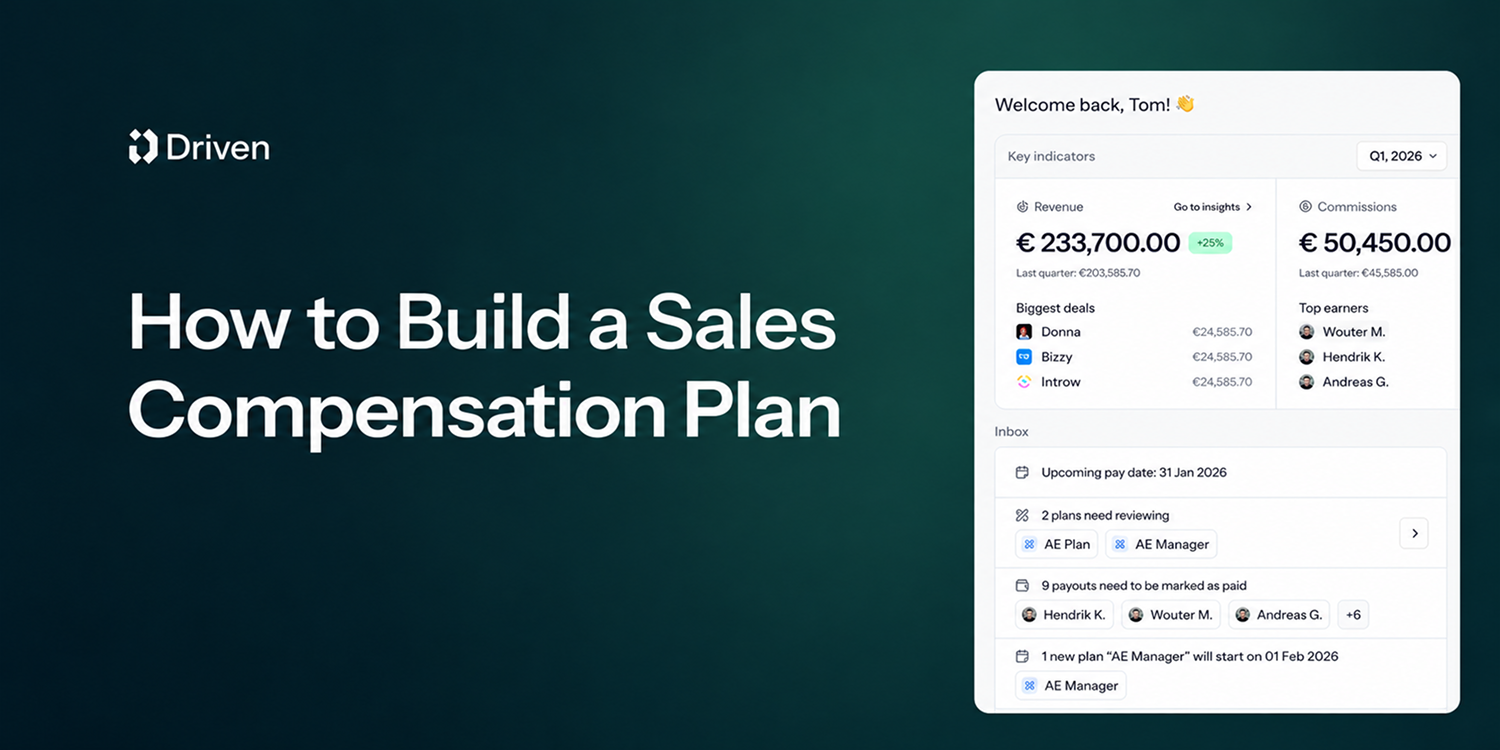
A sales compensation plan defines how your sales team gets paid: a fixed base salary, variable pay like commissions and bonuses, and a quota that decides how much of that variable pay a rep actually earns. Base salary plus target variable pay makes up a rep's on-target earnings (OTE).
Sales compensation plans do more than pay people; they shape behavior, drive revenue, and define culture. Get the plan right, and your team is aligned, motivated, and chasing the numbers that actually matter. Get it wrong, and you'll spend every month-end on disputes, recalculations, and reps who no longer trust their payslip.
This guide covers the core components, the main plan types, and a 10-step process to build your own, followed by three sales compensation plan examples. Jump to the examples. Everything here draws on Driven's work with finance, RevOps, and sales compensation leaders who run these plans every single month.

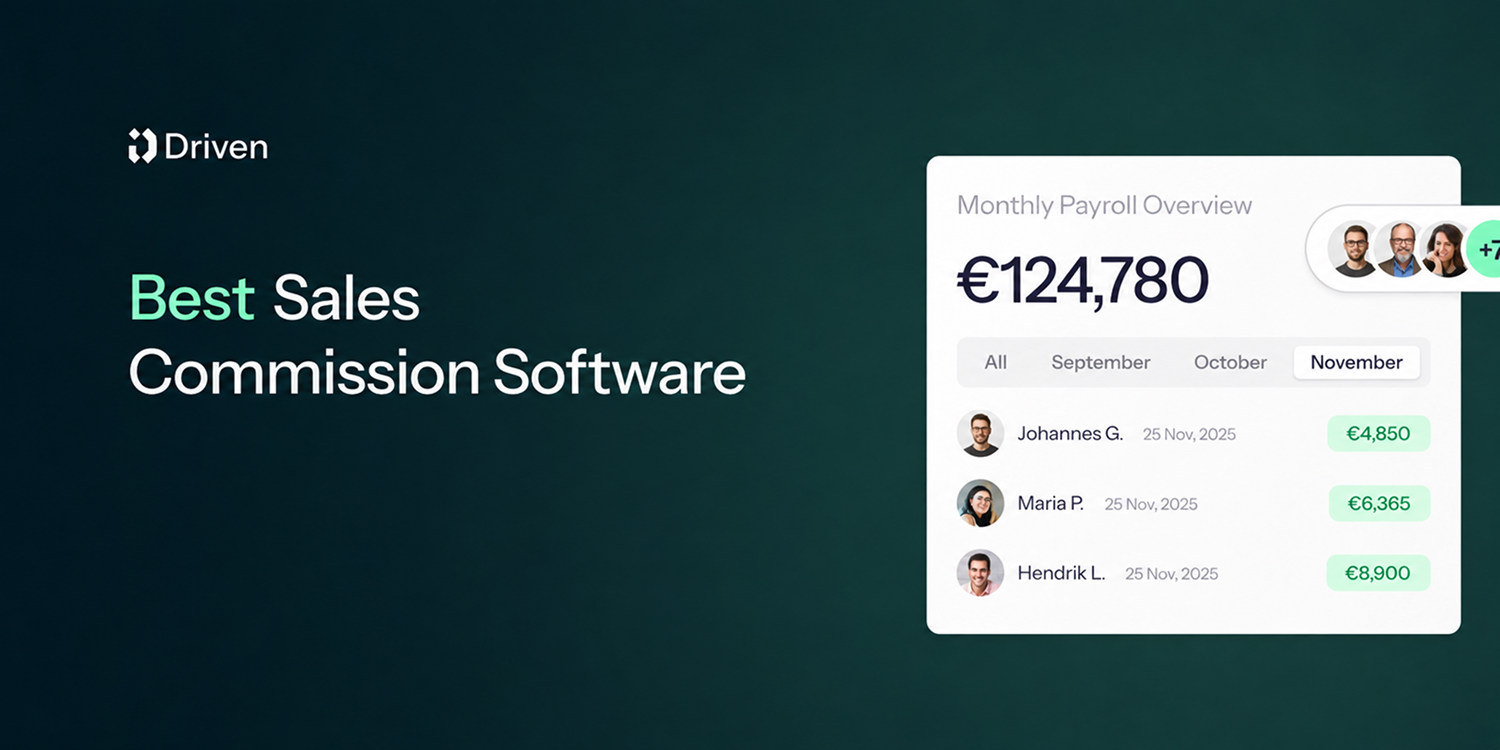
Sales commission software calculates, tracks and explains commissions from your CRM data, so nobody rebuilds a spreadsheet every month. The 9 best tools in 2026:
- Driven: best AI commission agent for HubSpot and Salesforce teams that want to go live in days
- QuotaPath: best for growing teams that want published pricing and broad CRM coverage
- CaptivateIQ: best for mid-market teams with complex, frequently changing plans
- Salesforce Spiff: best for companies that run on Salesforce
- Qobra: best for European RevOps teams that want no-code plans and AI agents
- Xactly Incent: best for large enterprises that also need planning and forecasting
- Performio: best for complex crediting across many data sources and regions
- Sales Cookie: best for small businesses that want month-to-month contracts
- QCommission: best for finance-led teams on QuickBooks or needing on-premise deployment
Choose based on three things: your CRM, how many reps you pay, and how complex your plan is.

TL;DR: Salesforce stores every field commissions depend on, but core Sales Cloud doesn't calculate, explain or protect payouts. Teams close that gap in one of five ways: native formula fields, a custom build, Salesforce's native ICM (Spiff), a vibe-coded tool, or a third-party commission tool. A flat rate and a few reps can stay native. Tiers, accelerators, splits and frequent plan changes point to a dedicated tool, and to an agentic platform like Driven if you want the plan designed, explained and maintained for you.
It's not uncommon for teams in 2026 to still run sales commissions on spreadsheets. The deal data lives in Salesforce, the rates live in a Google Sheet someone built three finance leads ago, and the payouts get reconciled by hand at the end of every quarter. When a rep asks why their number looks different, no one can fully explain it. When finance needs an accrual, someone exports a report and rebuilds it in Excel. The process is time-consuming, error-prone, and actively eroding rep trust. It's hard to keep a sales team motivated when reps can't trust their own paycheck.
Teams that outgrow the spreadsheet usually reach for formula fields, a custom build, or a paid add-on. But tools for managing sales incentives are now moving from rules engines you configure to agents that work alongside you. Gartner predicts that 40% of enterprise applications will feature task-specific AI agents by the end of 2026, up from less than 5% in 2025. They also say that 60% of B2B seller work will be executed through conversational interfaces by 2028.
This guide breaks down five ways to track Salesforce commissions, including what each approach does well, where it breaks, and how to choose.