In 2026, startups are scaling rapidly, but managing sales teams has become increasingly complex. With hybrid work models, multi product offerings, and aggressive revenue targets, sales commission management often becomes a major operational bottleneck. Many startups still rely on spreadsheets or disconnected tools, which may work initially but quickly fail as teams grow and compensation structures become more advanced.
This leads to serious issues such as incorrect or delayed commission payouts, disputes between sales and finance teams, reduced trust, lower sales motivation, and revenue leakage due to calculation errors. As a result, sales commission software for startups in 2026 is no longer optional it’s essential. Modern platforms automate calculations, integrate with CRMs, and offer real time visibility into earnings, with some even using AI to forecast payouts and optimise incentives. This guide explores the best tools, key features, and how to choose the right solution for your startup.
What Is Sales Commission Software?
Sales commission software is a specialised tool designed to automate the process of calculating, tracking, and managing sales incentives. Instead of relying on spreadsheets or manual calculations, these platforms use predefined rules to automatically compute commissions based on sales performance.
At a high level, sales commission software helps startups:
Automate commission calculations
Track sales performance in real time
Provide transparency to sales teams
Reduce payroll and finance workload
Integrate with CRM and accounting systems
In 2026, many platforms go beyond basic automation. They now include AI driven insights, predictive forecasting, and revenue optimisation features, making them a key part of modern RevOps stacks.
Why Startups Struggle Without Commission Software
Before understanding the solution, it’s important to understand the problem.
Startups often begin with simple commission structures that are easy to manage manually. However, as soon as they scale, challenges start to emerge.
1. Complex Commission Structures
As startups scale, compensation plans become layered and increasingly difficult to manage, especially when multiple incentives, product lines, and performance tiers are introduced simultaneously.
Tiered commission structures based on performance levels
Revenue based incentive models tied to deal value
SPIFFs and short term sales bonuses
Product specific or segment based payouts
Increased risk of manual calculation errors
2. Lack of Transparency
Without proper systems, sales teams often lack clarity on how earnings are calculated, leading to confusion, misalignment, and reduced trust in compensation processes.
Unclear commission calculation logic
No visibility into future expected earnings
Difficulty verifying payout accuracy
Limited real time performance tracking
Reduced trust between sales and finance teams
3. Revenue Leakage
Small errors in commission calculations can quietly accumulate over time, causing financial inefficiencies that directly impact profitability and distort revenue reporting accuracy.
Overpayments due to incorrect calculations
Underpayments affecting sales morale
Missed bonus or incentive triggers
Spreadsheet or formula errors at scale
Long term financial losses across cycles
4. Operational Bottlenecks
Finance and RevOps teams often spend excessive time managing manual commission processes, which delays reporting cycles and reduces overall operational efficiency.
Manual reconciliation of sales and CRM data
Time consuming dispute resolution between teams
Frequent spreadsheet updates and corrections
Delayed month end closing processes
High administrative workload on finance teams
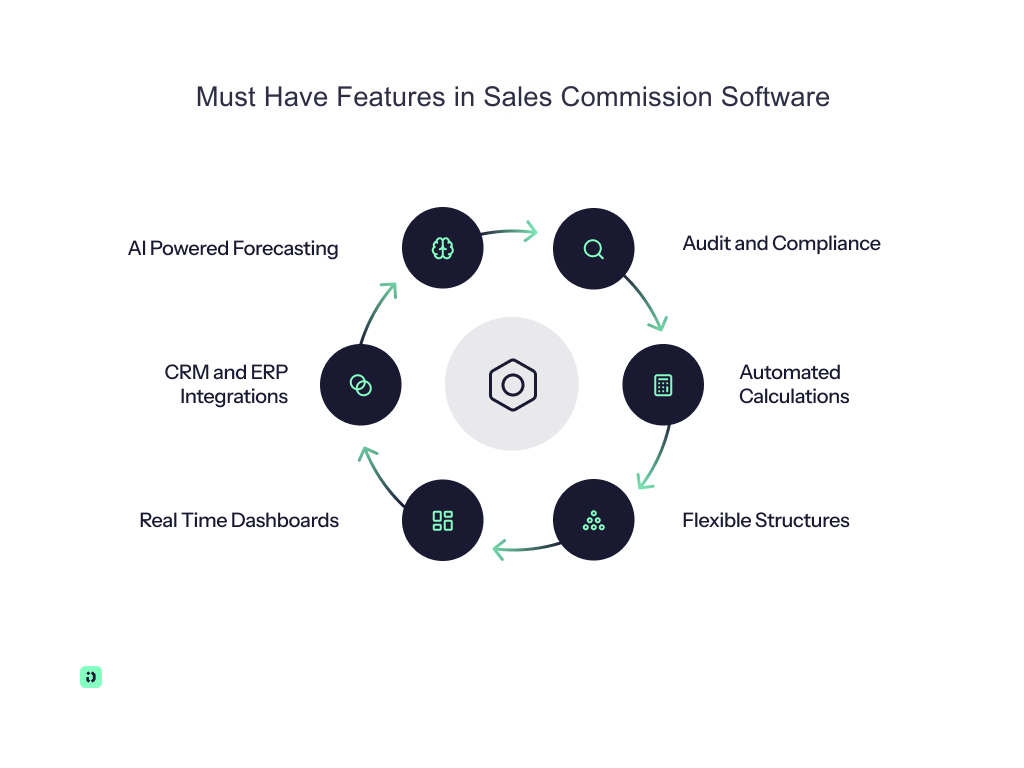
Must Have Features in Sales Commission Software
Not all commission tools are built the same. Startups in 2026 should evaluate platforms based on the following essential features:
Modern startups need adaptable systems that support tiered models, revenue based incentives, bonuses, and hybrid plans, ensuring compensation structures can evolve quickly as sales strategies, products, and business goals change over time. This flexibility also reduces dependency on rigid spreadsheets and manual updates
3. Real Time Dashboards
Real time dashboards give instant visibility into earnings, team performance, and deal level commission breakdowns, helping sales reps stay motivated while enabling managers to track progress and make faster, more informed operational decisions.
AI powered forecasting helps startups predict future commissions, estimate payout liabilities, and recommend incentive adjustments, enabling leadership to make data driven decisions that optimise revenue performance and improve sales planning accuracy.
6. Audit and Compliance Tracking
Audit and compliance tracking ensures every commission calculation is fully traceable, providing transparency, reducing disputes between teams, and simplifying financial audits by maintaining a clear and verifiable record of all payouts.
Benefits of Using Sales Commission Software for Startups
Implementing commission software delivers immediate and long term benefits.
Faster and Accurate Payouts: Automation ensures commissions are calculated correctly and on time
Higher Sales Motivation: When reps trust the system, they are more motivated to sell.
Better Financial Planning: Finance teams can accurately forecast future liabilities and revenue impact.
Reduced Administrative Work: Manual spreadsheet management is eliminated, freeing up valuable time.
Stronger Alignment Across Teams: Sales, finance, and leadership operate with a shared source of truth
Best Sales Commission Software for Startups in 2026
Startups in 2026 need more than spreadsheets to manage growing sales teams and complex compensation plans. The right sales commission software automates payouts, improves transparency, and helps teams scale revenue operations efficiently without manual errors or delays.
1. Driven
Driven is a modern revenue operations and sales commission platform designed for startups that want simplicity without sacrificing control. It stands out because it focuses on making commission management part of a broader revenue workflow rather than a standalone finance task.
Best for: Startups that want an all in one RevOps approach with clean commission automation. Key strengths:
Simple setup for early and growth stage teams
Real time commission visibility
Designed to align sales and finance workflows
Scales alongside revenue growth
Many startups prefer Driven because it reduces operational friction and integrates commission tracking naturally into the broader revenue system.
2. CaptivateIQ
CaptivateIQ is one of the most widely used flexible commission platforms in fast growing startups.
Best for: Startups with evolving or complex compensation structures. Key strengths:
Highly flexible rule engine
Strong analytics and reporting
Scales with growing sales teams
Strong finance and RevOps alignment
CaptivateIQ is ideal when compensation models are frequently changing.
3. Spiff
Spiff is known for its deep integration with Salesforce environments. Best for: Salesforce first SaaS startups. Key strengths:
Native Salesforce integration
Real time commission tracking
Simple UI for sales reps
Automated payout workflows
Spiff works best when Salesforce is the core system of record.
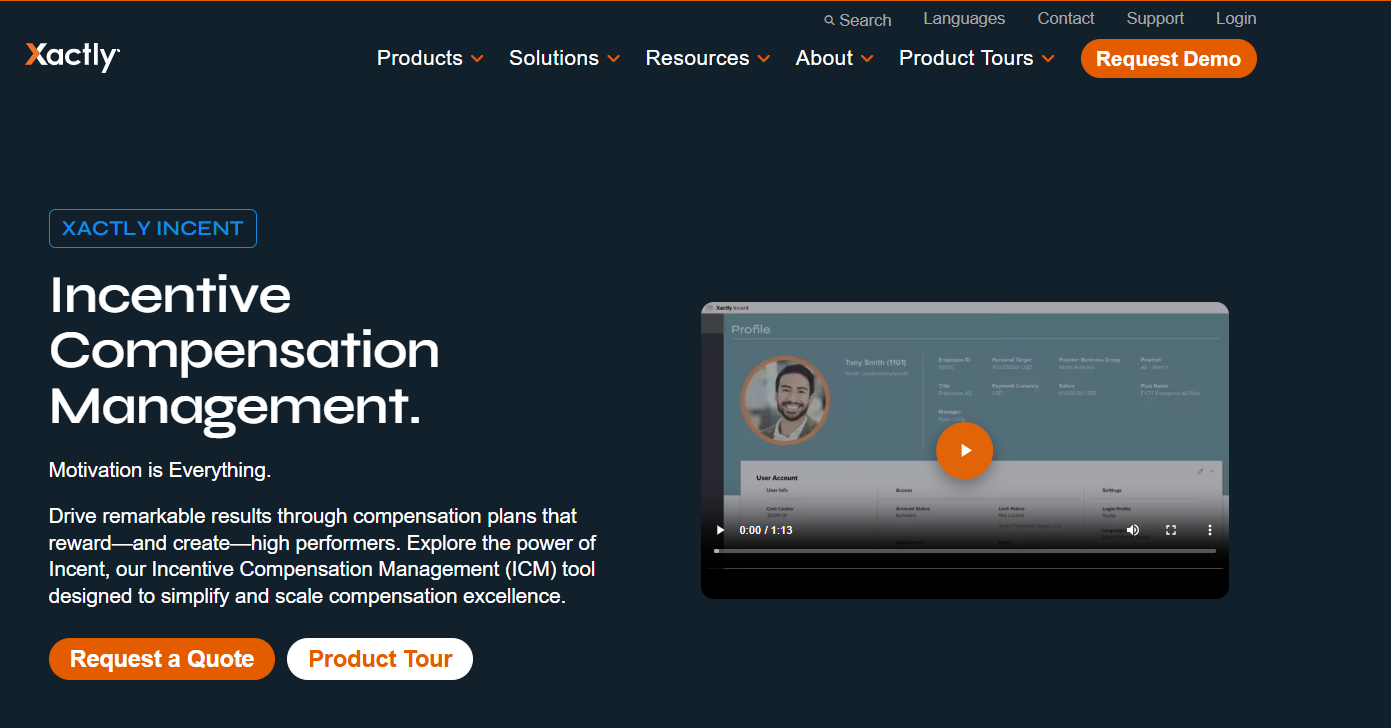
4. Xactly Incent
Xactly Incent is an enterprise grade commission platform built for advanced incentive modelling.
Best for: Scaleups moving toward enterprise level complexity. Key strengths:
Advanced incentive modeling
Strong compliance and audit capabilities
Predictive analytics
Reliable for complex org structures
It’s a strong choice for large, structured sales organizations.
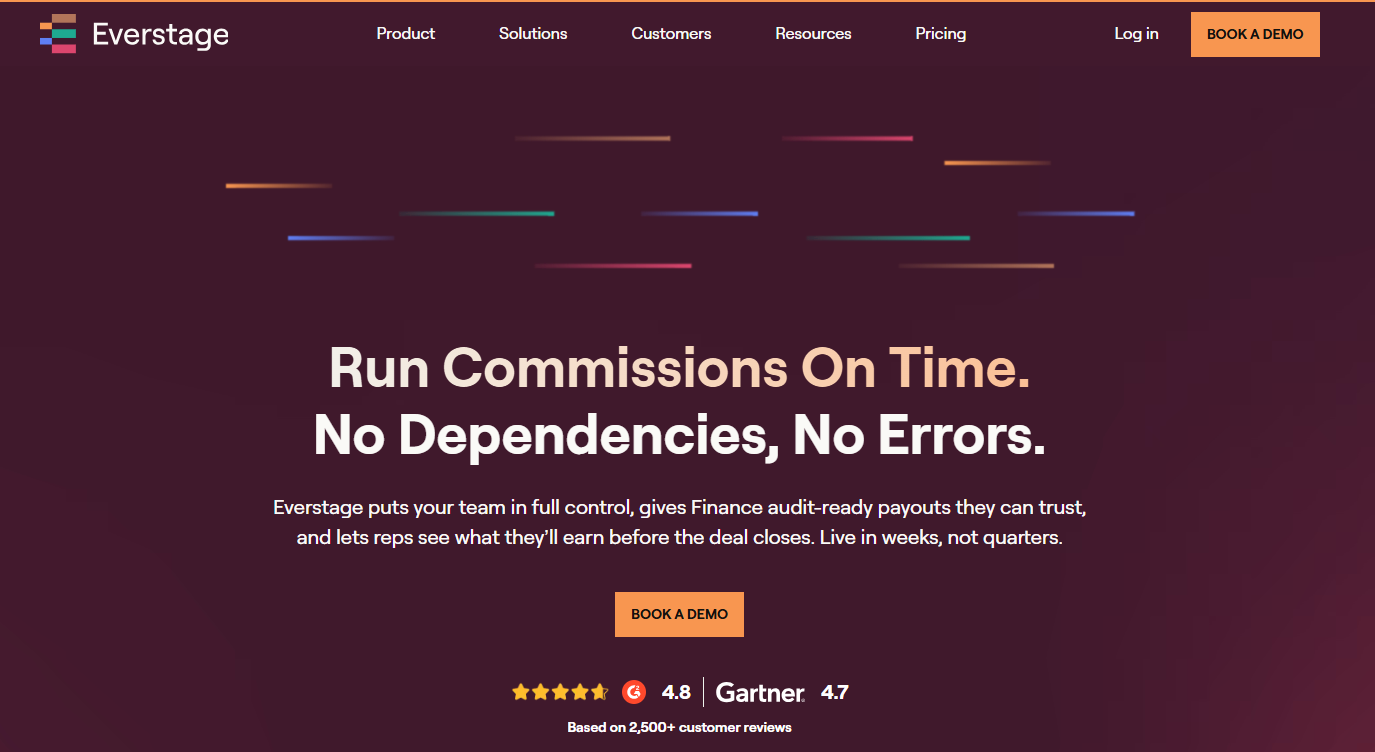
5. Everstage
Everstage is a fast growing commission platform focused on usability and speed.
Best for: Mid market startups needing quick implementation. Key strengths:
Fast onboarding
Clean, intuitive dashboards
Transparent commission tracking
Supports hybrid compensation plans
Everstage is popular for teams that want speed without heavy setup overhead.
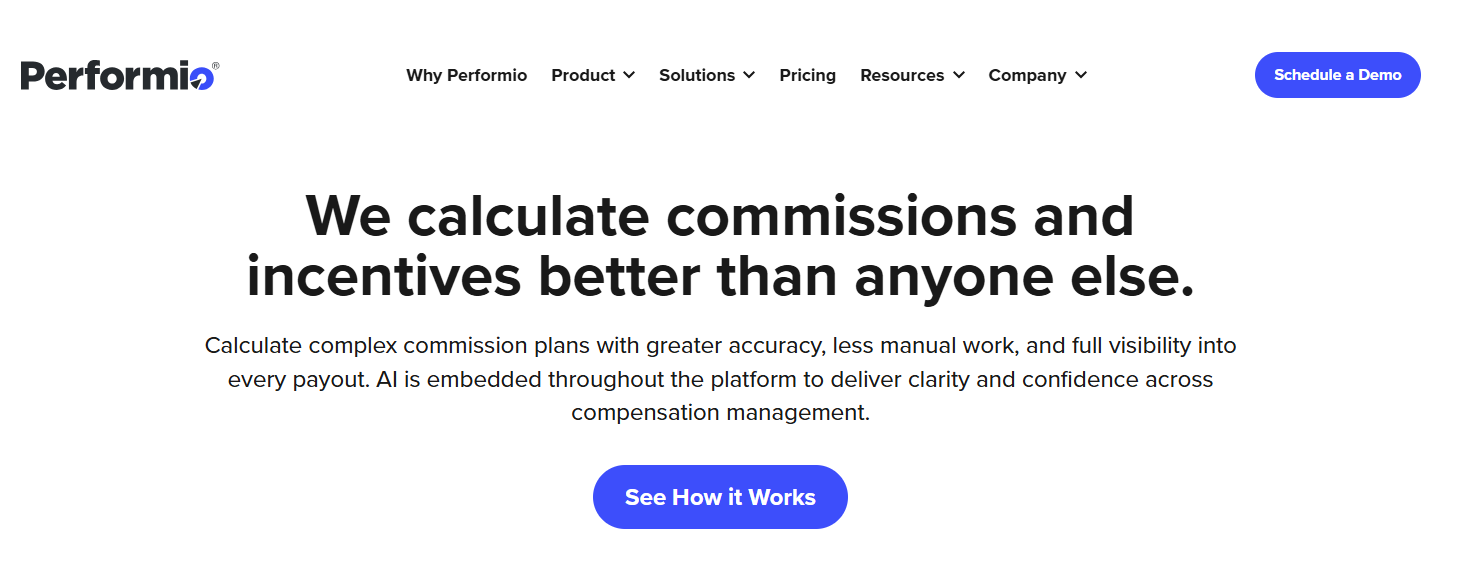
6. Performio
Performio is built for data heavy and highly complex sales organizations.
Best for: Multi product or multi region sales teams. Key strengths:
Advanced customization capabilities
Strong data visualization
Handles complex commission logic
Scales with large revenue operations
How to Choose the Right Sales Commission Software
Choosing the right tool depends on your startup’s stage and structure.
Ask these questions:
How complex is our commission structure?
Do we need deep CRM integration?
How fast are we scaling the sales team?
What is our budget for RevOps tools?
Do we need AI forecasting capabilities?
Early stage startups should prioritize simplicity. Growth stage startups should prioritize scalability and integration.
Implementation Tips for Startups
Even the best software can fail without proper implementation. Follow these best practices:
Start with simple commission structures
Clean your CRM data before integration
Align sales and finance teams early
Run parallel testing before going live
Continuously optimize compensation plans
Successful implementation is as important as the tool itself.
Common Mistakes Startups Should Avoid
Many startups struggle not because of the software, but because of poor implementation. Avoid these mistakes:
Overcomplicating commission structures too early
Ignoring integration requirements
Not providing transparency to sales reps
Failing to update plans as business evolves
Delaying automation until scaling becomes painful
Future of Sales Commission Software in 2026 and Beyond
Sales commission software is evolving rapidly.
Key trends include:
AI driven compensation planning
Real time incentive adjustments
Predictive revenue modeling
Deep RevOps ecosystem integration
Fully automated revenue operations systems
In the future, commission software will not just calculate payouts; it will actively help optimise revenue performance.
Conclusion
Sales commission management is no longer just a back office function, it has become a core driver of sales performance and overall startup growth. In 2026, as teams scale and compensation models become more complex, relying on spreadsheets introduces unnecessary risk, inefficiency, and frequent errors that can directly impact revenue operations.
Modern sales commission software solves these challenges by delivering accuracy, transparency, scalability, and stronger alignment between sales, finance, and leadership teams. Whether startups choose tools like CaptivateIQ, Spiff, Xactly Incent, Everstage, or Performio, the right solution ultimately depends on their stage, structure, and complexity. One thing remains clear startups that automate commission management early scale faster and avoid operational bottlenecks. If you’re ready to simplify and automate your revenue operations, explore how Driven can help you manage commissions with accuracy, transparency, and speed.
Frequently Asked Questions
What is the best sales commission software for startups in 2026?
The best sales commission software depends on your startup’s stage and complexity. Popular options include CaptivateIQ for flexible scaling, Spiff for Salesforce first teams, and Everstage for fast implementation. Each tool serves different startup needs based on team size and compensation structure.
Why should startups use sales commission software instead of spreadsheets?
Startups should move away from spreadsheets because they often lead to calculation errors, delayed payouts, lack of transparency and time consuming manual work. Sales commission software automates calculations, reduces disputes, and ensures accurate, real time payouts.
How does sales commission software work?
Sales commission software works by applying predefined rules to sales data imported from CRMs like Salesforce or HubSpot. It automatically calculates commissions based on performance metrics such as revenue, quota attainment, or deal type and displays results in real time dashboards.
Is sales commission software suitable for early stage startups?
Yes, but early stage startups should choose simple and easy to implement tools like Everstage. These platforms allow quick setup without requiring heavy technical or operational overhead.
Does sales commission software integrate with CRM tools?
Most modern commission platforms integrate with major CRMs such as Salesforce, HubSpot, and others. This ensures real time data syncing and eliminates manual data entry errors.
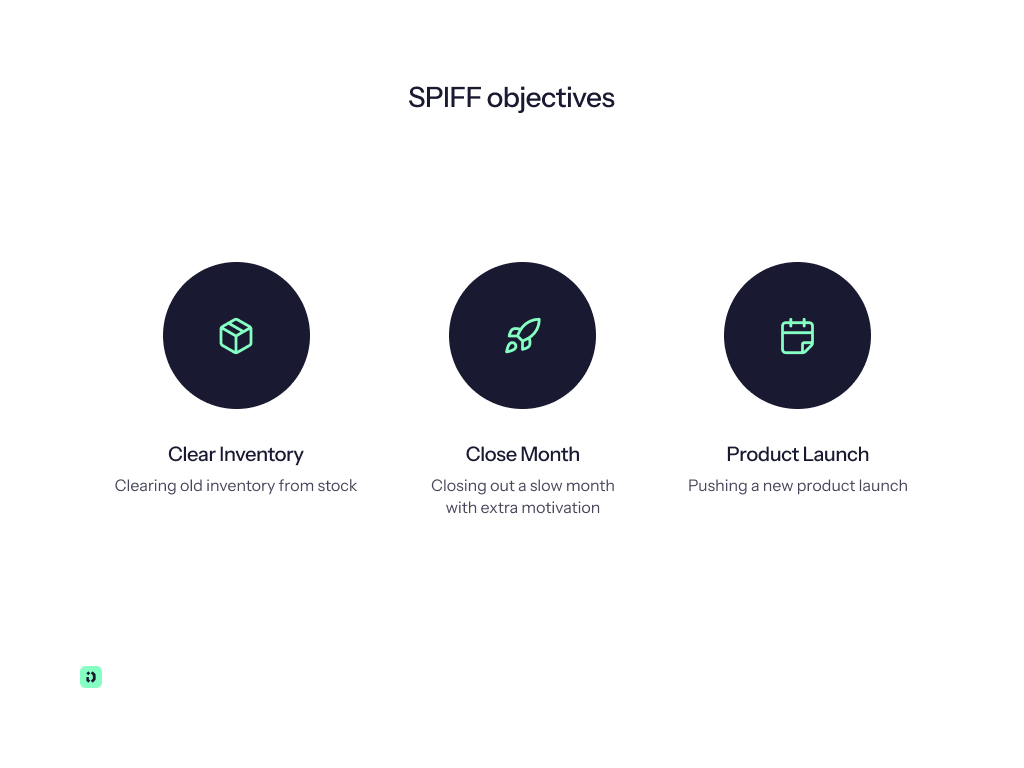
A SPIFF (Sales Performance Incentive Fund) is a short-term cash incentive tied to a specific, immediate action, usually selling a particular product, hitting a short-window target, or pushing a specific behavior the company wants right now.
SPIFFs are built for speed. They're announced, run for a defined stretch, usually days or weeks, and paid out fast, sometimes even same-day or same-week, specifically because the immediacy is what makes them effective. A SPIFF isn't meant to replace commission, it's meant to temporarily redirect a rep's attention toward something specific: clearing old inventory, pushing a new product launch, or closing out a slow month with extra motivation.
A draw in sales compensation is a guaranteed advance payment made to a salesperson against their future commissions. This means it is an advance against future commission, paid out on a regular schedule, usually monthly, so reps have predictable income before their pipeline turns into closed deals and actual commission.
Companies use draws to protect new reps' income during ramp. A brand-new AE with a three-month sales cycle isn't going to close anything in week two, but they still need to pay rent. A draw bridges that gap.
For sales professionals, understanding draw type matters because it affects real take-home pay, not just cash flow timing. Two reps can be offered the exact same dollar amount as a "draw" and end up with completely different financial outcomes, depending on which type it actually is.
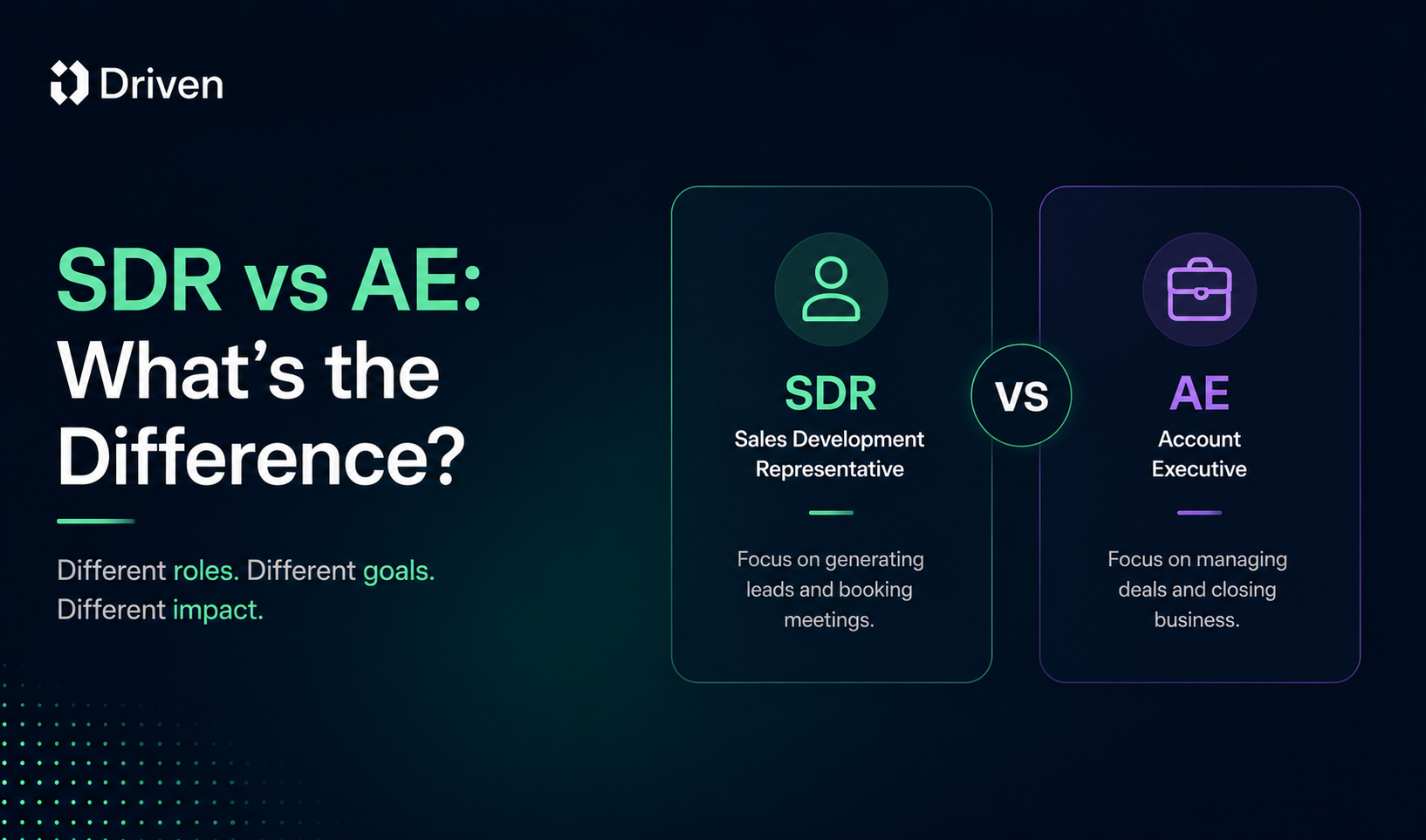
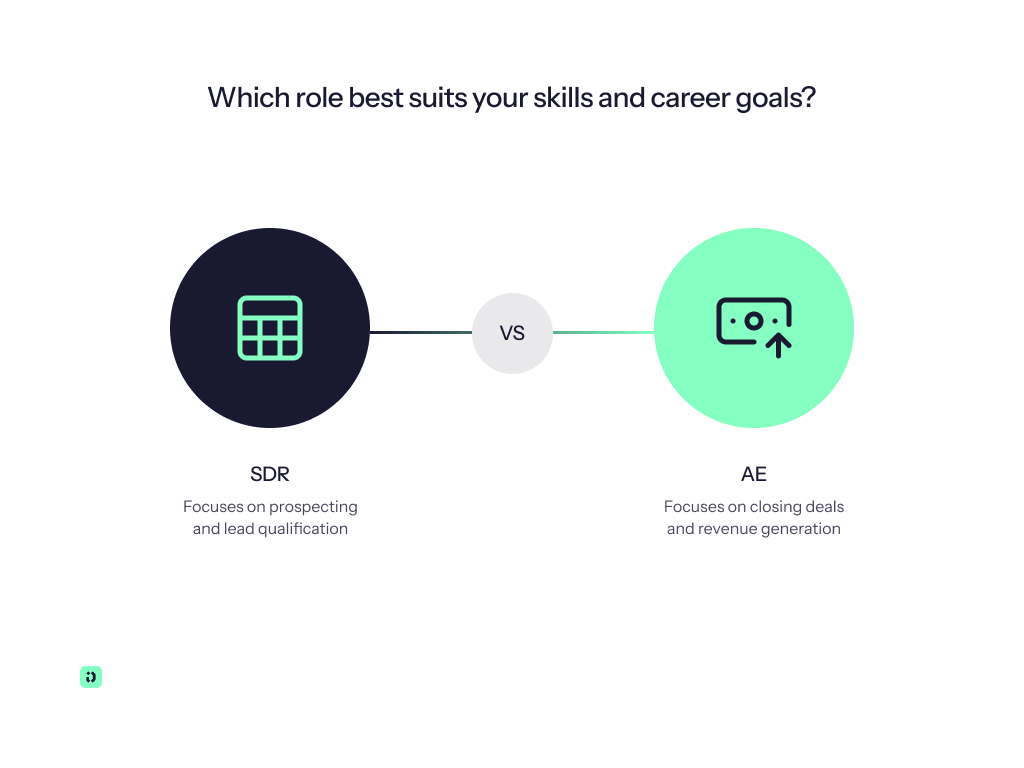
Before comparing pay, it helps to be clear on what each role is actually on the hook for. They sit on the same team, but they're not doing the same job.
What Does an SDR Do?
SDRs own the top of the funnel. Their day is built around prospecting, outbound outreach, and lead qualification, all pointed at one outcome: booking meetings and creating a pipeline for AEs to work. SDRs generally aren't responsible for closing deals. Their job ends where the AE's job begins.
What Does an AE Do?
AEs own the deal once it's qualified. That means running discovery calls, delivering product demos, negotiating terms, and closing the deal. AEs carry direct revenue ownership, and in a lot of organizations, they also handle account management once the deal is signed. The pressure sits differently here: an AE's number is measured in dollars closed, not meetings booked.

.png)


.avif)



.png)
.png)

.png)







.svg%201.avif)