How One SaaS Company Increased Sales by 25% with Smarter Incentives

TL;DR
Sales teams rarely lose motivation because they lack skill or effort. In most cases, the real issue is a lack of clarity. When reps cannot clearly see how their daily activities connect to their earnings, even high performers begin to disengage. Unclear commission structures, delayed payouts, and limited visibility into performance create frustration and reduce focus.
This real world case study highlights how a growing B2B SaaS company addressed this challenge and increased sales by 25 percent. By optimizing its commission structure through a data driven approach and replacing manual processes with smarter incentives, the company created a system that rewarded the right behaviors. As a result, it not only improved overall performance but also rebuilt trust, transparency, and morale across the entire sales team.
The Problem: When Incentives Kill Performance
At first, the company’s challenges were not readily apparent. Pipeline numbers looked healthy, and the team was active. But revenue growth was inconsistent, and sales reps were disconnected.
The root causes were clear:
- Confusing commission structures that reps did not fully understand
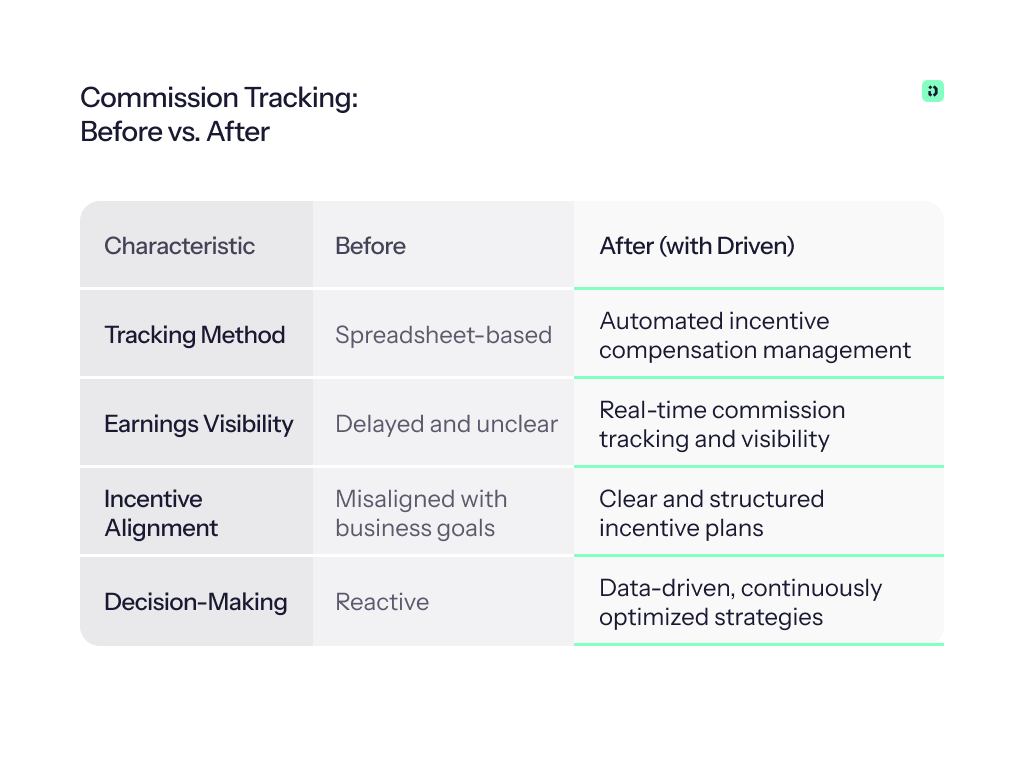
- Delayed visibility into earnings and performance
- Incentives misaligned with key goals like retention and upsells
- Heavy reliance on spreadsheets for commission tracking
Over time, this created frustration. Reps focused on closing quick deals rather than the right deals, and motivation dropped because effort did not consistently translate into rewards.
The Turning Point: Incentives as a Growth Strategy
Leadership realized that compensation was not just an operational task. It was one of the most powerful drivers of sales behavior.
Instead of increasing pressure or adjusting quotas blindly, they decided to redesign their incentive structure using a modern incentive compensation management approach. The goal was simple: create a system that aligns rep motivation with business outcomes.
To achieve this, they implemented Driven’s sales compensation software to bring clarity, automation, and intelligence into their processes.
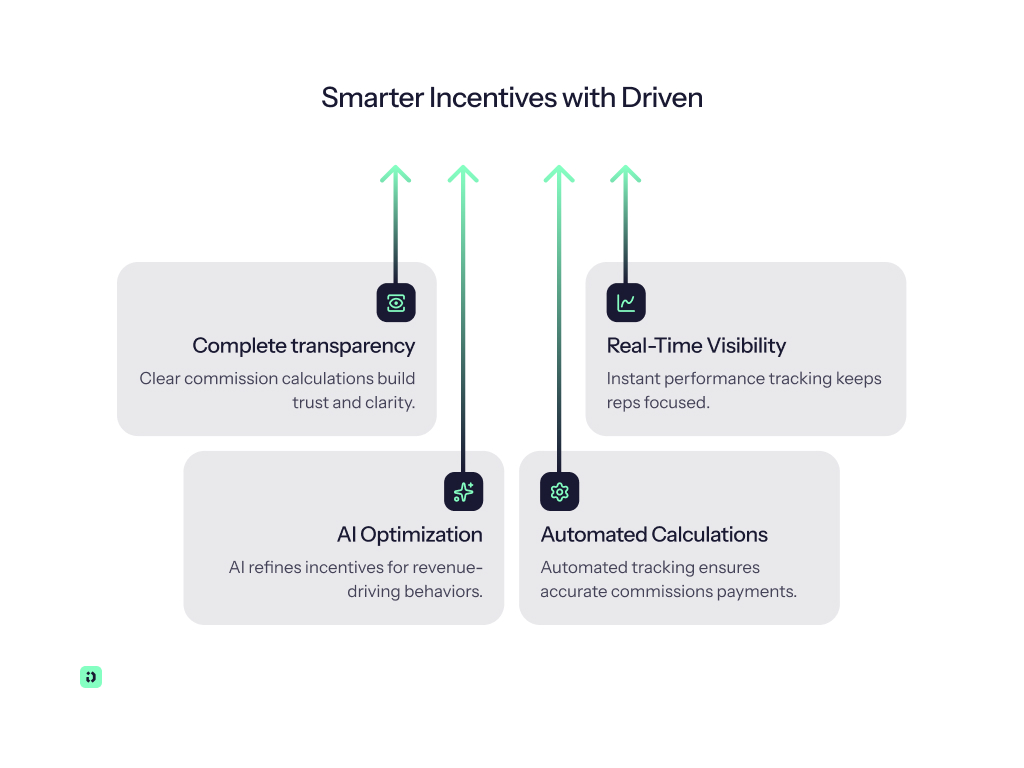
The Solution: Smarter Incentives with Driven
By adopting Driven, the company transformed how incentives were designed, tracked, and optimized.
1. Complete Transparency
Every rep could clearly understand how their commissions were calculated.
With a structured and transparent system, there was no ambiguity. This eliminated confusion and immediately increased trust in the compensation plan.
2. Real Time Performance Visibility
Driven provided real time visibility into performance and earnings.
Reps no longer had to wait until the end of the month to understand where they stood. They could track progress instantly, which helped them stay focused on high impact deals and adjust their approach proactively.
3. AI Powered Incentive Optimization
One of the biggest shifts came from AI.
Instead of relying on static plans or guesswork, the company used AI powered insights to continuously refine its incentive structure. This ensured that commissions were aligned with revenue driving behaviors such as upsells, renewals, and long term value creation.
This transformed incentives from a fixed system into a dynamic performance engine.
4. Automated Commission Calculations
Manual spreadsheets were replaced with automated commission tracking.
This reduced errors, eliminated disputes, and saved hours of administrative work. More importantly, it ensured that reps were paid accurately and on time, reinforcing trust in the system.
The Results: 25% Increase in Sales Performance
Within a few months, the impact became measurable.
- Sales increased by 25%
- Rep motivation and engagement improved significantly
- Deal cycles became faster and more focused
- Alignment between sales activity and business goals strengthened
The result was not a significant improvement. It was a clear example of how smarter incentives can directly influence performance.
Why It Worked
This transformation succeeded because it addressed the core drivers of sales behavior.
- Clarity removed confusion, allowing reps to focus on selling instead of calculating
- Real time visibility increased accountability and urgency
- Automation built trust by ensuring accuracy and consistency
- AI driven insights enabled continuous improvement, replacing guesswork with data
This proves that when incentives are designed using real data, performance improvements are not theoretical. They are predictable.
How to Achieve Similar Results in Your SaaS Team
If your sales team is struggling with motivation or inconsistent performance, your incentive structure may be the missing link. A well designed compensation plan does more than reward outcomes. It builds trust, drives the right behaviors, and keeps your team focused on closing high value deals. Here is how to start:

Here is how to start:
- Audit your current commission structure for gaps in clarity: Take a close look at how your current plan is structured. Identify areas where rules are unclear, payouts are delayed, or calculations are too complex. If reps cannot easily explain how they earn, the plan needs simplification.
- Ensure reps can easily understand how they earn: Your compensation plan should be simple enough for every rep to understand without constant explanation. Clear earning logic helps build confidence and allows reps to focus on selling instead of second guessing their incentives.
- Provide real time visibility into performance and commissions: Sales reps perform better when they can track their progress instantly. Give them access to dashboards that show targets, earnings, and deal impact in real time. Visibility creates accountability and keeps motivation high.
- Align incentives with revenue driving actions: Make sure your plan rewards the behaviors that actually drive growth. This could include closing larger deals, improving retention, or focusing on high margin products. When incentives are aligned with business goals, performance becomes more consistent.
- Implement modern sales compensation software like Driven: Manual processes and spreadsheets often lead to errors and mistrust. A modern solution like Driven uses automation and AI to create transparent, accurate, and scalable compensation plans that keep your team engaged.
- Continuously optimize using performance data and AI insights: Sales performance is not static, and your compensation plan should not be either. Use data and AI insights to identify what is working and what is not, then refine your strategy regularly to keep your team motivated and competitive.
Common Mistakes to Avoid
Even high growth SaaS companies make these mistakes, often without realizing how deeply they impact sales performance and team morale.
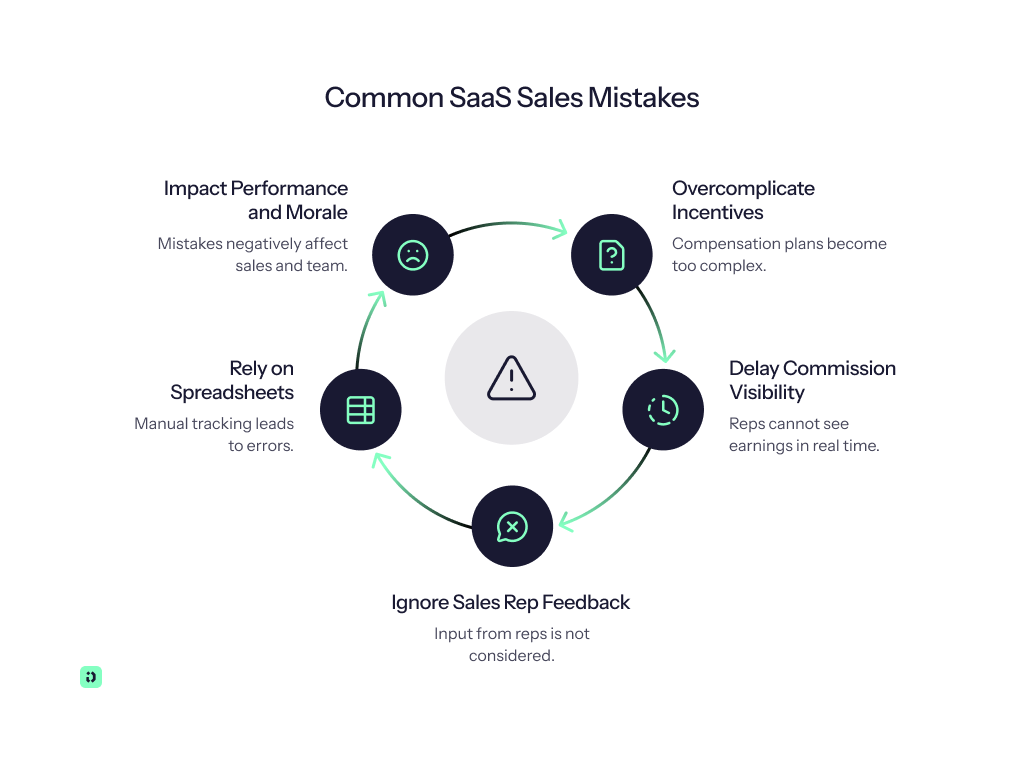
- Overcomplicating incentive structures: When compensation plans become too complex, reps struggle to understand how they earn. This confusion reduces motivation and shifts focus away from selling to figuring out payouts.
- Delaying commission visibility: If reps cannot see their earnings in real time, it creates uncertainty and frustration. Delayed visibility weakens trust and makes it harder for reps to stay motivated and goal focused.
- Ignoring feedback from sales reps: Sales reps are closest to the ground reality of what works and what does not. Ignoring their input can lead to misaligned incentives that fail to drive the right behaviors.
- Relying on spreadsheets instead of automated commissions: Manual tracking through spreadsheets increases the risk of errors and delays. This not only wastes time but also damages trust when payouts are inconsistent or unclear.
Avoiding these pitfalls can significantly improve both performance and morale by creating a transparent, reliable, and motivating compensation system.
Conclusion
Sales growth is not just about hiring more reps or increasing targets. It is about designing systems that motivate the right behaviors. The case study shows that by optimizing commission structures with transparency, automation, and AI driven insights, companies can unlock measurable growth and stronger team engagement. Smarter incentives are not just a back office improvement. They are a competitive advantage.
If you want to see how data driven incentives can improve your sales performance, it is time to rethink your approach. Book a demo with Driven and discover how real time visibility, AI powered insights and automated commissions can help your team sell smarter, stay motivated, and consistently hit targets.



See your comp plan, fully built in minutes

Frequently Asked Questions
About the author
Ludovic Diercxsens






Understanding SPIFFs, Bonuses, and Commissions
Ask a sales rep what's driving their next paycheck, and you'll often hear all three words used interchangeably: SPIFF, bonus, and commission. They get lumped together as "extra money for selling," but they're not the same thing, and treating them like they are leads to confused reps, inconsistent payouts, and comp plans nobody can actually explain.
A SPIFF is a short-term, targeted incentive. A bonus is a lump-sum reward tied to hitting a broader goal. A commission is the ongoing, formula-based pay tied directly to sales, the core of most sales comp plans, not an add-on to it.
This guide breaks down what each one actually means, when companies use them, how they're calculated, and how they stack together so you can build a comp plan where every payout has a clear reason behind it.

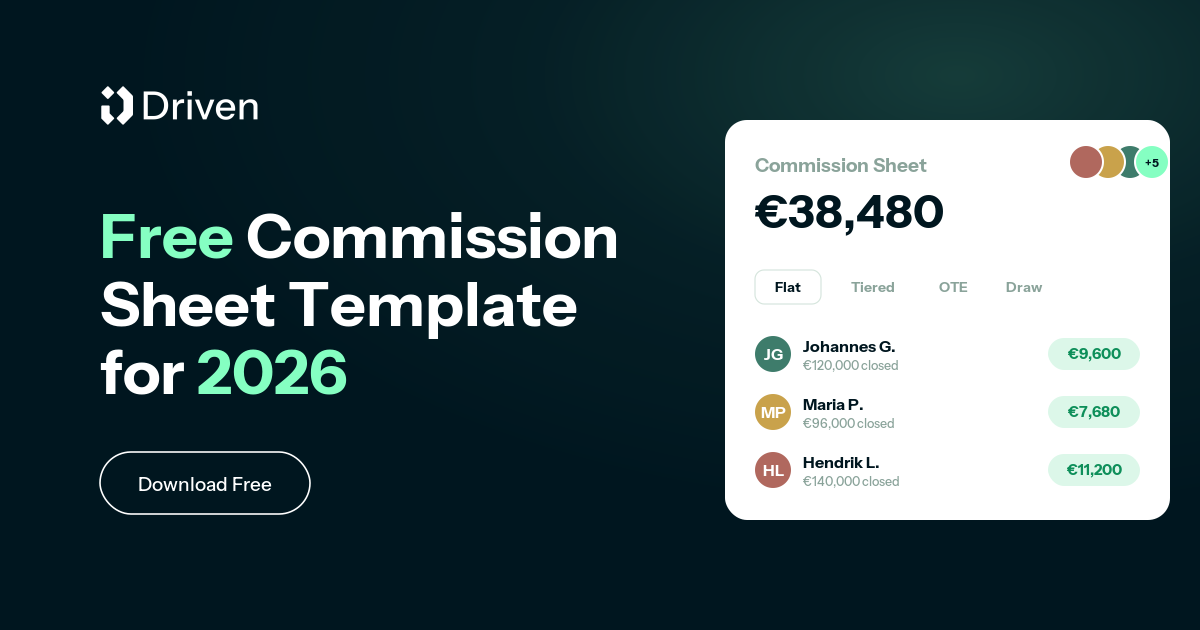
Free Commission Sheet Template: 8 Sales Commission Spreadsheets in One Excel File
Most commission plans don't fail because the idea is wrong. They fail because nobody modelled the numbers before rolling them out. A rate that looks generous on a slide turns into a payout you can't afford at 130% attainment, or an accelerator so flat that your best reps stop pushing the moment they hit quota.
So we built a free commission sheet template to fix that. It's one Excel file with eight ready-to-use sales commission spreadsheets, each structure on its own tab, each with live formulas and a filled-in sample row. Change a rate, a quota, or a revenue number and every payout updates instantly, and because everything lives in one workbook you can compare models side by side without juggling downloads.
Download the commission sheet template, or start for free and let Driven build the plan for you.

New to comp design? Start with our guide to sales compensation structure types, then model your pick here.


Non-Recoverable Draw vs. Recoverable Draw: What's the Difference?
New sales hires often get offered a "draw" against commission, and most sign the offer letter without knowing there are two very different types. That gap in understanding can mean thousands of dollars either staying in a rep's pocket or getting clawed back months later.
A draw is essentially an advance on future commission, designed to give reps steady income while they ramp up pipeline and close their first deals. But whether that advance is recoverable or non-recoverable determines something much bigger: whether it ever has to be paid back.
This guide breaks down what each draw type means, how they're calculated, when companies typically use each one, and the mistakes that turn a helpful ramp tool into a trust problem between reps and the company that hired them.


.svg%201.avif)