How Bizzy Gave Their Sales Team Back Their Focus with Driven
.png)

.avif)



Bizzy, a Ghent-based AI sales intelligence platform, was running commissions entirely on manual spreadsheets. After deploying Driven, they reclaimed ~4 hours per rep per month, cut commission disputes by ~90%, and got new reps to full comp clarity in a single day.
About Bizzy
Bizzy is a fast-moving, Ghent-based AI sales intelligence platform helping B2B sales teams across Europe find, qualify, and engage the right prospects without the manual grind. With a database spanning over 34 million European companies and 76 million professional contacts, Bizzy is one of Europe's fastest-growing sales tools.
Founded in 2021 by Hendrik Keeris and Steve Declercq, Bizzy has grown to 35 people and over 500 paying customers, with €3M in ARR and backing from Fortino Capital. Sales is everything at Bizzy — reps are driven, targets move fast, and comp plans evolve with the business. Steve, as a founder, had a very personal reason for wanting to fix compensation: he dreaded the end of every quarter. Spreadsheets flying back and forth, HR chasing payout approvals, reps questioning their numbers. He needed something that would just work.
The Challenge
In a company where comp plans change every quarter and every rep knows their number, running compensation on Excel just doesn't cut it. Bizzy's process was entirely manual — no agent watching the pipeline, no system calculating earnings in the background, no one proactively telling reps where they stood.
Key pain points included:
- No automated tracking: Reps lost hours each month pulling HubSpot exports and rebuilding their numbers by hand using Coefficient, a Google Sheets add-on.
- Recurring disputes: Without a live source of truth, commission disagreements surfaced every month. Finance and management spent valuable time resolving issues a real-time system would have prevented.
- Manual new joiner setup: Every new hire required building a custom comp plan from scratch with no intelligent system to configure, assign, and communicate it from day one.
- No personalised views: With reps on different commission rates, there was no automated way to give each person a private view of their own earnings.
- Quarterly rebuilds: Moving from annual to quarterly targets meant rebuilding everything from scratch each time.
The Solution
Bizzy deployed Driven as an intelligent compensation layer on top of their existing HubSpot setup. Rather than replacing their CRM or adding another tool for reps to check, Driven operates as a set of autonomous agents that run in the background: monitoring deals, calculating commissions, answering questions, forecasting payouts, and nudging reps at exactly the right moment.
AgentWhat it doesComp BuilderStructures quarterly compensation plans for every role — built once and applied automatically. No spreadsheets, no manual updates.Transparency EngineA live, agent-powered earnings dashboard for every rep, updated automatically as deals move through the pipeline.AI MotivatorMonitors each rep's progress and sends personalised Slack nudges at the right moment — pushing toward the next threshold before the rep thinks to check.AI WikiAn always-on agent that answers compensation questions instantly, with a clear step-by-step breakdown of every payout.Forecast AgentShows every rep what their payout will look like based on their live pipeline.
The Results
Within the first quarter, Driven's agents were running silently in the background — calculating, explaining, forecasting, and motivating — while the revenue team focused entirely on selling.
- ~4 hours saved per rep per month
- ~90% fewer commission disputes
- Improved rep retention (self-reported)
- 1 day from new rep onboarding to full comp clarity
"Our reps used to spend hours every month pulling data out of HubSpot just to know where they stood on commissions. With Driven, that calculation just happens. They see it live, they trust it, and they use it to stay motivated. It has genuinely changed how our team shows up every day."
— Steve Declercq, Co-founder, Bizzy
Hours Saved
Before Driven, Bizzy's reps were using Coefficient — a Google Sheets add-on — to manually pull HubSpot data and reconstruct commission numbers from scratch. That process consumed roughly four hours per rep per month. With Driven's agents handling every calculation automatically and continuously, that time drops to zero. For a team of 12, that's close to 50 hours of selling time reclaimed every single month.
Disputes Eliminated
Disputes used to emerge at the end of every month when a rep's manual calculation didn't match what finance had processed. Driven's AI Wiki agent eliminated that gap entirely. Every payout now comes with an automatic, transparent audit trail that reps can query in plain language at any time. Disputes have dropped by approximately 90%.
Rep Retention and Motivation
The AI Motivator agent changed the energy on the floor. Rather than waiting until end of month to discover where they stood, reps now receive personalised Slack nudges throughout the quarter — exactly when they are closest to a threshold and most likely to act on it. Paired with the Forecast Agent showing live projected payouts, compensation shifted from an afterthought into an active driver of daily behaviour.
Driven didn't just automate comp — it reinforced Bizzy's sales culture, making every rep feel accountable, informed, and motivated around the clock. Bizzy's leadership reported a meaningful reduction in voluntary turnover since go-live, which they attribute directly to the transparency and motivation Driven brought to the floor.
Onboarding Made Simple
Getting a new rep up and running used to mean building a custom spreadsheet from scratch. With Driven, leadership configures a new comp plan in minutes through the Comp Builder. From that point, the agents take over. The new rep sees their live dashboard, receives their first AI Motivator nudge, and can query their plan through AI Wiki on day one. Onboarding to full compensation clarity went from weeks to a single day.

"Our reps used to spend hours every month pulling data out of HubSpot just to know where they stood on commissions. With Driven, that calculation just happens. They see it live, they trust it, and they use it to stay motivated. It has genuinely changed how our team shows up every day."
Steve Declercq, Co-founder, Bizzy
Why Driven
Most compensation tools are glorified dashboards. They display data someone else calculated, updated on a schedule someone else controls. Driven is different — it's a set of autonomous agents that run continuously: watching your pipeline, doing the maths, explaining the outputs, forecasting the future, and nudging your reps to act. Nobody triggers it. Nobody maintains it. It just works.
For Bizzy, a company built on the belief that AI should do the grunt work so salespeople can focus on relationships, Driven was the obvious choice. Competitors offer reports. Driven offers intelligence that acts.


Understanding SPIFFs, Bonuses, and Commissions
A SPIFF (Sales Performance Incentive Fund) is a short-term cash incentive tied to a specific, immediate action, usually selling a particular product, hitting a short-window target, or pushing a specific behavior the company wants right now.
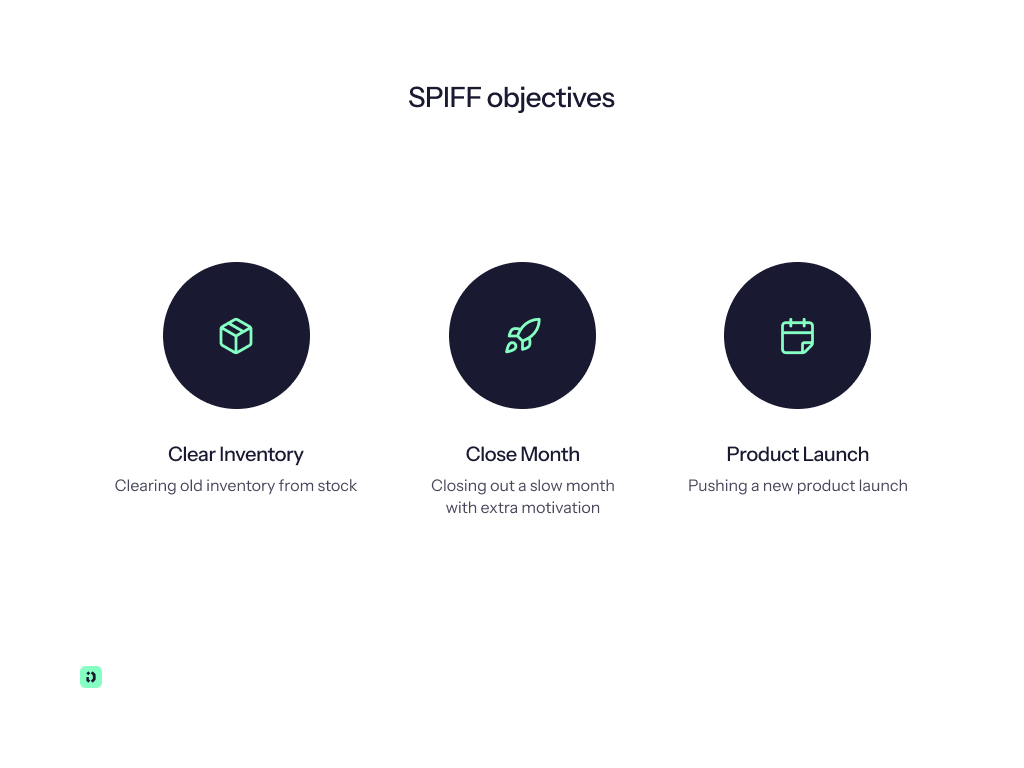
SPIFFs are built for speed. They're announced, run for a defined stretch, usually days or weeks, and paid out fast, sometimes even same-day or same-week, specifically because the immediacy is what makes them effective. A SPIFF isn't meant to replace commission, it's meant to temporarily redirect a rep's attention toward something specific: clearing old inventory, pushing a new product launch, or closing out a slow month with extra motivation.


Non-Recoverable Draw vs. Recoverable Draw: What's the Difference?
A draw in sales compensation is a guaranteed advance payment made to a salesperson against their future commissions. This means it is an advance against future commission, paid out on a regular schedule, usually monthly, so reps have predictable income before their pipeline turns into closed deals and actual commission.
Companies use draws to protect new reps' income during ramp. A brand-new AE with a three-month sales cycle isn't going to close anything in week two, but they still need to pay rent. A draw bridges that gap.
For sales professionals, understanding draw type matters because it affects real take-home pay, not just cash flow timing. Two reps can be offered the exact same dollar amount as a "draw" and end up with completely different financial outcomes, depending on which type it actually is.

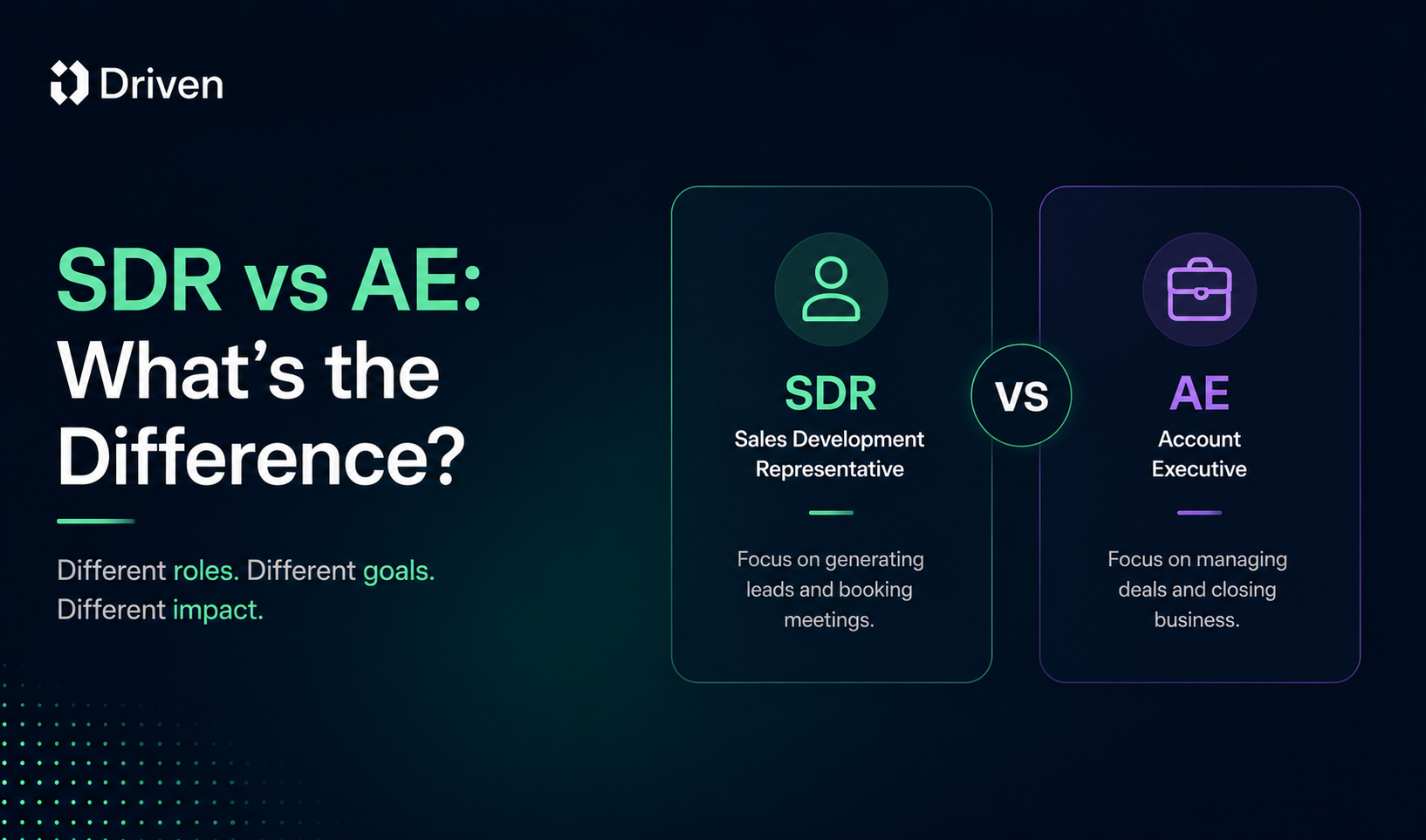
Sales Compensation Plans for SDRs vs AEs: What's the Difference?
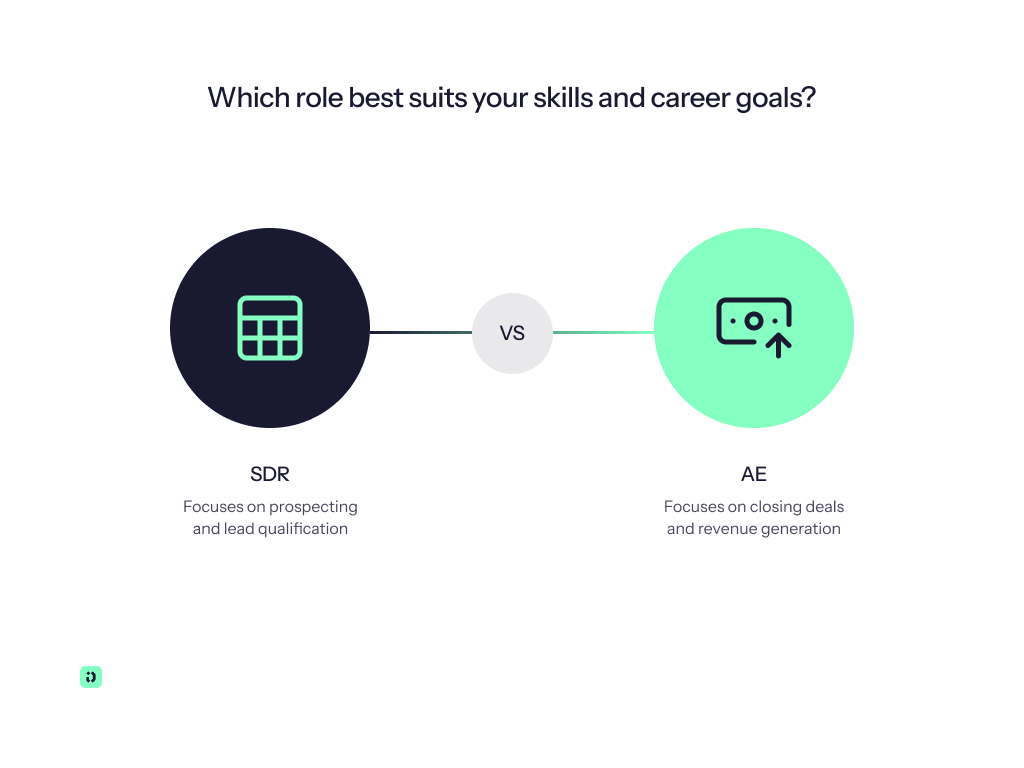
Before comparing pay, it helps to be clear on what each role is actually on the hook for. They sit on the same team, but they're not doing the same job.
What Does an SDR Do?
SDRs own the top of the funnel. Their day is built around prospecting, outbound outreach, and lead qualification, all pointed at one outcome: booking meetings and creating a pipeline for AEs to work. SDRs generally aren't responsible for closing deals. Their job ends where the AE's job begins.
What Does an AE Do?
AEs own the deal once it's qualified. That means running discovery calls, delivering product demos, negotiating terms, and closing the deal. AEs carry direct revenue ownership, and in a lot of organizations, they also handle account management once the deal is signed. The pressure sits differently here: an AE's number is measured in dollars closed, not meetings booked.




.svg%201.avif)