Best Sales Compensation Software in 2026

TL;DR
Sales compensation software has moved far beyond spreadsheets and manual commission tables that are prone to errors, delays, and confusion. Modern compensation platforms now help businesses design fair and motivating compensation plans, automate even the most complex commission calculations, accurately forecast payout costs, and improve transparency across the entire sales organization. By providing real-time visibility into earnings and performance, these tools keep sales teams motivated while helping finance leaders maintain control over budgets and revenue planning. In a world where sales velocity, scalability, and revenue predictability matter more than ever, choosing the right sales compensation software can truly transform how your revenue organization operates and grows.
In this guide, we review the best sales compensation software available today, compare their key features, pricing models, and ideal use cases, and help you confidently choose the platform that best fits your business goals.
.png)
1. Driven
Best Overall Sales Compensation Software for 2026
Best for: Companies that want clarity, automation, and performance growth
Pricing: Custom (contact for demo & quote)
Driven combines AI-powered compensation planning with real-time commission automation and a strong focus on rep-friendly transparency. Instead of relying on complex spreadsheets and error-prone formulas, sales and finance teams can quickly build flexible incentive plans, accurately forecast payout impact, and clearly explain how earnings are calculated. This clarity helps reduce disputes, improve trust, and keep sales teams focused on closing deals rather than questioning their commissions.

Top features:
- AI compensation planning: Uses intelligent data analysis to recommend optimized variable pay structures that align sales behavior with revenue goals and motivate consistent, high-performance results.
- Automated calculations: Automatically calculates commissions based on predefined rules, removing manual effort, reducing errors, and ensuring accurate, on-time payouts every cycle.
- Real-time dashboards: Provides live visibility into earnings, quotas, and performance metrics, allowing reps and managers to track progress and make faster, data-driven decisions.
- Rep-facing clarity portal: Offers a transparent, easy-to-understand view of compensation plans and earnings, reducing confusion and disputes and increasing rep trust and engagement.
- CRM & system integrations: Seamlessly connects with CRM, payroll, and financial systems to sync data automatically, eliminate duplicate entry, and maintain a single source of truth.
Why Driven wins: Designed for small teams, Driven blends power with simplicity, which helps you stop guessing and start growing.
Pros
- Fast, automated commission calculation
- Easy for reps and managers to use
- AI-powered plan suggestions
Cons
- Custom pricing requires contacting sales
2. Visdum
Best for Automated Commission Management & Payout Accuracy
Best for: Mid-market to enterprise revenue teams (20- 200 reps)
Pricing: Transparent, SMB-friendly (tiered plans)

Visdum is built for teams that want to eliminate spreadsheet-heavy commission workflows and automate payouts end-to-end. It focuses on accuracy, auditability, and ops efficiency- making it especially useful for Sales Ops and Finance teams managing complex commission structures without enterprise bloat.
The platform syncs directly with CRMs, calculates commissions automatically, and gives reps clear visibility into earnings using dashboards-without manual reconciliation every month.
Standout features:
- Automated commission calculation from CRM data
- Flexible rate tables & visual rule-based logic
- Real-time dashboards for reps, managers, and finance
- Audit-ready payout reports & approvals
- HubSpot-native integration (bi-directional sync)
Pros
- Extremely easy to implement and operate
- Strong fit for scaling sales ops
- Dedicated implementation and ongoing support
Cons
- Less emphasis on advanced forecasting compared to enterprise tools
3. LeadAngel
Best for: Supporting accurate sales compensation through clean data, fair lead distribution & ownership tracking
Best for: Revenue teams that want to eliminate credit conflicts and improve compensation accuracy (Enterprise marketplace)
Pricing: Custom pricing based on use case and scale
LeadAngel strengthens the foundation of sales compensation by ensuring every lead, account, and opportunity is accurately matched and assigned. With clean data and precise ownership tracking, it helps teams avoid disputes and ensures commissions are based on reliable, real-time information.
By automating lead routing and eliminating duplicates, it creates a system where performance is clearly tied to the right sales reps, making compensation processes smoother and more trustworthy.

Standout features:
- Advanced lead-to-account matching (including fuzzy matching) to ensure correct ownership
- Automated lead routing based on territory, account, or custom rules
- Lead deduplication to eliminate duplicate credit issues
- Real-time lead assignment to improve speed-to-lead tracking
- Detailed reporting for visibility into lead ownership and distribution
- Seamless CRM integrations (like Salesforce) for consistent data flow
Pros
- Prevents commission disputes with accurate ownership data
- Reduces manual work and data inconsistencies
- Improves trust in compensation tracking and reporting
- Highly customizable routing and matching logic
Cons
- Not built for direct commission tracking or payouts
- May require integration with other tools for full compensation workflows
How We Evaluated These Tools
- Automation & accuracy: Does the tool eliminate manual work and errors?
- Real-time reporting: Are reps and managers seeing up-to-date earnings?
- Customization: Can you build complex comp plans?
- Integrations: Does it sync with CRM/ERP systems?
- User experience: Is the platform intuitive for both reps and admins?
Successful compensation tools don’t just calculate, they help motivate your team and optimize revenue outcomes.
3. CaptivateIQ
Best for Flexible Plan Modeling
Best for: Teams needing customizable models
Pricing: Custom (on request)
CaptivateIQ enables teams to build complex compensation logic without needing coding skills. Its sandbox simulation environment lets you test structures before rolling them out, and seamless integrations ensure your sales data flows without friction.

Top features:
- Real-time earnings insights
- Sandbox environment for testing
- Strong integrations with CRM & ERP
- Automated approvals and payout visibility
Pros
- Powerful modeling tools
- Highly configurable
Cons
- Some setup complexity reported
- No dedicated mobile app.
4. Xactly Incent
Best for Enterprise & Compliance
Best for: Large companies with complex compensation structures
Pricing: Custom enterprise quotes
Xactly has a long history in sales performance management and is tailored for enterprise needs, including compliance, multi-country rules, and detailed payout control.
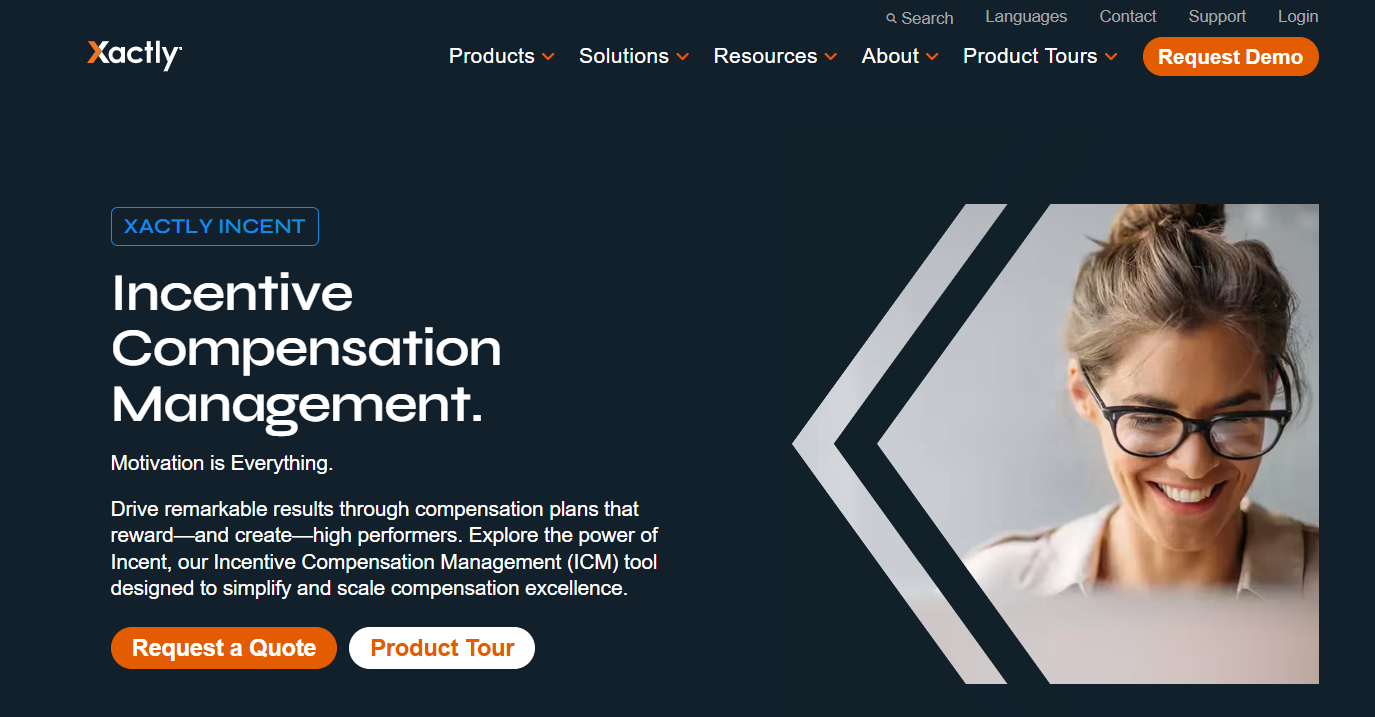
Key features:
- Drag-and-drop hierarchy & plan builder
- Custom incentive statements
- Integration across CRM and HR systems
- Global and multi-language support
Pros
- Mature enterprise tool
- Strong governance & audit features
Cons
- Implementation can be resource-heavy
- The UI feels dated compared to newer tools.
5. SPIFF
Best for Short-Term Sales Incentives & Motivation
Best for: Incentive programs and short-term sales motivation
Pricing: Custom (on request)
SPIFF focuses on driving immediate sales behavior through flexible SPIFFs, bonuses, and incentive programs. It helps sales leaders quickly launch contests, track progress in real time, and reward reps faster, keeping motivation consistently high.

Standout features:
- Real-time SPIFF and bonus tracking
- Automated incentive payouts
- Gamification with leaderboards and notifications
- CRM integrations for instant data syncing
Pros
- Excellent for short-term incentives and contests
- Easy to launch and manage programs
- High rep engagement and adoption
Cons
- Less suited for complex commission plans
- Limited long-term compensation modeling.
6. Qobra
Commission automation for modern SaaS teams
Best for: SMBs to mid-market companies
Pricing: Custom (on request)
Qobra is a commission automation platform designed to simplify complex compensation plans, especially for SaaS businesses. It replaces spreadsheets with automated workflows while providing transparency for both finance teams and sales reps.

Standout features:
- Automated commission calculations
- SaaS-friendly compensation modeling
- Real-time earnings visibility for reps
- CRM and billing system integrations
Pros
- Clean, modern user interface
- Strong automation for recurring revenue models
- Improves transparency and reduces disputes
Cons
- Fewer advanced enterprise analytics
- Limited incentive gamification features
7. AgentsVerse
Best For: B2B sales teams, SDRs, recruiting firms, agencies, founders, and GTM leaders looking to build pipeline from high-intent buying signals.
Pricing: Starting at $99/month.
AgentsVerse is an AI-powered lead generation platform that helps sales teams identify high-intent prospects before competitors do. The platform automatically monitors newly funded companies, enriches them with verified decision-maker contact information, and delivers ready-to-contact prospects directly into your workflow. Instead of spending hours researching accounts, sales teams receive a daily stream of companies actively investing in growth, hiring, and new initiatives.
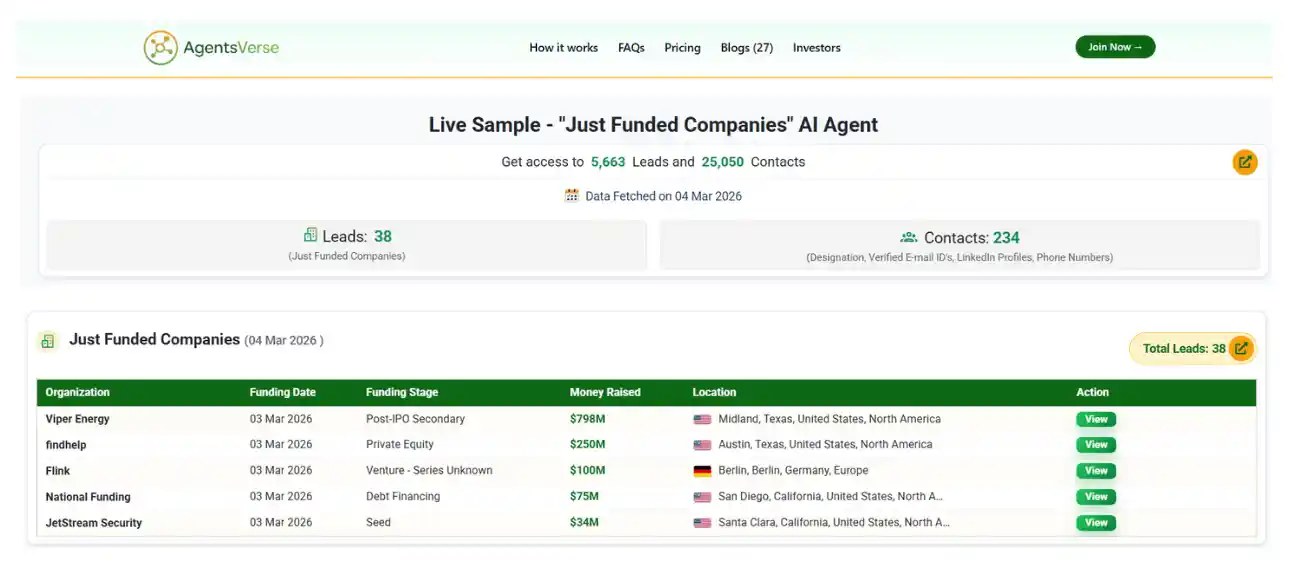
Key Features:
- Daily alerts for newly funded companies worldwide
- Verified decision-maker emails, phone numbers, and LinkedIn profiles
- Company enrichment including funding details, employee count, and location
- Slack, email, and HubSpot delivery
- Automated prospecting with no manual research required
Why We Like It:
While sales compensation software helps teams manage commissions after revenue is generated, AgentsVerse helps create the pipeline that makes those commissions possible. By identifying companies immediately after funding events, sales teams can engage prospects when buying intent is highest.
Additional Tools to Explore
While researching sales compensation solutions, you may come across tools such as B EYE, QuotaPath, CaptivateIQ, Spiff, and other sales compensation platforms. It’s important to look beyond surface-level features and focus on factors such as ease of implementation, flexibility in designing compensation plans, automation capabilities, reporting accuracy, and how well the platform integrates with your existing CRM and financial systems. A structured evaluation approach helps ensure you select a solution that aligns with your business goals and can scale effectively as your organization grows.
Key Features to Look For in Sales Compensation Software
When choosing a platform, consider:
1. Real-Time Tracking & Dashboards: Provides instant, live visibility into sales targets, commissions, and earnings progress. Reps and managers can track performance in real time, make informed decisions, and stay motivated to hit goals.
2. Automation & Calculations: Automatically calculates commissions and payouts based on predefined rules. Eliminates manual spreadsheet work, reduces errors, ensures consistent, accurate results, and saves time for sales and finance teams.
3. Integrations: Seamlessly connects with CRM, ERP, and payroll systems to sync data automatically. Ensures accuracy, reduces duplicate work, and provides a unified source of truth across your sales and finance tools.
4. Plan Modeling Tools: Allows admins to build, simulate, and test complex compensation structures without coding. Supports tiered plans, accelerators, and variable payouts while optimizing for performance and cost efficiency.
5. Rep-Friendly Interfaces: Provides a clear, intuitive view of how reps earn commissions. Reps can easily understand targets, payouts, and incentives, reducing confusion and disputes and improving engagement and motivation.
Conclusion
The best sales compensation software for your business depends on your team size, the complexity of your compensation plans, and your budget. For most companies in 2026, Driven stands out with its AI-powered planning, automation, and transparency that truly drives sales performance. If you’re ready to simplify commissions and motivate your sales team, book a demo with Driven or request a free compensation audit today to see the impact for yourself.



See your comp plan, fully built in minutes

Frequently Asked Questions
About the author
Tom De Kooning






Understanding SPIFFs, Bonuses, and Commissions
Ask a sales rep what's driving their next paycheck, and you'll often hear all three words used interchangeably: SPIFF, bonus, and commission. They get lumped together as "extra money for selling," but they're not the same thing, and treating them like they are leads to confused reps, inconsistent payouts, and comp plans nobody can actually explain.
A SPIFF is a short-term, targeted incentive. A bonus is a lump-sum reward tied to hitting a broader goal. A commission is the ongoing, formula-based pay tied directly to sales, the core of most sales comp plans, not an add-on to it.
This guide breaks down what each one actually means, when companies use them, how they're calculated, and how they stack together so you can build a comp plan where every payout has a clear reason behind it.

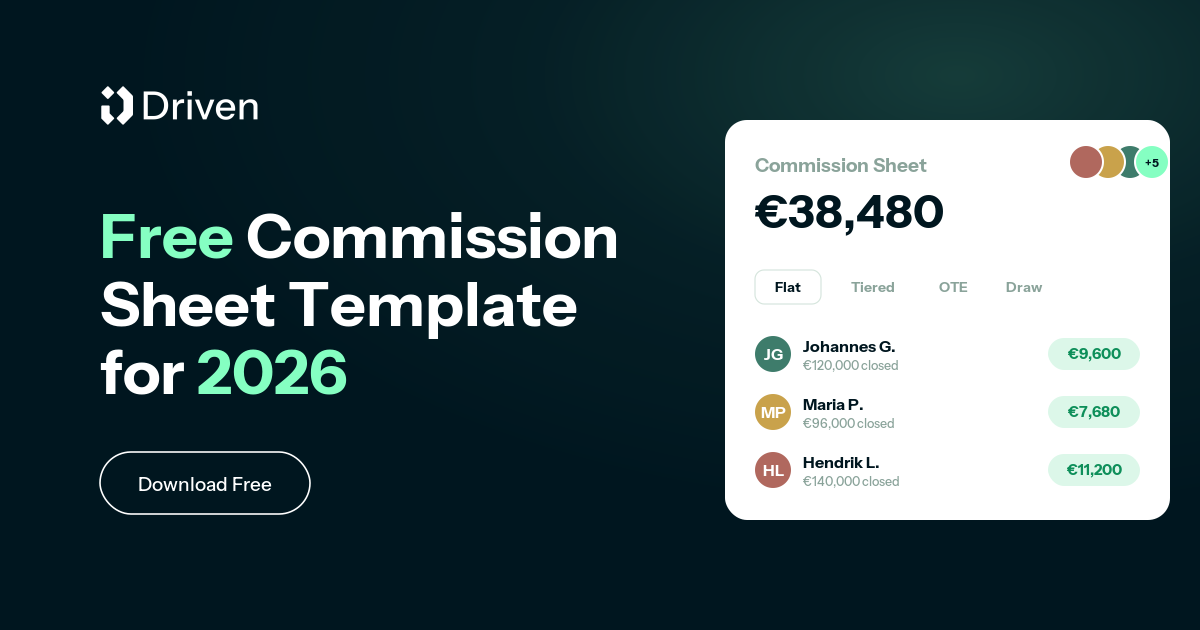
Free Commission Sheet Template: 8 Sales Commission Spreadsheets in One Excel File
Most commission plans don't fail because the idea is wrong. They fail because nobody modelled the numbers before rolling them out. A rate that looks generous on a slide turns into a payout you can't afford at 130% attainment, or an accelerator so flat that your best reps stop pushing the moment they hit quota.
So we built a free commission sheet template to fix that. It's one Excel file with eight ready-to-use sales commission spreadsheets, each structure on its own tab, each with live formulas and a filled-in sample row. Change a rate, a quota, or a revenue number and every payout updates instantly, and because everything lives in one workbook you can compare models side by side without juggling downloads.
Download the commission sheet template, or start for free and let Driven build the plan for you.

New to comp design? Start with our guide to sales compensation structure types, then model your pick here.

Non-Recoverable Draw vs. Recoverable Draw: What's the Difference?
New sales hires often get offered a "draw" against commission, and most sign the offer letter without knowing there are two very different types. That gap in understanding can mean thousands of dollars either staying in a rep's pocket or getting clawed back months later.
A draw is essentially an advance on future commission, designed to give reps steady income while they ramp up pipeline and close their first deals. But whether that advance is recoverable or non-recoverable determines something much bigger: whether it ever has to be paid back.
This guide breaks down what each draw type means, how they're calculated, when companies typically use each one, and the mistakes that turn a helpful ramp tool into a trust problem between reps and the company that hired them.




.svg%201.avif)