Understanding Management by Objectives (MBO) in Sales

%20in%20Sales%20(1)%20(1).png)
TL;DR
In today’s competitive business environment, sales teams need more than just enthusiasm and product knowledge; they need direction, focus, and measurable goals. This is where Management by Objectives (MBO) comes into play.
MBO isn’t just another management buzzword; it’s a proven approach that helps organizations align their goals with individual performance. By setting clear, achievable objectives, MBO transforms how sales teams operate, helping them stay focused on what truly matters, driving results. But what exactly is MBO, and how can it revolutionize your sales strategy? Let’s explore in depth.
What is Management by Objectives (MBO)?
Management by Objectives (MBO) is a strategic management model introduced by Peter Drucker in the 1950s. The concept revolves around one central idea, which is to set clear, measurable goals that align individual performance with the broader objectives of the organization.
In an MBO framework, both managers and employees participate in defining objectives, creating a sense of shared purpose and accountability. The focus shifts from simply completing tasks to achieving meaningful results. In sales, MBO ensures that every salesperson understands their role in achieving company targets, whether it’s increasing monthly revenue, improving conversion rates, or expanding into new territories.
Importance of MBO in Sales
Sales is one of the most performance-driven areas of any organization. Without clear goals, even the most talented sales teams can lose focus. MBO brings structure, direction, and accountability to the process. Here’s why MBO is essential in sales management:
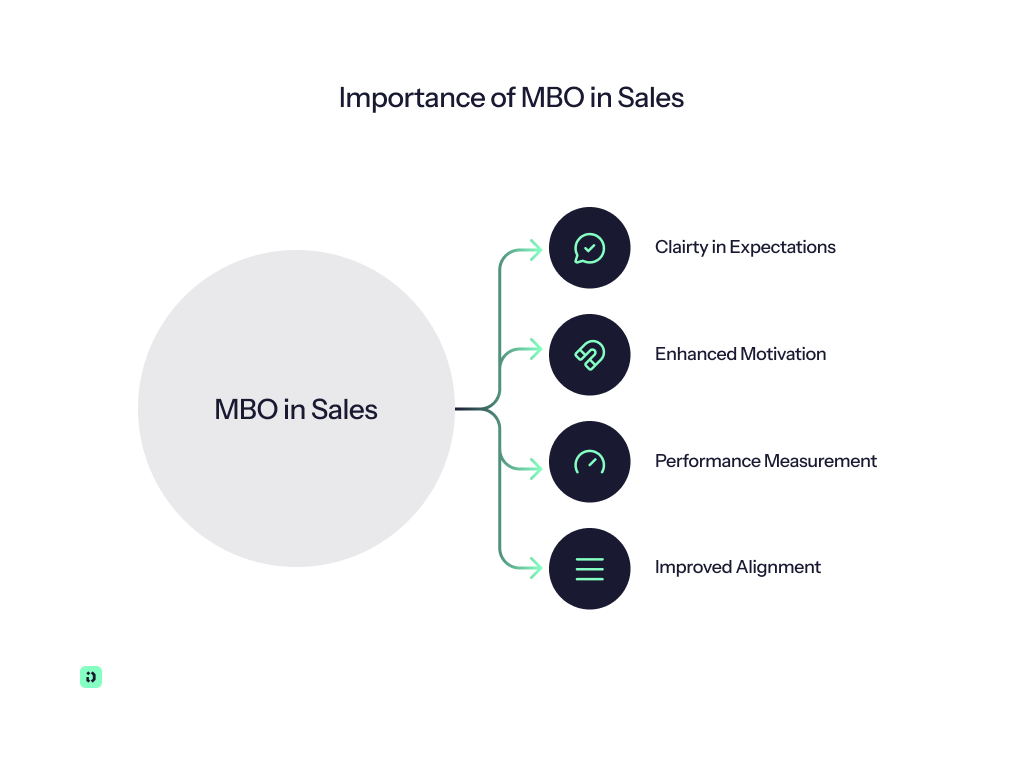
- Clarity in expectations: Each sales representative knows what is expected of them and how their work contributes to organizational success.
- Enhanced motivation: When salespeople participate in setting their objectives, they feel more ownership and motivation to achieve them.
- Performance measurement: MBO provides measurable benchmarks, making it easier to track progress and results.
- Improved alignment: It ensures that individual, team, and company goals move in the same direction.
Essentially, MBO transforms a sales team from working hard to working smart; every action has a defined purpose and measurable outcome.
How MBO Works in a Sales Team
Implementing MBO in sales requires a systematic approach that connects organizational goals with individual performance. Here’s a step-by-step breakdown:
1. Define Organizational Sales Objectives: Start with the company’s broader sales strategy, whether it’s expanding market share, increasing revenue, or improving customer retention. These goals form the foundation of individual sales objectives.
2. Set Individual Sales Goals: Each sales representative or team receives specific targets aligned with overall company goals. For example, if the company aims for a 20% revenue increase, each salesperson may have an individual goal that contributes to that target.
3. Develop an Action Plan: Once objectives are set, define the strategies and activities needed to achieve them, prospecting plans, client outreach schedules, or upselling initiatives.
4. Monitor Performance Continuously: Sales managers must track KPIs (key performance indicators) such as lead conversion rate, number of calls made, and revenue generated. Regular progress reviews help identify gaps and guide corrective actions.
5. Provide Ongoing Feedback: Feedback sessions keep employees informed about their progress and areas needing improvement. This two-way communication fosters trust and continuous learning.
6. Evaluate and Reward Performance: At the end of the performance period, results are compared against objectives. Those who achieve or exceed their targets should be recognized and rewarded to reinforce motivation.
This structured approach ensures that both managers and sales professionals stay aligned on goals and progress throughout the cycle.
How Driven Makes MBO Work
Driven isn’t just another software — it’s a modern AI-powered platform that makes sales performance management simple, practical, and scalable. By combining MBO with automation and intelligence, it turns goal-setting into action, visibility, and results.
1) Align Objectives and Incentives Automatically
Driven automatically links each rep’s objectives to measurable KPIs and compensation. Reps know exactly what they need to achieve and how it impacts their earnings. This removes confusion, prevents misalignment, and ensures everyone is working toward the same goals with clarity and purpose.
2) Real-Time Tracking and Insights
Managers and leaders can monitor progress live, spot potential gaps, and take action immediately. No more waiting for monthly reports or chasing spreadsheets. Real-time insights give teams the ability to pivot fast, coach effectively, and maintain performance across individuals, teams, and territories.
3) Transparency and Motivation
Reps can see their goals, progress, and earnings in real time. This transparency fosters trust and accountability while keeping motivation high. When team members clearly understand their targets and rewards, they’re more engaged, focused, and driven to hit—and exceed—their objectives.
4) AI-Powered Optimization
Driven uses AI to recommend changes to objectives or incentive plans based on historical performance, market trends, and revenue targets. This ensures plans are effective, balanced, and achievable. By eliminating guesswork, AI helps managers make smarter decisions faster and keeps teams on track for success.
5) Scalable for Growing Teams
Whether you have 10 reps or 200, Driven scales effortlessly. MBO processes, tracking, and reporting remain consistent, accurate, and automated, so growth doesn’t create confusion or manual work. Teams stay aligned, objectives are maintained, and performance management continues smoothly as the organization expands.
MBO + Driven = High-Performing Sales Teams
High-performing sales teams mean that when you pair the goal-setting framework of Management by Objectives (MBO) with the automation, intelligence, and transparency of Driven, you turn a traditionally manual and error-prone process into a smooth, reliable system. Instead of struggling with spreadsheets, unclear comp plans, or misaligned objectives:
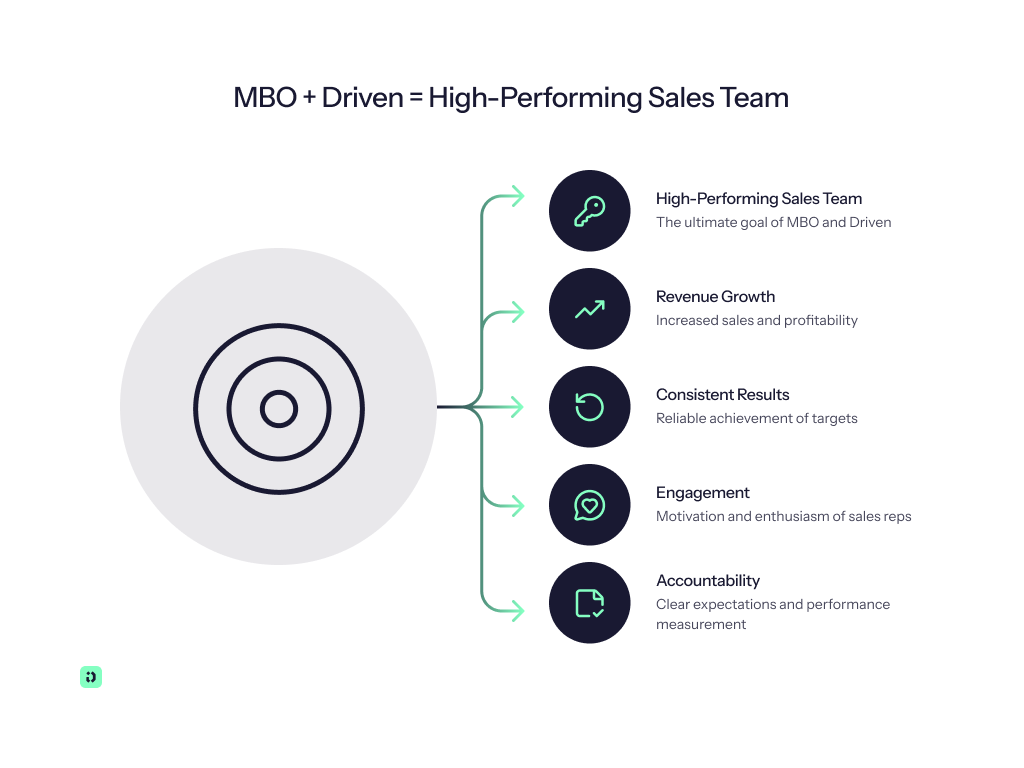
- Accountability: Everyone knows exactly what’s expected and how success is measured.
- Engagement: Reps see their goals, progress, and rewards in real time, keeping motivation high.
- Consistent Results: Managers can track performance live, spot gaps early, and make adjustments before problems grow.
The result? Sales teams work smarter, hit targets more consistently, and grow revenue efficiently, all without the usual headaches of manual tracking or miscommunication.
Try Driven Now and automate tracking, align objectives, and keep your team motivated every month.
Challenges and Limitations of MBO
While MBO has significant advantages, it’s not without challenges:
- Overemphasis on Numbers: Sales results aren’t always purely quantitative; qualitative aspects like customer relationships also matter.
- Time-Consuming: Setting and tracking goals can take considerable managerial time.
- Unrealistic Objectives: Poorly set goals can demotivate rather than inspire.
- Dependence on Leadership: The success of MBO heavily relies on how effectively managers engage with their teams.
Overcoming these challenges requires a balanced approach — integrating both quantitative and qualitative performance measures and maintaining open communication.
Best Practices for Implementing MBO in Sales
To make MBO successful in a sales environment, consider the following best practices:
- Collaborative Goal-Setting: Involve sales reps in defining their targets to boost ownership.
- Set SMART Objectives: Ensure goals are specific, measurable, achievable, relevant, and time-bound.
- Leverage Technology: Use CRM tools and analytics platforms to monitor progress and performance.
- Frequent Reviews: Conduct quarterly or monthly check-ins to stay on track.
- Provide Constructive Feedback: Focus on solutions and improvement rather than blame.
- Recognize Achievements: Celebrate wins, big or small, to maintain team morale.
- Adapt Goals When Needed: Be flexible; if market conditions change, so should the objectives.
These practices help create a culture of continuous improvement and sustained motivation within your sales team.
Conclusion
Management by Objectives (MBO) is more than just a management technique, it’s a philosophy that empowers sales teams to align personal performance with company success. By setting clear, measurable goals and involving employees in the process, MBO fosters accountability, motivation, and collaboration.
In today’s fast-paced sales environment, organizations that adopt MBO can expect improved performance, better alignment, and stronger business outcomes.
Whether you manage a small sales team or lead a global organization, implementing MBO can help you transform goals into results and results into growth.



See your comp plan, fully built in minutes

Frequently Asked Questions
About the author
Tom De Kooning






Understanding SPIFFs, Bonuses, and Commissions
Ask a sales rep what's driving their next paycheck, and you'll often hear all three words used interchangeably: SPIFF, bonus, and commission. They get lumped together as "extra money for selling," but they're not the same thing, and treating them like they are leads to confused reps, inconsistent payouts, and comp plans nobody can actually explain.
A SPIFF is a short-term, targeted incentive. A bonus is a lump-sum reward tied to hitting a broader goal. A commission is the ongoing, formula-based pay tied directly to sales, the core of most sales comp plans, not an add-on to it.
This guide breaks down what each one actually means, when companies use them, how they're calculated, and how they stack together so you can build a comp plan where every payout has a clear reason behind it.

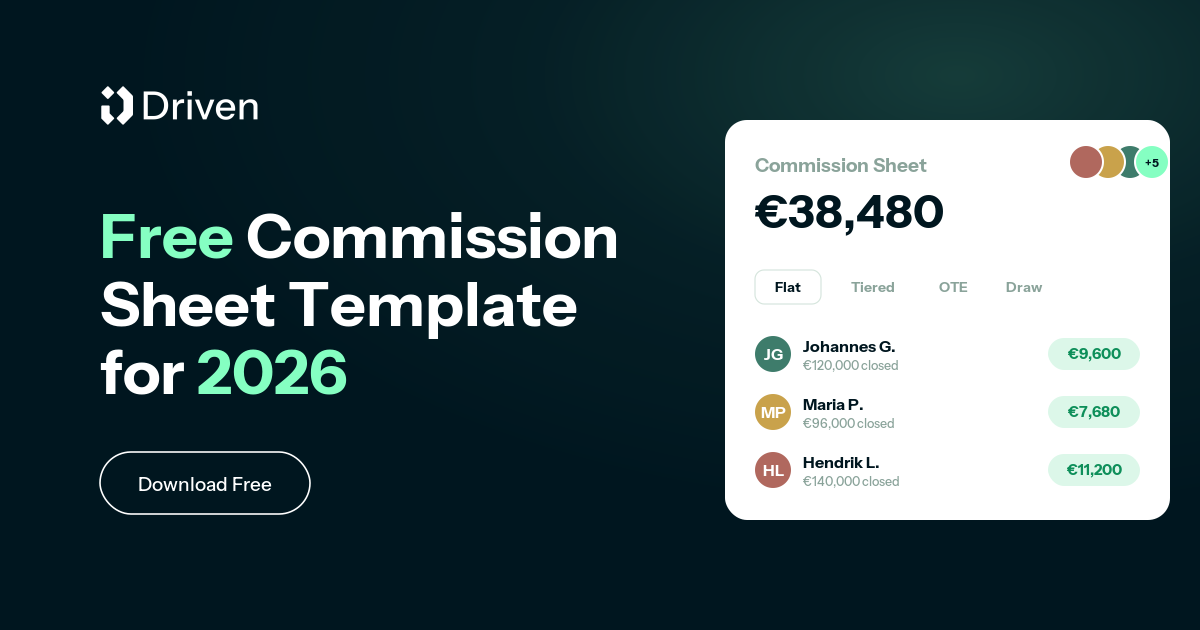
Free Commission Sheet Template: 8 Sales Commission Spreadsheets in One Excel File
Most commission plans don't fail because the idea is wrong. They fail because nobody modelled the numbers before rolling them out. A rate that looks generous on a slide turns into a payout you can't afford at 130% attainment, or an accelerator so flat that your best reps stop pushing the moment they hit quota.
So we built a free commission sheet template to fix that. It's one Excel file with eight ready-to-use sales commission spreadsheets, each structure on its own tab, each with live formulas and a filled-in sample row. Change a rate, a quota, or a revenue number and every payout updates instantly, and because everything lives in one workbook you can compare models side by side without juggling downloads.
Download the commission sheet template, or start for free and let Driven build the plan for you.

New to comp design? Start with our guide to sales compensation structure types, then model your pick here.

Non-Recoverable Draw vs. Recoverable Draw: What's the Difference?
New sales hires often get offered a "draw" against commission, and most sign the offer letter without knowing there are two very different types. That gap in understanding can mean thousands of dollars either staying in a rep's pocket or getting clawed back months later.
A draw is essentially an advance on future commission, designed to give reps steady income while they ramp up pipeline and close their first deals. But whether that advance is recoverable or non-recoverable determines something much bigger: whether it ever has to be paid back.
This guide breaks down what each draw type means, how they're calculated, when companies typically use each one, and the mistakes that turn a helpful ramp tool into a trust problem between reps and the company that hired them.




.svg%201.avif)