How AI Removes Bias and Increases Fairness in Sales Compensation
.png)
TL;DR
Most sales reps will never say it out loud in a team meeting. But the thought exists on almost every sales floor: "Is the system actually fair, or does it quietly favour certain people?"
It might look like a senior rep getting easier territory. A deal being reassigned at the last minute, along with the commission that came with it. A quota that feels suspiciously higher than a colleague's, despite covering a similar market. These are not imagined grievances. In many organisations, they are the invisible byproduct of compensation plans that were never designed to be fully objective.
The problem is not always bad intent. It is bad infrastructure. When compensation decisions are made by humans working with spreadsheets, memory, and judgment calls, bias, conscious or not, finds a way in. And once it takes hold, it quietly shapes who stays motivated, who disengages, and ultimately, who stays.
AI changes that. By grounding every commission calculation in verified data and consistent logic, AI removes the variables that allow bias to exist in the first place. The result is a compensation system that every rep can trust, because it treats performance as the only factor that matters.
Bias in Sales Compensation Does Not Always Look Like Favoritism; Sometimes It Looks Like a Spreadsheet
When most people hear the word "bias" in a professional context, they picture deliberate unfairness. But in sales compensation, bias rarely announces itself. It tends to arrive quietly, embedded in the processes and judgment calls that organizations rely on every day.

Here is what it actually looks like in practice:
- Territory bias: certain reps are handed geographies or accounts with significantly higher revenue potential, making quota attainment easier regardless of individual skill or effort
- Deal reassignment bias: commissions shifted during handoffs, account transitions, or team restructures without clear or consistently applied rules
- Quota setting bias: targets set inconsistently across reps covering similar markets, often shaped more by manager perception than by objective data
- Deal type bias: comp plans that structurally reward certain deal types, such as new logos, over others, such as renewals or expansions, inadvertently disadvantaging reps who work those segments
- Recency bias: performance reviews and comp adjustments influenced disproportionately by a rep's most recent results rather than their full contribution over time
- Relationship bias, informal favoritism where reps with stronger manager relationships receive better opportunities, more support, or more favorable treatment during disputes
The common thread across all of these is that none of them require anyone to act with bad intentions. They are the natural output of systems that rely too heavily on human judgment without consistent, data backed guardrails. And they tend to surface in very specific places:
- Territory and account assignments
- Mid cycle quota adjustments
- Commission dispute resolutions
- Accelerator and bonus eligibility decisions
- Split commission arrangements between reps
For reps on the receiving end of these inconsistencies, the impact is real: reduced motivation, eroded trust, and a growing sense that working harder may not actually be the deciding factor in how much they earn.
The Problem Is Not Always the People; It Is the Process
Understanding why bias persists in sales compensation requires looking honestly at how most organisations actually manage it. And the answer, for many companies, is manual.
Managers make quota decisions informed by memory, intuition, and incomplete data. Finance teams run commission calculations in spreadsheets that were built by someone who may no longer be at the company. Disputes get resolved through conversations rather than documented policy. And at the end of each cycle, a handful of people are reconciling numbers across multiple systems, hoping the formulas are still intact.
This is not a criticism of the people doing this work. It is a recognition that the process itself creates conditions where fairness cannot be guaranteed, no matter how good the intentions are.

Here is why manual comp management struggles to be fully fair:
- No consistent logic applied uniformly across all reps and scenarios; similar situations can produce different outcomes depending on who handles them
- Limited auditability decisions made verbally or in emails are nearly impossible to trace or explain months later
- Errors that are correct too late:, by the time a calculation mistake is caught and fixed, the damage to rep trust has already been done
- Dispute resolution that varies by manager rather than by policy, the outcome often depends more on who the rep is than what the policy says
- No real time visibility for reps to identify issues as they happen, leaving them to discover problems only after payout
When the infrastructure is unreliable, even the best intentions cannot guarantee fair outcomes. Small inconsistencies that seem minor in isolation compound over months and quarters, quietly shaping which reps feel valued and which ones start looking elsewhere. That is where AI fundamentally changes the equation.
AI Does Not Have Favorites; It Only Has Data
The core reason AI improves fairness in sales compensation is straightforward: it applies the same logic, rules, and calculations to every rep, every deal, and every scenario, without exception, without memory, and without relationships influencing the outcome.
Where human managed processes introduce a judgment layer at every step, AI replaces that layer with consistent, documented, rule based logic. The same formula that calculates one rep's commission calculates every rep's commission. The same threshold that triggers an accelerator for one rep triggers it for every rep who hits that mark. There are no informal exceptions and no decisions that cannot be explained.
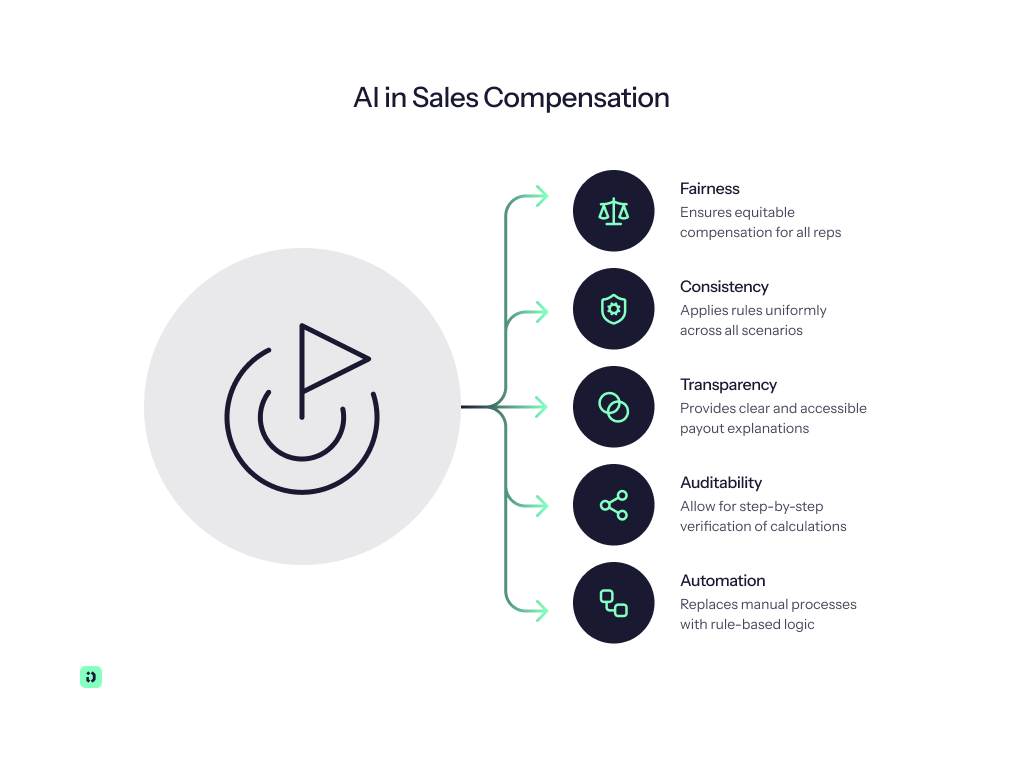
Here is what AI practically replaces in the compensation process:
- Manual spreadsheet calculations → automated, rule based logic that runs consistently every time
- Manager judgment calls → consistent, documented policy application across all reps and scenarios
- Reactive error correction → proactive anomaly detection that flags issues before they reach reps
- Opaque payout explanations → full calculation transparency that every rep can access and understand
- Delayed end of month visibility → real time earnings tracking throughout the entire quarter
Beyond consistency, AI also brings auditability. Every calculation is traceable. Every payout can be broken down step by step. If a rep questions their commission, the answer is not "Let me check with finance"; it is immediately available, documented, and verifiable. That transparency alone removes a significant source of the distrust and suspicion that lives in manually managed comp environments.
Fairness Is Not Just a Feeling; Here Is Where It Shows Up
Understanding that AI improves fairness conceptually is one thing. Knowing exactly where reps will feel the difference is what builds genuine trust in the system. These are the specific areas where AI driven compensation produces meaningfully fairer outcomes:
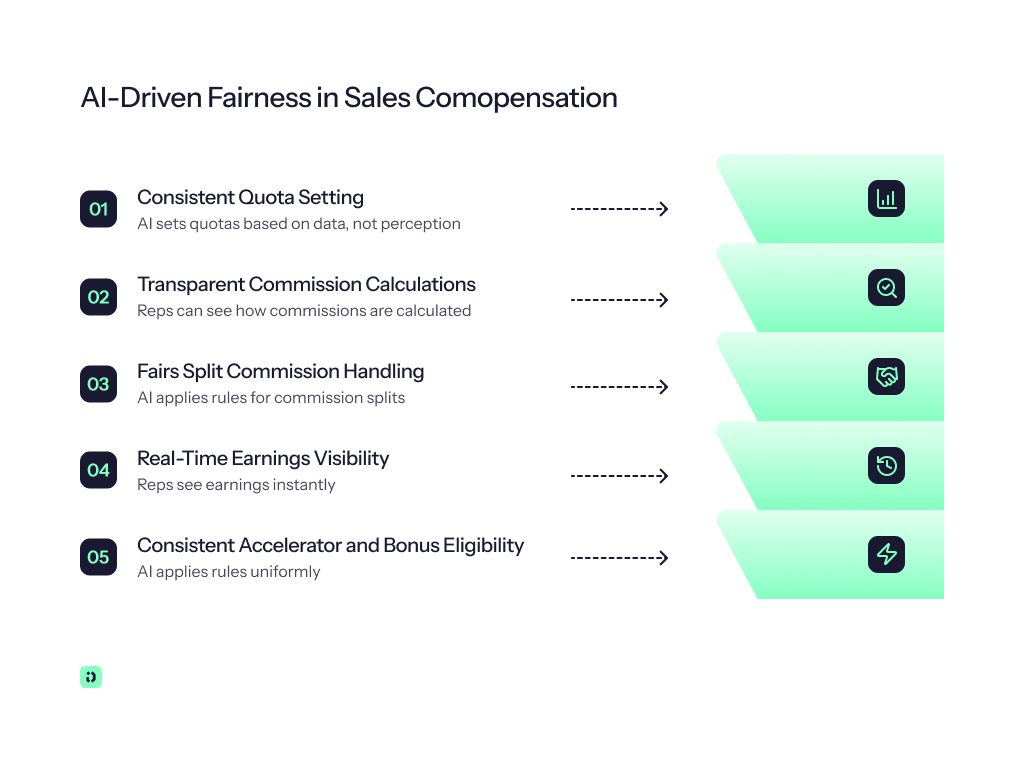
Consistent quota setting
- AI uses historical performance data, territory potential, and market variables to set quotas grounded in reality rather than perception
- Removes the inconsistency of manager driven quota negotiations where relationships and advocacy can influence targets
- Every rep begins the quarter on a level playing field based on their specific context, not on how their last conversation with their manager went
Transparent commission calculations
- Every rep can see exactly how their commission was calculated, step by step, without needing to submit a request to finance
- No more black box payouts that create suspicion and require explanation after the fact
- Disputes decrease naturally because the logic is visible, consistent, and available to everyone simultaneously
Fair split commission handling
- AI applies predefined rules to split commissions between reps automatically, based on documented policy rather than managerial judgment
- Removes the ambiguity and relationship dynamics that often skew split decisions in unpredictable directions
- Every rep involved in a deal receives what the policy says they should, not what someone decides in the moment
Real time earnings visibility
- Reps no longer have to wait until month-end to know where they stand or what they have earned
- Real time dashboards show current earnings, progress toward quota, and projected bonuses at any point in the quarter
- Removes the anxiety and speculation that so often fuel fairness concerns when reps are left in the dark
Consistent accelerator and bonus eligibility
- AI applies accelerator thresholds and bonus criteria uniformly across all reps without selective or relationship influenced application
- High performers in every territory and every segment are recognized equally for equivalent performance
- The rules work the same way for the newest rep on the team as they do for the most tenured
When Reps Trust the System, Everything Performs Better
Fairness in compensation is not a soft, feel good benefit. It is a structural advantage that shows up directly in your revenue numbers, your attrition rate, and the culture your team builds quarter after quarter.
When reps believe the system is genuinely fair, the dynamic across the entire team shifts:
- Retention improves: top performers stay when they know their results will always be recognized consistently, regardless of politics or perception
- Motivation increases: reps who trust the system focus their energy on performance rather than on questioning whether the effort is even worth it
- Collaboration strengthens: teams with high comp trust are less protective of deals and more willing to support each other, because they know cooperation will not cost them
- Onboarding accelerates: new reps who join a transparent, data driven comp environment build trust in the system from day one rather than spending months figuring out how it really works
- Disputes decrease: when logic is visible and consistent, the conversations that drain time from managers', finance's, and ops teams' largely disappear
What improves when compensation is genuinely fair:
- Rep retention, especially among high performers who have the most options
- Time spent selling versus time spent disputing or second guessing pay
- Team collaboration and willingness to share deals across segments
- Overall quota attainment as motivation and clarity increase across the board
- Your ability to recruit top talent by signaling that merit, not relationships, drives earnings
The organizations that treat compensation fairness as a strategic priority, not just an HR concern, consistently build stronger, more stable, and higher performing sales teams. And increasingly, AI is what makes that standard achievable at scale.
How Driven Helps
Driven is built to give your sales team exactly what a fair compensation system requires, calculations grounded in data, visibility that is transparent by design, and consistency that does not depend on who handles a given situation.
With Driven, you can:
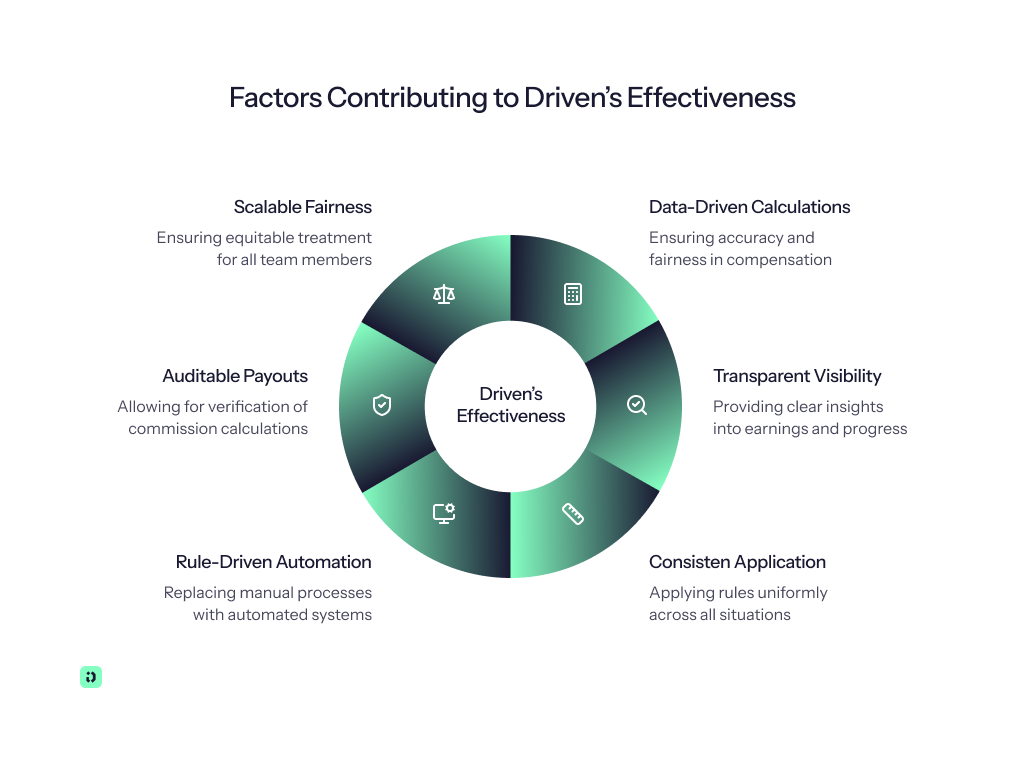
- Eliminate manual bias by replacing judgment based processes with consistent, rule driven automation
- Give every rep real time visibility into their earnings, quota progress, and projected bonuses throughout the quarter
- Make every payout fully auditable so reps and managers can trace exactly how a commission was calculated
- Apply split commission rules consistently across every deal without ambiguity or dispute
- Scale fairness across your entire team whether you have ten reps or two hundred, the same logic applies to everyone
When your reps trust the system, they stop thinking about pay and start focusing on performance. That shift, from suspicion to confidence, is where the real revenue impact begins.
The Bottom Line
The question of whether your compensation plan is truly fair is not always easy to answer when you are relying on a manual process. Bias does not announce itself. It builds quietly through inconsistencies that individually seem minor but collectively shape who succeeds, who disengages, and who walks out the door.
AI removes that uncertainty. When every calculation follows the same logic, every rep has full visibility into their earnings, and every payout is traceable and consistent, the question of fairness answers itself. There is no ambiguity left to fuel suspicion, only clear, verifiable data that every rep can see and trust.
A fair compensation system is not just better for your people. It is better for your pipeline, your retention, and your revenue. And building one no longer requires a perfect process, it requires the right technology.



See your comp plan, fully built in minutes

Frequently Asked Questions
About the author



- What they do: AI tools for sales operations take repetitive work off your team, keep CRM data clean and surface insights across planning, routing, forecasting and pay.
- The main lesson: match the kind of AI to the job. AI drafts, explains and flags; fixed rules calculate anything involving money or ownership; a human signs off.
- Best AI tools for sales ops: Driven (compensation), Fullcast (territory and quota planning), Clay (data enrichment), LeanData (lead routing), Gong (pipeline and forecasting).
- What's at stake: real teams lose from one or two days to two weeks per quarter on manual work.
- How to choose: start from your CRM, fix your source of truth, pick the one bottleneck that hurts most and test edge cases in a pilot.

- Sales commission automation is the process of using rules, data, and automated systems to calculate, track, approve, and report sales commissions with less manual effort.
- You can automate sales commissions with spreadsheets, build a custom system, or use dedicated sales commission software, depending on your team's size, commission structures, and business needs.
- A useful rule of thumb is: AI can help draft and explain plans, rules should calculate payouts, and humans should approve them.
- To get started, identify your source of truth, clean your CRM and sales data, document your commission rules, and then choose the automation approach that fits your commission process.
- Aikido Security used Driven to cut its commission processing time from 3 days to 3 hours, while giving 120+ sales reps real-time visibility into their earnings.
Most commission plans fail because nobody modelled the numbers before rolling them out. A rate that looks generous on a slide turns into a payout you can't afford at 130% attainment, or an accelerator so flat that your best sales reps stop pushing the moment they hit quota.
So we collected the eight most common sales commission structures into a single free commission sheet template. It is one workbook with a commission spreadsheet for each structure, each with live formulas and a filled-in example. Change a rate, a quota, or a revenue number and every payout updates instantly, so you can compare sales commissions across models in one place.
Open the template in Google Sheets or start for free and let Driven build the plan for you.


Under ASC 606, the revenue recognition standard, and its cost subtopic, ASC 340-40, sales commissions that are incremental costs of obtaining a contract are no longer expensed when paid. They are recorded as a deferred commission asset and amortized as the company delivers the service, which can be longer than the initial contract term if renewals are expected. A practical expedient lets you expense commissions as incurred when the amortization period is one year or less, but it rarely fits multi-year SaaS contracts.
Fixed salaries and company-wide bonuses are not capitalized, while SPIFFs and bonuses tied to specific deals usually are. ASC 606 does not dictate how to design your sales compensation plan, but the plan you choose determines how much accounting work you create. Clear rules on new vs. renewal commissions, clawbacks and other sales incentives keep it clean, and a platform like Driven can automate the schedules and keep them audit-ready.
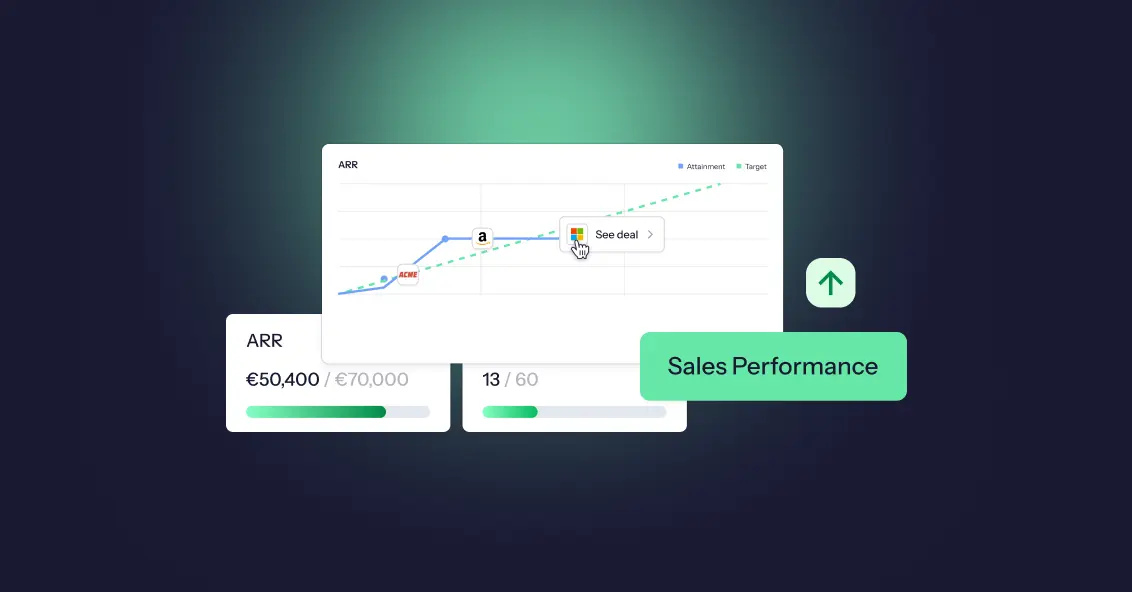
Sales performance analysis is the process of examining sales data to understand what is driving results, what is holding them back, and what to change next. It differs from reporting, which only says what happened, and the ongoing practice and technology behind it is called sales analytics.
A good sales analysis starts with a clear question, tracks a handful of key sales metrics (win rate, conversion rate, average deal size, sales cycle length, quota attainment, pipeline coverage and cost of sales), and looks at the data through five lenses: time, rep, territory, customer segment and lead source. The practical process has seven steps: ask a question, collect the sales data, clean it, set a baseline, identify trends through the lenses, diagnose the root cause, and act and monitor.
To evaluate individual sales reps, use a balanced scorecard of outcomes, activity and quality, and look at how attainment is distributed across the team, not just the average. Because compensation shapes behavior, it helps to analyze pay against performance too.
Driven acts as the data layer that connects your CRM and commission data, so you can query it in natural language and build the dashboards each person needs.
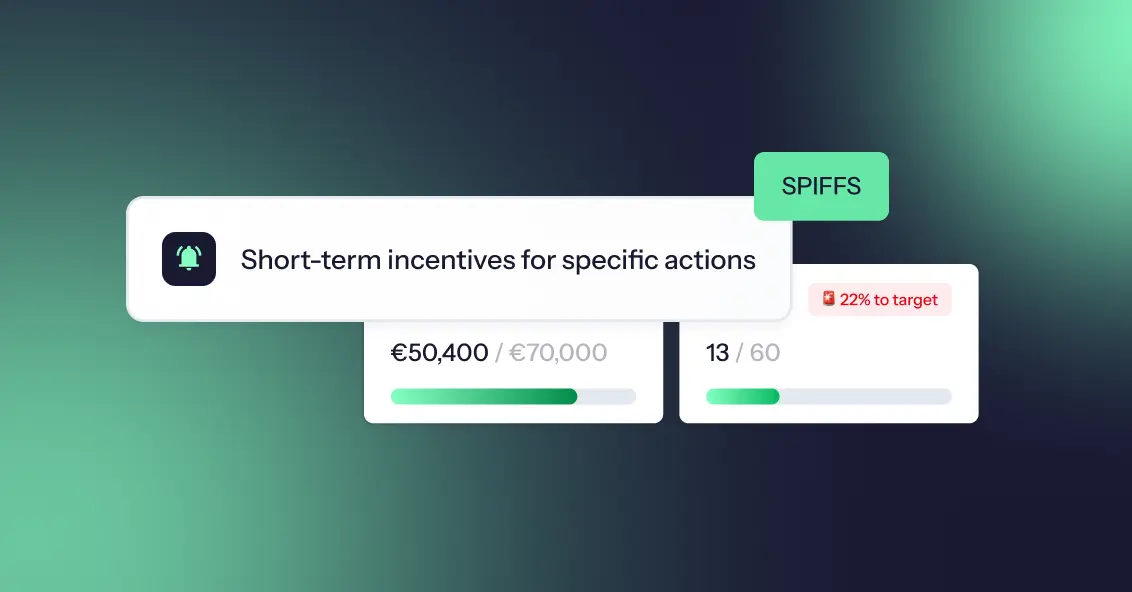
A SPIF (Sales Performance Incentive Fund, also spelled SPIFF) is a short-term sales incentive that rewards sales reps for a specific goal within a defined period, such as selling a specific product or hitting a revenue milestone. It sits on top of sales commissions and is usually paid out fast, which is what makes it effective.
Every SPIFF works the same way: set a goal, define the reward, set a timeframe, track performance, and pay out quickly. SPIFFs come in several types, including individual, team, product, tiered, activity-based, and vendor-funded, and sales teams use them to focus attention, create urgency, and boost sales. To build an effective SPIFF program, define the objective, write simple rules, set a budget, and communicate clearly. To measure one, compare results to a baseline and check the cost per extra sale. The most common mistakes are overcomplicated rules, running SPIFFs too often, and rewards too small to matter. Tools like Driven automate the tracking and payouts, so none of this lives in a spreadsheet.
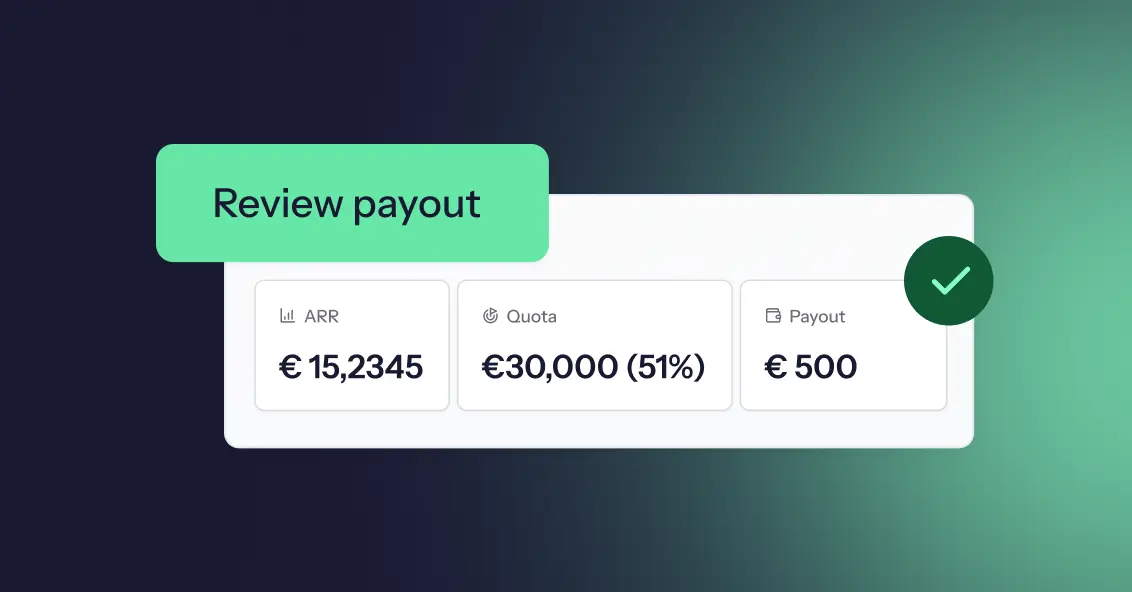
Incentive pay is variable pay that rewards employees for results, paid on top of base pay and earned again in each period. It counts toward total earnings and is generally taxable, but it is not part of the fixed salary.
Common types include commission, performance bonuses, team incentives, gainsharing, profit sharing, spot awards, non-monetary incentives, and long-term incentives like stock options. Unlike a bonus, which rewards past results, or merit pay, which is a permanent raise, incentive pay is agreed in advance and drives future performance.
It is calculated as a performance result multiplied by an incentive rate, using flat, threshold, tiered, or target-based structures. To make it work, set clear objectives, use a few meaningful metrics, set realistic targets, and pay out accurately and on time with transparent statements.
The main risks are gaming, sandbagging, short-term focus, and perceived unfairness, and clear data and automation help catch them early.
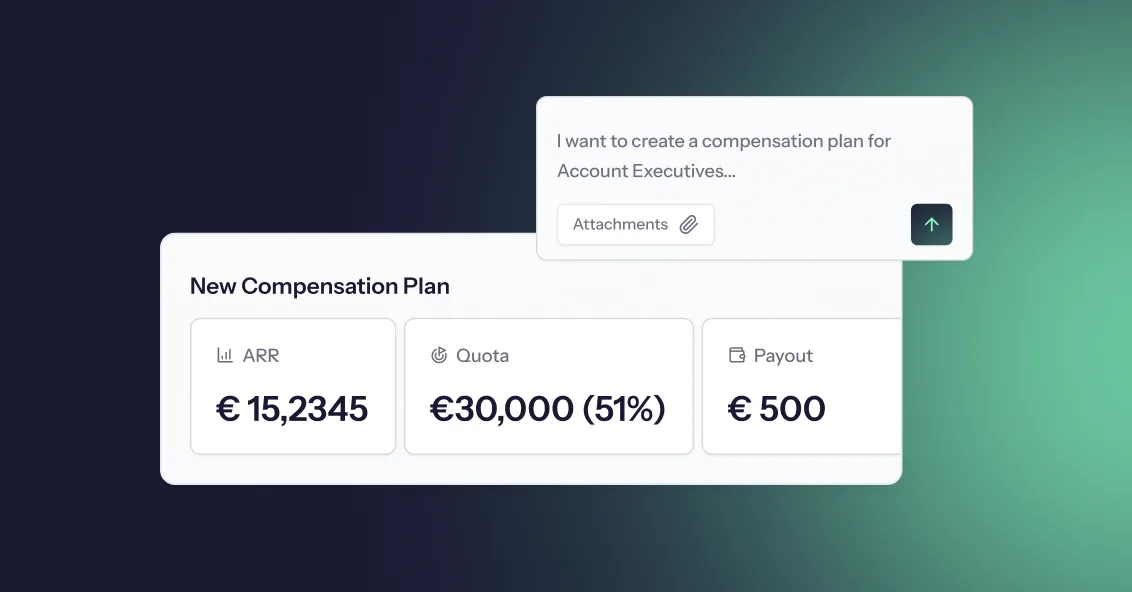
A sales compensation plan defines how your sales team gets paid: a fixed base salary, variable pay like commissions and bonuses, and a quota that decides how much of that variable pay a rep actually earns. Base salary plus target variable pay makes up a rep's on-target earnings (OTE).
Sales compensation plans do more than pay people; they shape behavior, drive revenue, and define culture. Get the plan right, and your team is aligned, motivated, and chasing the numbers that actually matter. Get it wrong, and you'll spend every month-end on disputes, recalculations, and reps who no longer trust their payslip.
This guide covers the core components, the main plan types, and a 10-step process to build your own, followed by three sales compensation plan examples. Jump to the examples. Everything here draws on Driven's work with finance, RevOps, and sales compensation leaders who run these plans every single month.
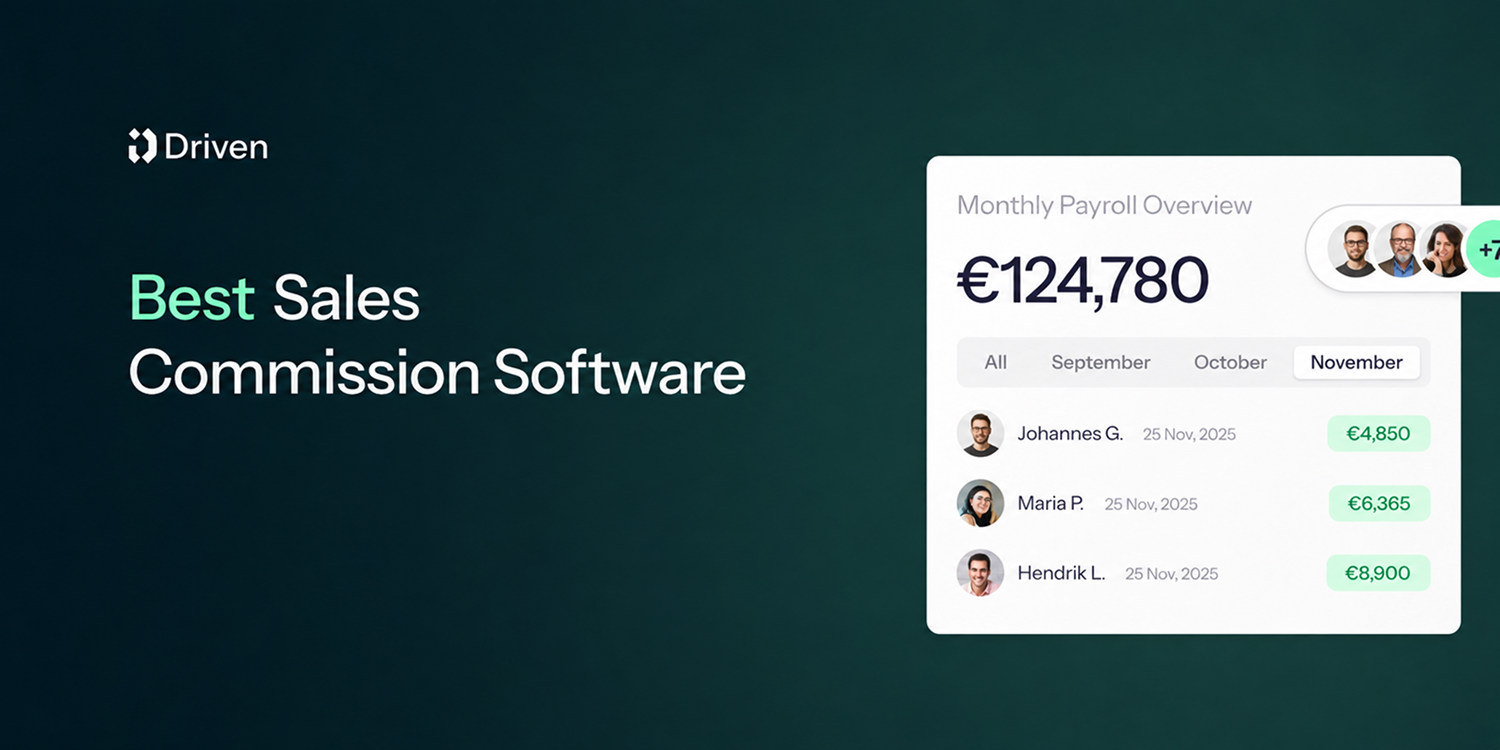
Sales commission software calculates, tracks and explains commissions from your CRM data, so nobody rebuilds a spreadsheet every month. The 9 best tools in 2026:
- Driven: best AI commission agent for HubSpot and Salesforce teams that want to go live in days
- QuotaPath: best for growing teams that want published pricing and broad CRM coverage
- CaptivateIQ: best for mid-market teams with complex, frequently changing plans
- Salesforce Spiff: best for companies that run on Salesforce
- Qobra: best for European RevOps teams that want no-code plans and AI agents
- Xactly Incent: best for large enterprises that also need planning and forecasting
- Performio: best for complex crediting across many data sources and regions
- Sales Cookie: best for small businesses that want month-to-month contracts
- QCommission: best for finance-led teams on QuickBooks or needing on-premise deployment
Choose based on three things: your CRM, how many reps you pay, and how complex your plan is.

TL;DR: Salesforce stores every field commissions depend on, but core Sales Cloud doesn't calculate, explain or protect payouts. Teams close that gap in one of five ways: native formula fields, a custom build, Salesforce's native ICM (Spiff), a vibe-coded tool, or a third-party commission tool. A flat rate and a few reps can stay native. Tiers, accelerators, splits and frequent plan changes point to a dedicated tool, and to an agentic platform like Driven if you want the plan designed, explained and maintained for you.
It's not uncommon for teams in 2026 to still run sales commissions on spreadsheets. The deal data lives in Salesforce, the rates live in a Google Sheet someone built three finance leads ago, and the payouts get reconciled by hand at the end of every quarter. When a rep asks why their number looks different, no one can fully explain it. When finance needs an accrual, someone exports a report and rebuilds it in Excel. The process is time-consuming, error-prone, and actively eroding rep trust. It's hard to keep a sales team motivated when reps can't trust their own paycheck.
Teams that outgrow the spreadsheet usually reach for formula fields, a custom build, or a paid add-on. But tools for managing sales incentives are now moving from rules engines you configure to agents that work alongside you. Gartner predicts that 40% of enterprise applications will feature task-specific AI agents by the end of 2026, up from less than 5% in 2025. They also say that 60% of B2B seller work will be executed through conversational interfaces by 2028.
This guide breaks down five ways to track Salesforce commissions, including what each approach does well, where it breaks, and how to choose.
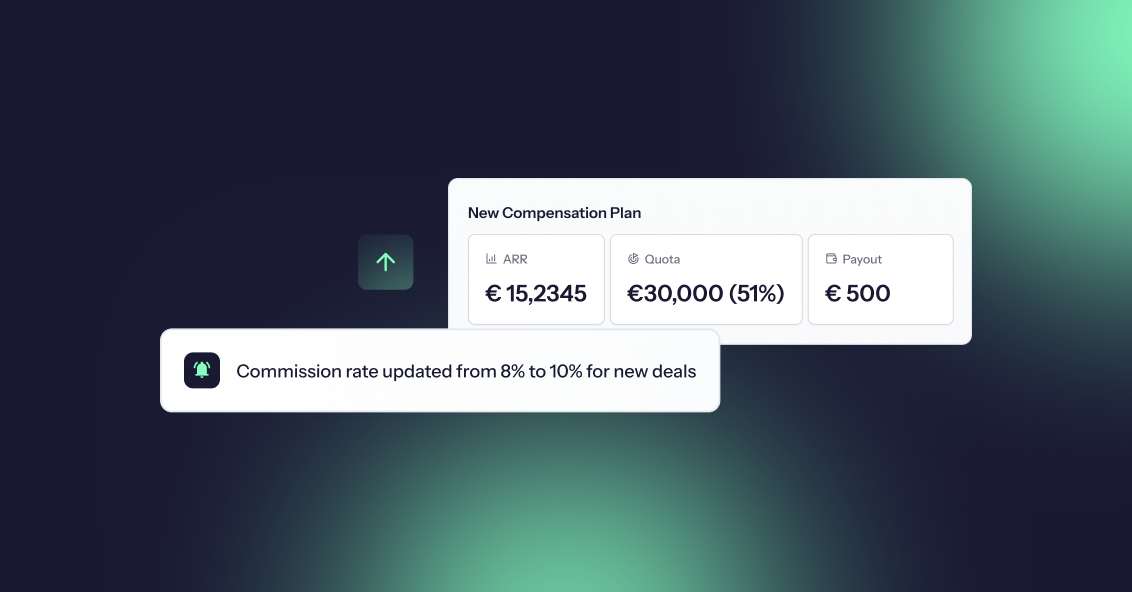
To calculate sales commission, multiply the commissionable sales amount by the commission rate. A $40,000 sale at 8% earns $3,200. Base-plus-commission plans add that figure to salary, and tiered plans apply each tier's rate only to the sales inside it. The hard part is agreeing which deals count and what the rate applies to.
Three core formulas cover almost every plan. Straight commission is Commission = Sales × Rate. Base plus commission is Total pay = Base salary + (Sales × Rate). Tiered commission adds up each tier separately: (Tier 1 sales × Tier 1 rate) + (Tier 2 sales × Tier 2 rate), and so on for every tier the rep reaches.
This guide shows why most payout errors come from deciding which deals count rather than from the calculation itself. It explains why tiered plans can pay very different amounts depending on whether tiers are marginal or retroactive, and it covers why payouts should be locked once approved, so later CRM changes don't alter what has already been paid.

Ask a sales rep what's driving their next paycheck, and you'll often hear all three words used interchangeably: SPIFF, bonus, and commission. They get lumped together as "extra money for selling," but they're not the same thing, and treating them like they are leads to confused reps, inconsistent payouts, and comp plans nobody can actually explain.
A SPIFF is a short-term, targeted incentive. A bonus is a lump-sum reward tied to hitting a broader goal. A commission is the ongoing, formula-based pay tied directly to sales, the core of most sales comp plans, not an add-on to it.
This guide breaks down what each one actually means, when companies use them, how they're calculated, and how they stack together so you can build a comp plan where every payout has a clear reason behind it.

New sales hires often get offered a "draw" against commission, and most sign the offer letter without knowing there are two very different types. That gap in understanding can mean thousands of dollars either staying in a rep's pocket or getting clawed back months later.
A draw is essentially an advance on future commission, designed to give reps steady income while they ramp up pipeline and close their first deals. But whether that advance is recoverable or non-recoverable determines something much bigger: whether it ever has to be paid back.
This guide breaks down what each draw type means, how they're calculated, when companies typically use each one, and the mistakes that turn a helpful ramp tool into a trust problem between reps and the company that hired them.
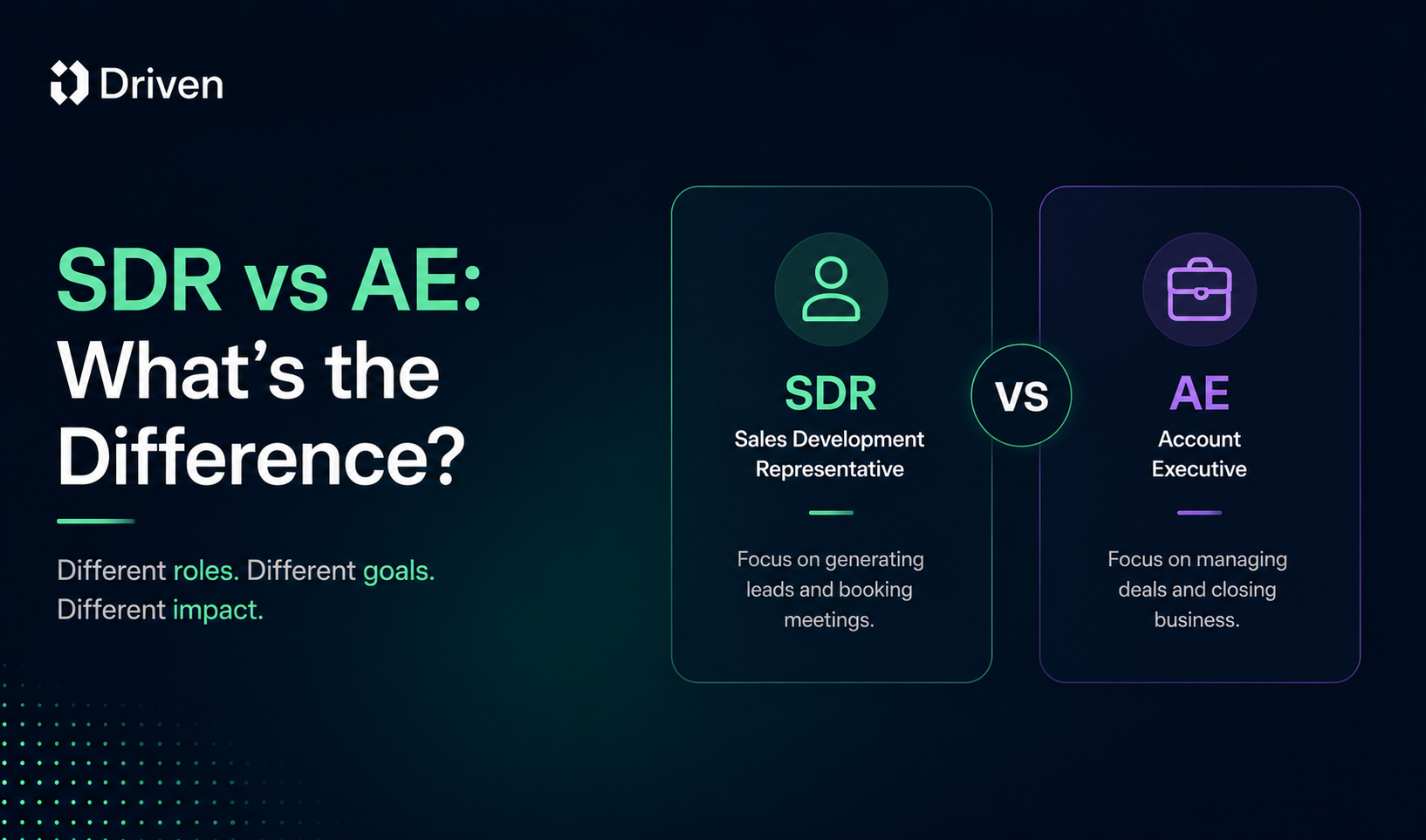
Not every sales role drives revenue the same way, so it doesn't make sense to pay everyone on the same plan. Yet plenty of companies still try to copy-paste one commission structure across the whole sales org, and then wonder why half the team feels underpaid and the other half feels unmotivated.
Sales Development Representatives (SDRs) generate qualified pipeline. Account Executives (AEs) close it. Their responsibilities are different, their quotas are different, and their performance metrics are different, which means their compensation plans need to be different too.
In this guide, you'll learn the key differences between SDR and AE roles, how their compensation plans are typically structured, common pay mixes and incentive models, mistakes companies should avoid, and how compensation software makes managing both plans easier as a team grows.
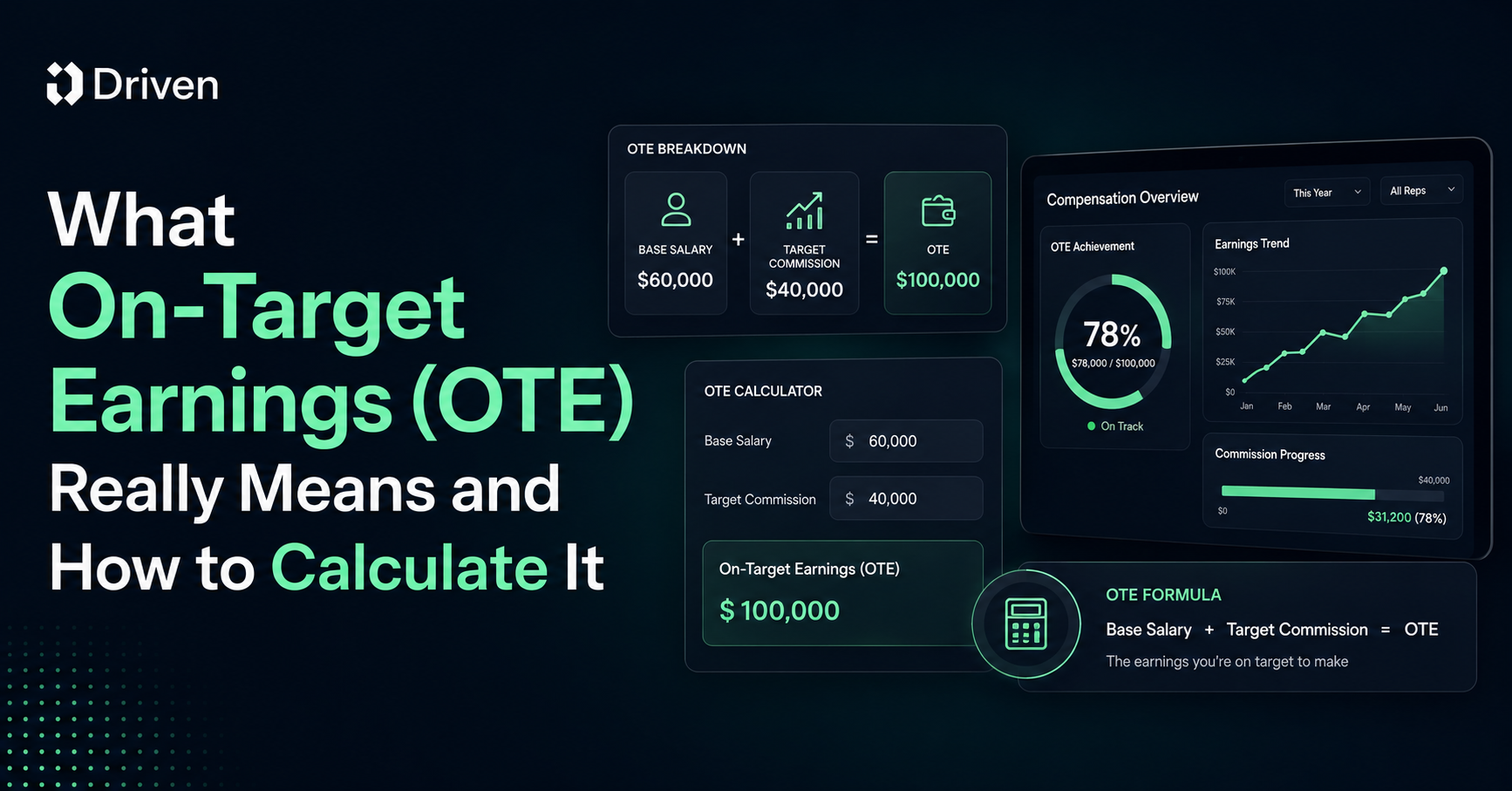
Ask ten sales reps what OTE means and you'll get ten different answers. Some think it's their salary. Some think it's guaranteed. Some think it's a number recruiters made up to make a job posting look better than it is.
On-Target Earnings, or OTE, is one of the most misunderstood terms in sales compensation, and that confusion costs people real money and real trust. Candidates accept offers they don't fully understand. Reps hit quota and still feel confused about their paycheck. Finance teams build comp plans that nobody on the floor can explain in one sentence.
This guide breaks down exactly what OTE means, how to calculate it, and how it's different from base salary and total compensation. You'll walk away knowing how to read an offer letter, build a comp plan, or explain your own earnings potential without the guesswork.
.png)
Revenue Operations has become the foundation of modern revenue teams in 2026. What once focused mainly on aligning sales and marketing now connects every revenue-related function, workflow, and process across the organisation. However, many companies still struggle with disconnected tools and fragmented systems. Businesses invest in CRMs, forecasting platforms, analytics software, customer success tools, and compensation management systems, but often end up with siloed data and inefficient workflows.
As a result, teams spend more time fixing operational issues than driving growth. A successful RevOps tech stack is not about having more software, it’s about ensuring every tool works together seamlessly. In this guide, we’ll explore how to build a connected RevOps stack that improves visibility, automation, and operational efficiency while reducing complexity. We’ll also look at how platforms like Driven help automate commission operations with AI-powered workflows.
.png)
Sales compensation has moved from a back-office payroll function to one of the most strategically important levers a revenue organisation can pull. For RevOps leaders, compensation data isn't just interesting; it's operational intelligence. The right benchmarks reveal whether your quota structure is realistic, whether your commission model is driving the right behaviours, whether your reps trust the plan they're working under, and whether your finance team is spending 40 hours a month on a process that should take four.
In 2026, the data tells a clear story: most organizations are underperforming on compensation design, overspending on manual administration, and underinvesting in the transparency that keeps sales teams engaged and motivated. This guide compiles the most important sales compensation statistics. RevOps leaders need to know this year and translate each data point into a practical implication for strategy and execution.
.png)
Sales compensation management is undergoing a major transformation. What was once a manual, rule-based, and spreadsheet-heavy process is now becoming more intelligent, automated, and insight-driven. At the core of this shift is artificial intelligence (AI) in revenue operations and commission management. Businesses are no longer just looking for tools that calculate commissions; they want systems that can think, analyse, and optimise.
Here's where things get confusing: what exactly is an AI commission agent, and how does it differ from conventional commission software? This blog explains it well. Most commission software calculates payouts. An AI commission agent goes several steps further, it analyses, predicts, automates, and even assists decision-making.
.png)
A sales team's compensation structure directly influences performance, motivation, retention, and revenue growth. When designed correctly, it encourages the right behaviors, rewards top performers, and aligns sales activities with business goals. When designed poorly, it can create confusion, reduce motivation, and drive unwanted behaviors.
Whether you're building your first sales team or refining an existing compensation plan, understanding sales compensation structures is essential for long-term success.

Most sales teams assume missed targets are a performance issue. When numbers fall short, the default response is to push harder: more calls, more pipeline, more pressure on reps. But that reaction overlooks a more fundamental problem. In many cases, the issue isn’t how your team is selling; it’s what they’re being asked to achieve. Quotas shape behavior, motivation, and outcomes, and when they’re set incorrectly, even strong teams struggle to perform.
The reality is simple: the quota itself might be wrong. Set it too high, and reps disengage. Set it too low, and you cap your revenue potential. Distribute it unevenly, and your top performers lose trust in the system. Despite this, many organizations still rely on spreadsheets and manual processes to define targets. If that sounds familiar, it’s a sign that your approach to quota setting may need a serious rethink

Sales compensation is not just about paying commissions; it’s about shaping behaviour, driving performance, and aligning teams with business goals. But here’s where many organisations go wrong: they design compensation plans without accounting for how their sales actually work.
B2B and B2C sales operate in fundamentally different environments. They differ in deal size, buyer complexity, and sales cycles. Yet, companies often apply similar compensation logic across both, and the result is predictable: misaligned incentives, inconsistent performance, and lost revenue opportunities. To build an effective compensation strategy, you need to start with a simple principle: how you sell should define how you pay.

If you’ve spent any time around startups, scaling companies, or even corporate teams, you’ve probably heard the term “Ops” thrown around in meetings, job titles, or strategy discussions. Sales Ops, Marketing Ops, RevOps, DevOps, it’s everywhere. But what does “Ops” actually mean in business? And more importantly, why has it become such a critical function for companies that want to grow efficiently.
The truth is, most businesses don’t struggle because they lack ideas or demand. They struggle because things break internally, processes are unclear, teams are misaligned, and execution becomes messy. That’s where Ops comes in. In this guide, we’ll break down what Ops really means, what it includes, and why it plays a central role in building a scalable, high performing business.

Most sales teams don’t fail because they lack effort or talent. They fail because the system meant to reward performance is too complex to understand. Commission plans are meant to drive behavior. But when they become overloaded with rules, tiers, exceptions, and calculations, they stop being motivational tools and start becoming confusion engines.
Modern compensation systems are evolving beyond manual design, with AI and automation reshaping how incentive structures are created and optimized. And once reps stop clearly understanding how their earnings work, performance drops, not because they stop trying, but because they stop trusting the system. This is becoming more important as AI is reshaping sales compensation systems and incentive design.

Most companies think they have a compensation problem. They don't; they have an alignment problem. Sales teams focus on what they’re paid to do, while leadership focuses on revenue growth, predictability, and profitability. When those priorities aren’t tightly connected, things start to break quietly at first, then all at once. Revenue targets are consistently missed, payouts increase without meaningful impact, and reps begin optimizing for incentives instead of outcomes.
Here’s the uncomfortable truth: if your compensation plan isn’t directly tied to revenue goals, it’s working against you. If you want to understand where sales compensation is heading, explore our take on the future of sales compensation.

In today’s performance driven business environment, companies are moving beyond fixed salaries and embracing compensation models that directly reward results. Variable incentive pay has become a cornerstone of modern compensation strategies, especially for sales and revenue teams. But while the concept sounds simple, designing an effective variable pay plan is anything but.
Done right, it can drive performance, boost motivation, and align teams with business goals. Done poorly, it can create confusion, mistrust, and missed targets. In this guide, you’ll learn what variable incentive pay is, the different types, its key benefits, and how to design plans that actually work in 2026 and beyond.

You can build a highly data driven, strategically aligned compensation plan and still see it fall apart within weeks of rollout. The reason is simple: your sales team may not fully understand it, trust it, or believe they can actually succeed under it. When reps feel uncertain about how they earn, even the best designed plans lose their impact.
In 2026, success in sales compensation isn’t just about plan structure or incentives; it's about how clearly and consistently changes are communicated. Sales teams today are more informed, more analytical, and more sensitive to fairness than ever before something closely tied to trends shaping the future of sales compensation and how AI is changing the game. When communication falls short, confusion grows and motivation drops. This blog breaks down how to communicate compensation plan changes in a way that builds clarity, trust, and adoption rather than resistance.
%20(1).png)
%20(1)%20(1).png)
.png)
.png)
%20(1).png)
%20(1).png)
%20(1).png)
A sales commission plan is meant to motivate your team—but when it’s poorly designed or misaligned with business goals, it becomes a silent revenue killer. Many companies underestimate how much damage a flawed compensation structure can cause because the problems don’t appear all at once. Instead, they compound quietly over months: reps chase the wrong deals, turnover increases, disputes rise, and forecasting becomes unreliable.
Meanwhile, leadership often looks everywhere except the comp plan to diagnose performance issues. The truth? Your commission structure has more influence over revenue growth, morale, and productivity than almost any other operational system. When incentives are unclear or unfair, even your best sellers give up. And when incentives are aligned and transparent, the entire organization accelerates. In this post, we break down the hidden financial costs of a poorly designed commission structure and how modern compensation systems are helping revenue teams eliminate those risks altogether.
.jpg)
Sales teams are the backbone of any revenue-driven organization, but even the most talented reps can underperform without the right incentives. A well-crafted sales compensation plan doesn’t just pay your team; it motivates, aligns, and drives consistent, high-level performance. Too often, companies rely on outdated spreadsheets, unclear quotas, or one-size-fits-all commission structures, leaving reps frustrated and sales results inconsistent.
In today’s competitive market, designing a compensation plan that balances fairness, transparency, and ambition is essential. This guide walks you through a tactical approach to building plans that reward the right behaviors, keep reps motivated, and ultimately help your business hit and exceed its revenue goals.
%20in%20Sales%20(1)%20(1).png)
In today’s competitive business environment, sales teams need more than just enthusiasm and product knowledge; they need direction, focus, and measurable goals. This is where Management by Objectives (MBO) comes into play.
MBO isn’t just another management buzzword; it’s a proven approach that helps organizations align their goals with individual performance. By setting clear, achievable objectives, MBO transforms how sales teams operate, helping them stay focused on what truly matters, driving results. But what exactly is MBO, and how can it revolutionize your sales strategy? Let’s explore in depth.
Sales compensation software has moved far beyond spreadsheets and manual commission tables that are prone to errors, delays, and confusion. Modern compensation platforms now help businesses design fair and motivating compensation plans, automate even the most complex commission calculations, accurately forecast payout costs, and improve transparency across the entire sales organization. By providing real-time visibility into earnings and performance, these tools keep sales teams motivated while helping finance leaders maintain control over budgets and revenue planning. In a world where sales velocity, scalability, and revenue predictability matter more than ever, choosing the right sales compensation software can truly transform how your revenue organization operates and grows.
In this guide, we review the best sales compensation software available today, compare their key features, pricing models, and ideal use cases, and help you confidently choose the platform that best fits your business goals.
.png)
%20and%20Why%20It%20Matters%20(1).jpg)
In today’s competitive business environment, achieving consistent sales growth is a challenge. Organizations often face real challenges when it comes to keeping sales teams motivated, tracking performance accurately, and making sure everyone’s efforts support the company’s bigger goals. Sales Performance Management (SPM) helps bring clarity to all of this. Instead of just offering tools, SPM provides a structured, fair way to evaluate performance, reward the right people, and strengthen the entire sales process so revenue grows consistently.
In this blog, we’ll explore what SPM is, why it matters, its core functions, the benefits it brings, the risks of operating without it, and how to choose the right SPM solution for your business.
%20(1).png)
If youʼve ever tracked commissions in a spreadsheet, you know how messy it can get, late nights fixing formulas, endless back-and-forth with sales reps, and disputes that eat into everyoneʼs time. What feels “cheap and easyˮ at first quickly turns into a drain on productivity and trust. On top of that, most salespeople donʼt fully understand their complex compensation plans when theyʼre buried in Excel formulas, which only adds to the confusion. Automated sales compensation software solves both problems: it not only removes errors but also clarifies commission plans so reps know exactly how theyʼre being paid.
And the numbers back this up: studies show that nearly 9 out of 10 spreadsheets contain errors. For something as critical as sales compensation, even a small mistake can cost thousands of dollars, spark disputes, and leave reps questioning their pay. The reality is simple: manual commission tracking isnʼt just inconvenient, itʼs costly. In this blog, weʼll uncover those hidden costs, compare manual vs automated commission tracking, and explore how automation transforms commission management from a constant headache into a driver of growth and transparency.